Japan has a wide variety of climates due to its long and narrow shape, mountainous terrain, and the influence of seasonal winds and ocean currents. Within a single country, there are regions where several meters of snow accumulate in winter, while others remain mild throughout the year. This climatic diversity has had a profound impact on Japan’s nature, culture, and agriculture.
This article provides a comprehensive explanation of the basic features of Japan’s climate, regional climate zones, precipitation, seasonal winds, and their effects on plants and crops.
Japan’s Climate in the Temperate Zone
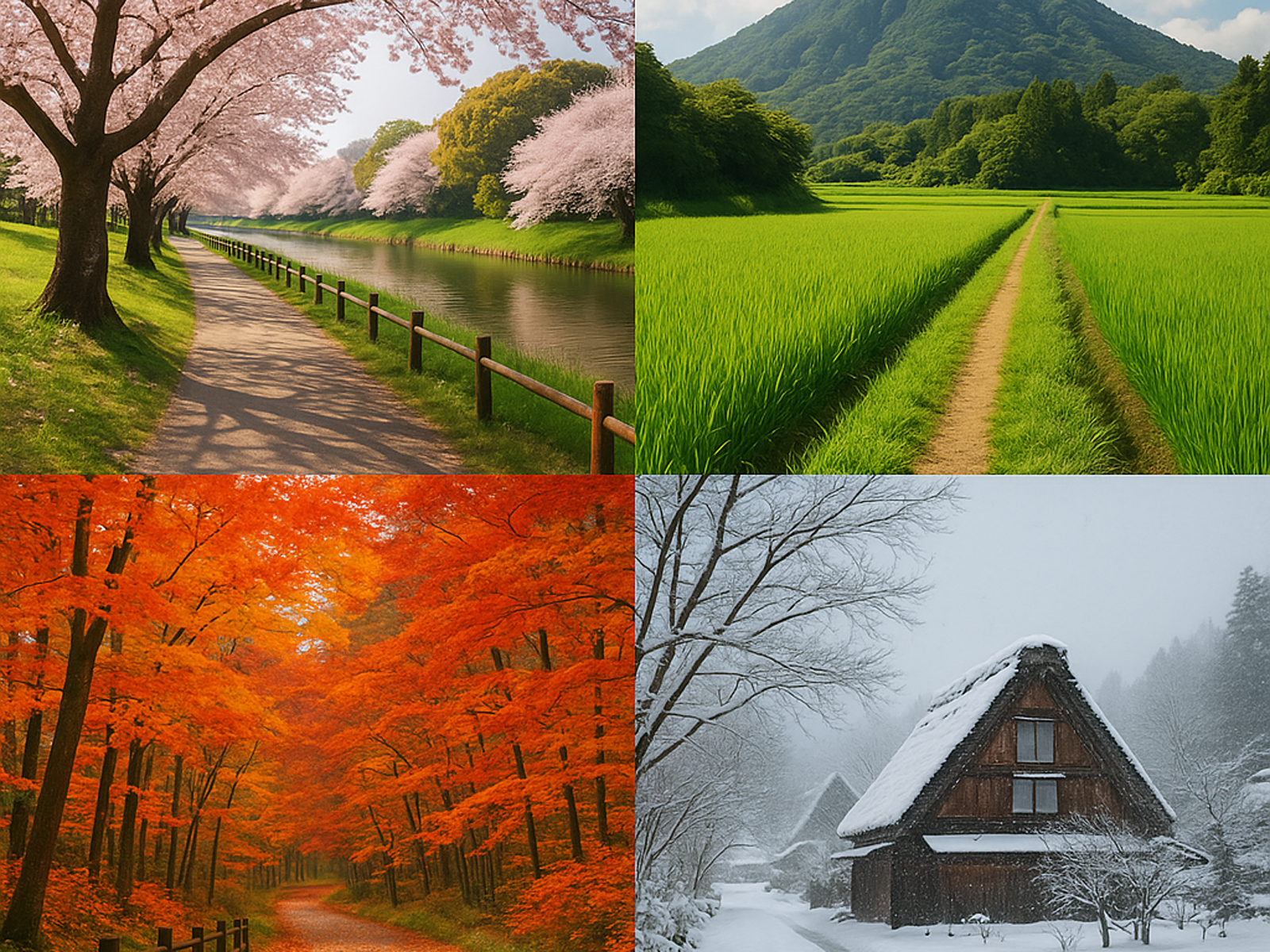
Most of Japan lies in the temperate zone of the Earth’s mid-latitudes. The temperate zone is characterized by neither excessive heat nor extreme cold, with clearly defined four seasons.
- Spring (March–May): A calm season when flowers bloom. The blooming of cherry blossoms is a symbolic landscape of Japan.
- Summer (June–August): Hot and humid, beginning with the rainy season known as tsuyu, followed by intense summer heat.
- Autumn (September–November): Temperatures drop and colorful autumn leaves appear. Typhoons frequently approach during this season.
- Winter (December–February): Severe cold and heavy snow in some regions.
However, since the Japanese archipelago stretches about 3,000 km from north to south, even the same season can look very different depending on the region.
The Influence of Monsoons
A major factor shaping Japan’s climate is the monsoon, which changes direction between summer and winter due to air pressure differences between the Asian continent and the Pacific Ocean.
- Winter monsoon: Cold northwesterly winds blow from the Siberian High, crossing the Sea of Japan, picking up moisture, and dumping large amounts of snow on the Japan Sea side. This creates heavy snowfall areas.
- Summer monsoon: Warm, moist southeasterly winds blow in from the Pacific High, causing hot and humid weather on the Pacific side.
The difference in wind direction and humidity is a major reason for the climatic contrasts between regions in Japan.
Characteristics of Precipitation
Japan is a country with abundant rainfall throughout the year, especially during the rainy season (June–July) and the typhoon season (August–October).
- Annual precipitation generally ranges from 1,000 to 2,500 mm, and some areas exceed 3,000 mm.
- Even major cities like Tokyo and Osaka receive about twice the rainfall of cities like London or Paris.
- On the Pacific side, rainfall is concentrated in summer, while on the Japan Sea side, winter snowfall makes up much of the precipitation.
This abundance of rainfall supports lush forests and agriculture but also increases the risk of floods and landslides.
Four Major Climate Zones in Japan
The Japan Meteorological Agency often explains Japan’s climate by dividing it into four zones. Their features are as follows:
1. Hokkaido Climate
- Temperature: Generally cool, with subzero winters.
- Precipitation: Relatively low, with dry, powdery “powder snow.”
- Feature: Inland areas sometimes reach -30°C, resembling cold European climates.
- Agriculture: Short summers make wheat, potatoes, and dairy farming common.
2. Pacific Side Climate
- Temperature: Winters are relatively mild, summers hot and humid.
- Precipitation: Heavy in summer due to the rainy season and typhoons.
- Feature: Includes major cities like Tokyo, Nagoya, and Osaka. Many sunny winter days, but air is dry.
2-1. Setouchi Climate
- Location: Around the Seto Inland Sea (Hiroshima, Okayama, Kagawa).
- Feature: Low annual rainfall, mild temperatures, less impact from typhoons.
- Nickname: “Mediterranean climate of Japan.”
2-2. Central Highland Climate
- Location: Inland mountain regions such as Nagano and Yamanashi.
- Feature: Large day-night temperature differences, cold winters, cool summers.
- Precipitation: Low, dry conditions, favorable for fruit cultivation.
3. Japan Sea Side Climate
- Winter: Heavy snowfalls.
- Summer: Hot and humid, sometimes influenced by the foehn phenomenon.
- Precipitation: Annual rainfall may exceed 3,000 mm due to winter snow.
4. Southwestern Islands (Subtropical Climate)
- Location: Okinawa and Amami regions.
- Temperature: Warm to hot year-round, average winter temperatures above 15°C.
- Precipitation: Very high due to rainy and typhoon seasons, over 2,000 mm annually.
- Feature: Subtropical environment with coral reefs and tropical plants.
Plants and Forest Distribution
Japan’s temperate climate and abundant rainfall support lush plant life and forests.
- Forest coverage is about 67% of the national land area, one of the highest levels in the world.
- Major tree species: Cedar and cypress (planted forests), beech, oak, and chestnut (deciduous broadleaf trees), red pine and black pine (conifers).
- Regional distribution: Coniferous forests in Hokkaido, deciduous forests in Honshu’s mountains, and evergreen broadleaf forests in Kyushu and southwards.
Forests serve multiple roles: timber supply, biodiversity, water conservation, and scenic value.
Crop Cultivation Limits
Climatic conditions define the limits of crop cultivation, known as the “cultivation limit line.”
- Rice: Northern Hokkaido marks the limit, with cold-tolerant varieties.
- Tea: Prefers warm climates, mainly cultivated south of central Honshu. Northern limit: Shizuoka to southern Miyagi.
- Citrus fruits and sugarcane: Cultivated mainly in the subtropical Nansei Islands and southern Kyushu.
- Altitude limits: Above 1,000 m, rice cultivation is difficult; instead, highland vegetables like lettuce and cabbage are grown.
Conclusion
Japan’s climate, while fundamentally temperate, is highly diverse due to monsoons, ocean currents, and terrain. These differences strongly influence daily life, culture, agriculture, and ecosystems, making climate an important part of Japan’s uniqueness.
Understanding regional climatic characteristics is useful not only for travel but also for living and business. Viewing Japan through the lens of “climate” provides a deeper perspective on the country.
Comments