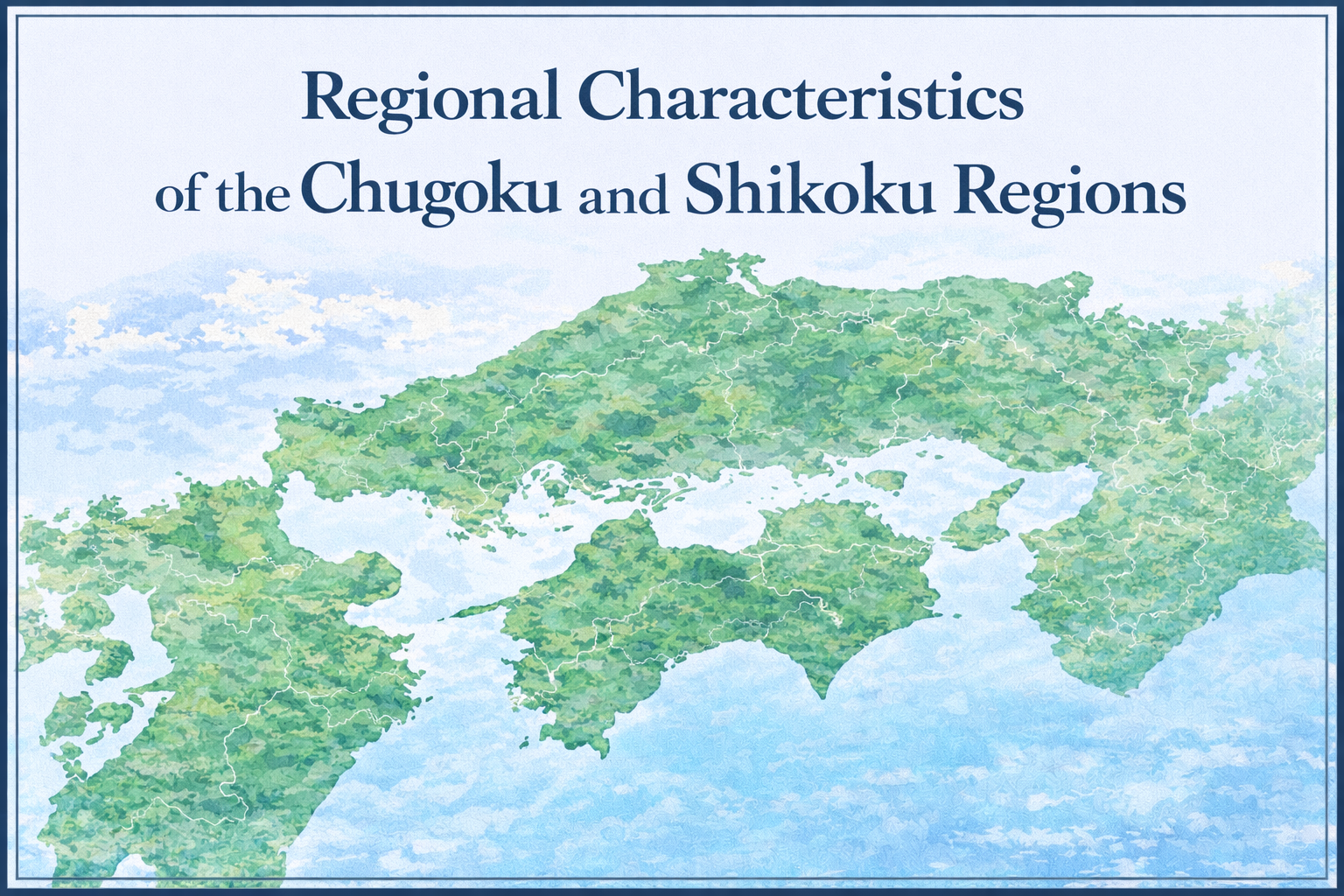
Overview of the Chugoku and Shikoku Regions
Area
The Chugoku and Shikoku regions are located in the western part of the Japanese archipelago, covering a total area of approximately 60,000 square kilometers. This represents about 16% of Japan’s total land area—slightly larger than Kyushu and roughly the same size as the Kanto region.
Population
The combined population is about 9 million, less than one-tenth of Japan’s total population. While major cities such as Hiroshima and Okayama attract residents, many mountainous and island areas are facing depopulation and aging populations.
Location
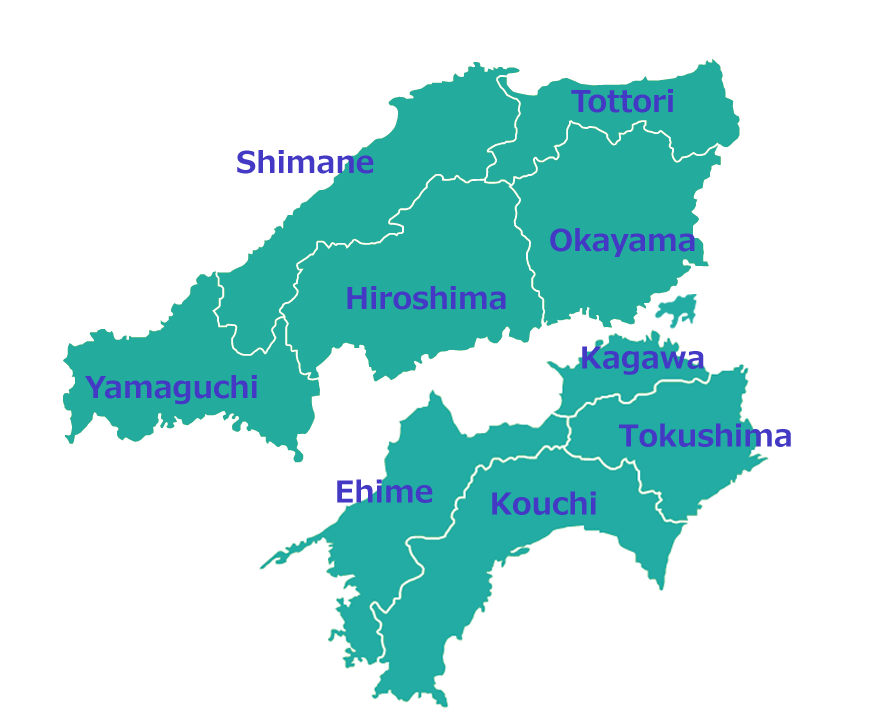
The Chugoku region occupies the western part of Honshu, while the Shikoku region lies to the south across the Seto Inland Sea. The western tip of Chugoku is close to Kyushu, and the Shikoku region faces the Pacific Ocean with a warm climate. Bridges such as the Seto Ohashi and the Shimanami Kaido connect the two regions and are popular travel routes.
Nature
Regional Classifications
The Chugoku and Shikoku regions can be divided into three major areas according to their natural features:
– Chugoku Region: Divided into San’in (Sea of Japan side) and Sanyo (Seto Inland Sea side)
– Shikoku Region: Divided by the Shikoku Mountains into North Shikoku (Seto Inland Sea side) and South Shikoku (Pacific Ocean side)
– Setouchi: A calm inland sea area connecting southern Chugoku and northern Shikoku
San’in Region
The San’in area spreads along the Sea of Japan coast, where winter brings frequent snow and rain.
– Izumo Plain (Shimane Prefecture): A fertile plain nourished by Lake Shinji and the Hii River, known for its connection to the ancient Izumo Taisha Shrine.
– Tottori Plain (Tottori Prefecture): Famous for the Tottori Sand Dunes, where crops such as pears and shallots are cultivated.
Setouchi Region
The Setouchi coastal zone connects southern Chugoku and northern Shikoku. Surrounded by mountains, it has little rainfall and long sunshine hours.
- Hiroshima Plain (Hiroshima Prefecture): A major urban and economic center centered on Hiroshima City.
- Okayama Plain (Okayama Prefecture): Known for grape and peach production, benefiting from its mild climate.
- Sanuki Plain (Kagawa Prefecture): Famous for Sanuki udon noodles. Numerous reservoirs help compensate for limited water resources.
South Shikoku Region
Facing the Pacific Ocean, this area is warm and experiences heavy rainfall.
- Shikoku Mountains and Sanuki Range: Mountain ranges forming rugged terrain.
- Kochi Plain (Kochi Prefecture): A wide, warm plain where agriculture thrives year-round.
Climate
San’in: Climate of the Sea of Japan Side
In winter, the northwest monsoon brings snow and rain, and cloudy days are common. Summers are relatively comfortable, but winters can be harshly cold.
Setouchi: Climate of the Seto Inland Sea
Surrounded by mountains, rainfall is low and sunshine is long. The region is often called “the land of sunshine.” The mild and calm weather supports agriculture and tourism.
South Shikoku: Climate of the Pacific Ocean Side
Summers are hot and humid with frequent rainfall, often affected by typhoons. Winters are mild with little frost, supporting greenhouse and early-season farming.
Industry
Agriculture and Fisheries
Diverse agricultural and fishery industries have developed, making use of each area’s natural conditions.
San’in
- Rice cultivation in the Izumo and Tottori plains.
- Pear and shallot farming at the Tottori Sand Dunes.
- Cattle grazing in the Chugoku Mountains.
- Sakaiminato is known for its abundant seafood landings, especially crabs.
Setouchi
- Ehime Prefecture is one of Japan’s leading citrus producers.
- The Okayama Plain is called the “Fruit Kingdom” for its grape and peach orchards.
- Oyster and sea bream aquaculture thrive in the Seto Inland Sea.
South Shikoku
- Kochi Plain’s warm climate supports greenhouse and early-season vegetable cultivation.
- Fishing ports in Kochi and Miyazaki Prefectures send vessels for offshore and deep-sea fishing.
Industry
The core of industry in the Chugoku and Shikoku regions is the Setouchi Industrial Zone. Factories cluster along the Seto Inland Sea coast in Okayama, Hiroshima, Yamaguchi, Kagawa, and Ehime Prefectures. Steelmaking, shipbuilding, petrochemicals, and automobile industries have developed, supported by calm ports and efficient highway and bridge networks connecting the regions.
Conclusion
The Chugoku and Shikoku regions are surrounded by three seas—the Sea of Japan, the Seto Inland Sea, and the Pacific Ocean—each giving rise to distinct natural features and industries. From the snowy San’in coast to the sunny Setouchi and the warm Pacific shore of South Shikoku, travelers can experience a wide variety of landscapes and cultures within a single region.
Visitors can enjoy fruit-themed tours, island-hopping across Setouchi, or savoring fresh seafood from the Sea of Japan. Truly, the Chugoku and Shikoku regions represent the diversity of Japan in both nature and lifestyle.
Comments