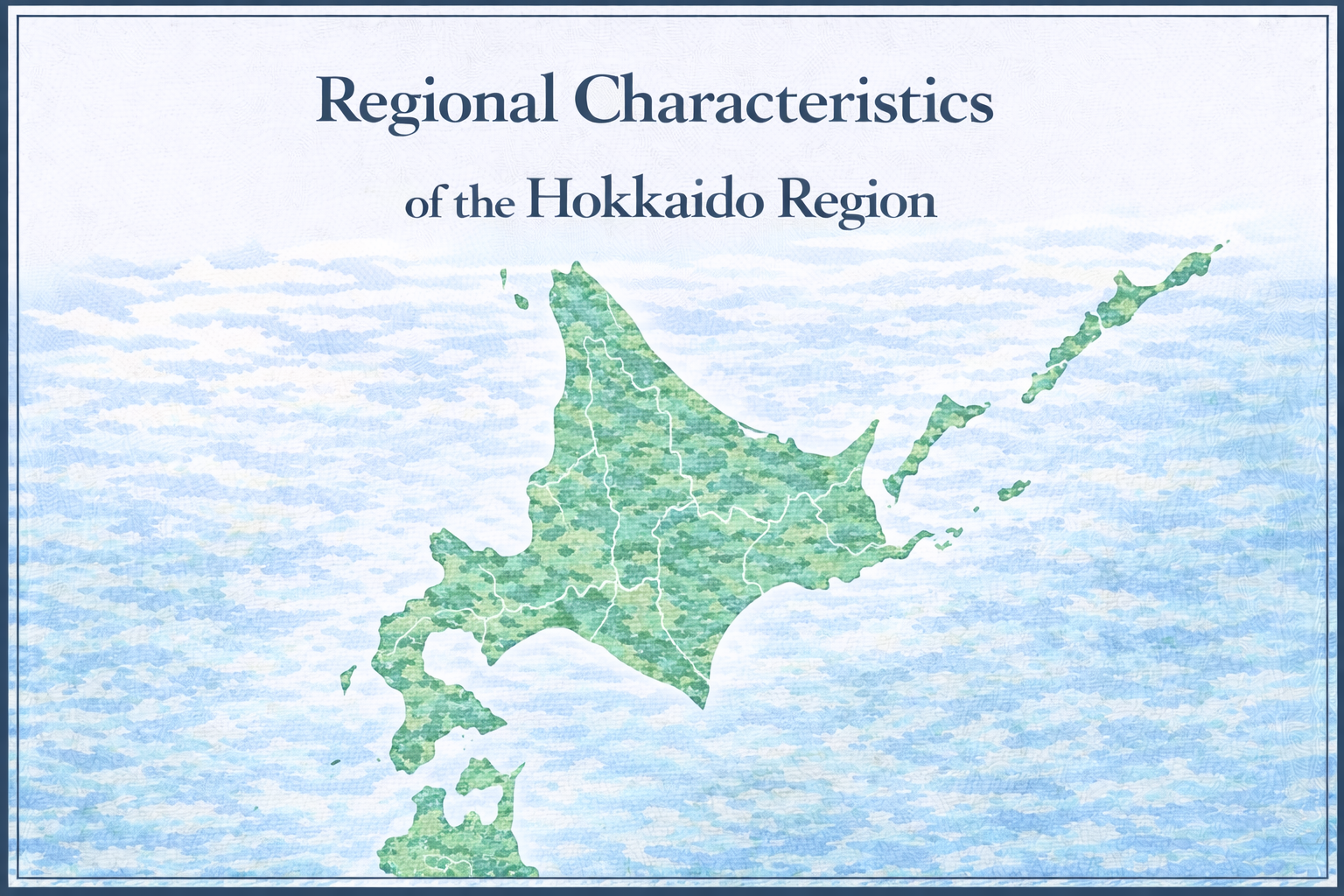
Overview of the Hokkaido Region
Area
The Hokkaido region is Japan’s northernmost and largest area, covering about 83,000 square kilometers.
It accounts for more than 20% of Japan’s total land area—larger than all other prefectures combined.
Population
The population is approximately 5 million, or about 4% of Japan’s total.
Most residents live in Sapporo City, while the rest of Hokkaido is sparsely populated, with vast areas of natural landscape.
Location
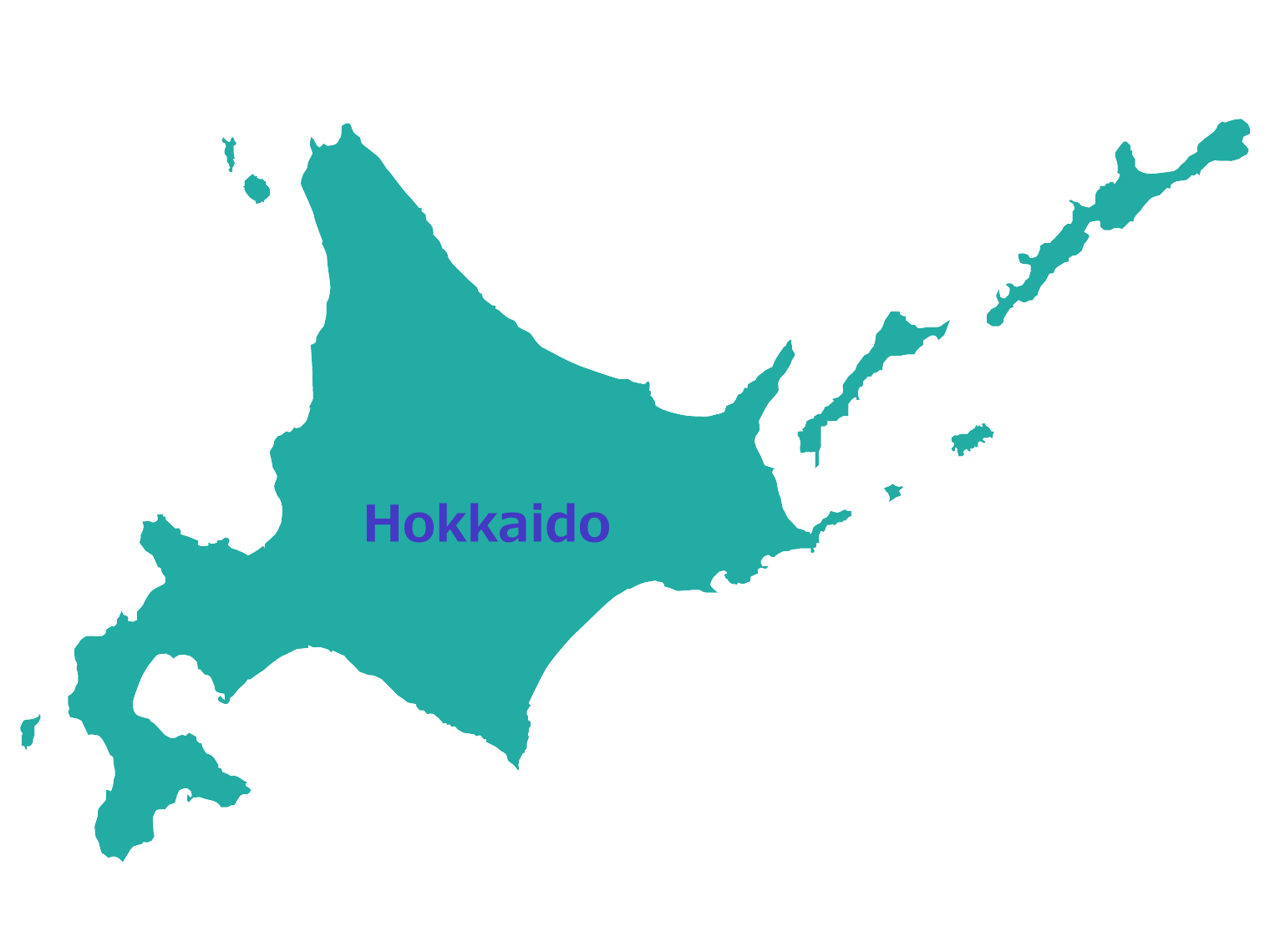
Hokkaido lies north of Honshu, separated from the Tohoku region by the Tsugaru Strait.
It is surrounded by the Pacific Ocean to the east, the Sea of Japan to the west, and the Sea of Okhotsk to the north.
The region also includes Rebun and Rishiri Islands, rich in natural beauty and biodiversity.
Nature
Topography
Mountains and Mountain Ranges
Hokkaido is home to several mountain ranges that form its majestic landscapes:
- Hidaka Mountains: Stretching across the south-central part, known for their rugged terrain.
- Daisetsuzan Range: Often called “the roof of Hokkaido,” this area features many active volcanoes, scenic alpine views, and hot springs.
- Shiretoko Peninsula Mountains: Part of a UNESCO World Natural Heritage Site, preserving untouched wilderness.
Rivers and Plains
- Ishikari River: The largest river in Hokkaido, forming the Ishikari Plain that supports extensive rice cultivation.
- Tokachi River: Waters the fertile Tokachi Plain, where large-scale farming flourishes.
- Other rivers such as Sorachi and Kushiro flow across the land, forming basins and wetlands.
Lakes
- Lake Toya: A caldera lake created by volcanic activity.
- Lake Shikotsu: Known for its crystal-clear water and popularity as a tourist destination.
- Lake Mashu: Famous for its mysterious fog and deep blue color.
- Lake Akan: Home to marimo (a rare green algae ball), designated a natural monument.
Coasts and Islands
- The Sea of Okhotsk coast is known for its drift ice in winter.
- The Sea of Japan coast features numerous fishing ports and abundant seafood.
- The Pacific coast is a hub for fisheries and port industries.
- Rebun and Rishiri Islands offer rich ecosystems and scenic beauty.
Climate
Eastern Hokkaido: Pacific Ocean Climate
Cold, moist winds often bring fog during summer, resulting in a cool and stable climate ideal for growing pasture grass and potatoes.
Central (Inland) Hokkaido: Inland Climate
Characterized by large temperature differences between day and night and between seasons.
Winters are harsh—temperatures in Asahikawa can drop below –30°C.
Western Hokkaido: Sea of Japan Climate
The northwest seasonal winds bring heavy snowfall in winter, supporting winter sports and tourism.
Summers are mild and comfortable compared with Honshu.
History
Development of Hokkaido
Life of the Ainu
The Ainu people have lived in Hokkaido for centuries, coexisting with nature through hunting, fishing, and trade.
Their unique culture and language continue to be preserved and respected today.
Meiji Era and Beyond
During the Meiji period, the government established the Hokkaido Development Commission and began large-scale colonization by tondenhei (farmer-soldiers).
Agricultural land was reclaimed, and roads and railways were built, promoting modernization.
Post–World War II
Agriculture, dairy farming, and fisheries became the foundation of the economy.
Urbanization centered on Sapporo advanced, and tourism became a major industry.
Agriculture and Livestock
Crop Farming
Hokkaido’s wide plains and basins support extensive crop farming.
Major products include potatoes, sugar beets, wheat, and beans.
Rice Cultivation
Rice farming thrives in the Ishikari Plain and Sorachi area.
Hokkaido-grown rice has gained national recognition for its quality.
Dairy Farming
Using vast grasslands, dairy farming is one of Hokkaido’s main industries.
Milk, cheese, and butter produced here are distributed nationwide.
Fisheries
- Offshore Fishing: Once large-scale operations in the North Pacific for salmon, trout, and cod.
- Coastal and Aquaculture Fisheries: Scallops, kelp, oysters, and sea urchins are harvested and exported worldwide.
Forestry
Hokkaido’s forests account for over 20% of Japan’s total forest area, providing abundant timber resources.
Forestry focuses mainly on coniferous trees used for construction and paper.
Coal Industry
Hokkaido was once Japan’s leading coal-producing region.
Mines in Yubari and Kushiro supported Japan’s postwar energy needs.
Although most mines are now closed, some sites remain preserved as industrial heritage and museums.
Industry
Hokkaido’s industries are based on food processing, utilizing local agricultural, dairy, and marine products.
Key sectors include dairy products, seafood processing, sugar refining, and paper manufacturing.
Machinery and chemical industries are also growing in Sapporo and Tomakomai.
Conclusion
The Hokkaido region boasts Japan’s largest land area, magnificent natural scenery, and unique history.
Its agriculture, dairy farming, and fisheries produce some of Japan’s finest foods, while tourism and environmental industries continue to expand.
With its distinct four seasons, Ainu heritage, and breathtaking landscapes—from drift ice and snowfields to fertile plains—
Hokkaido stands as one of Japan’s most dynamic and captivating regions.
Comments