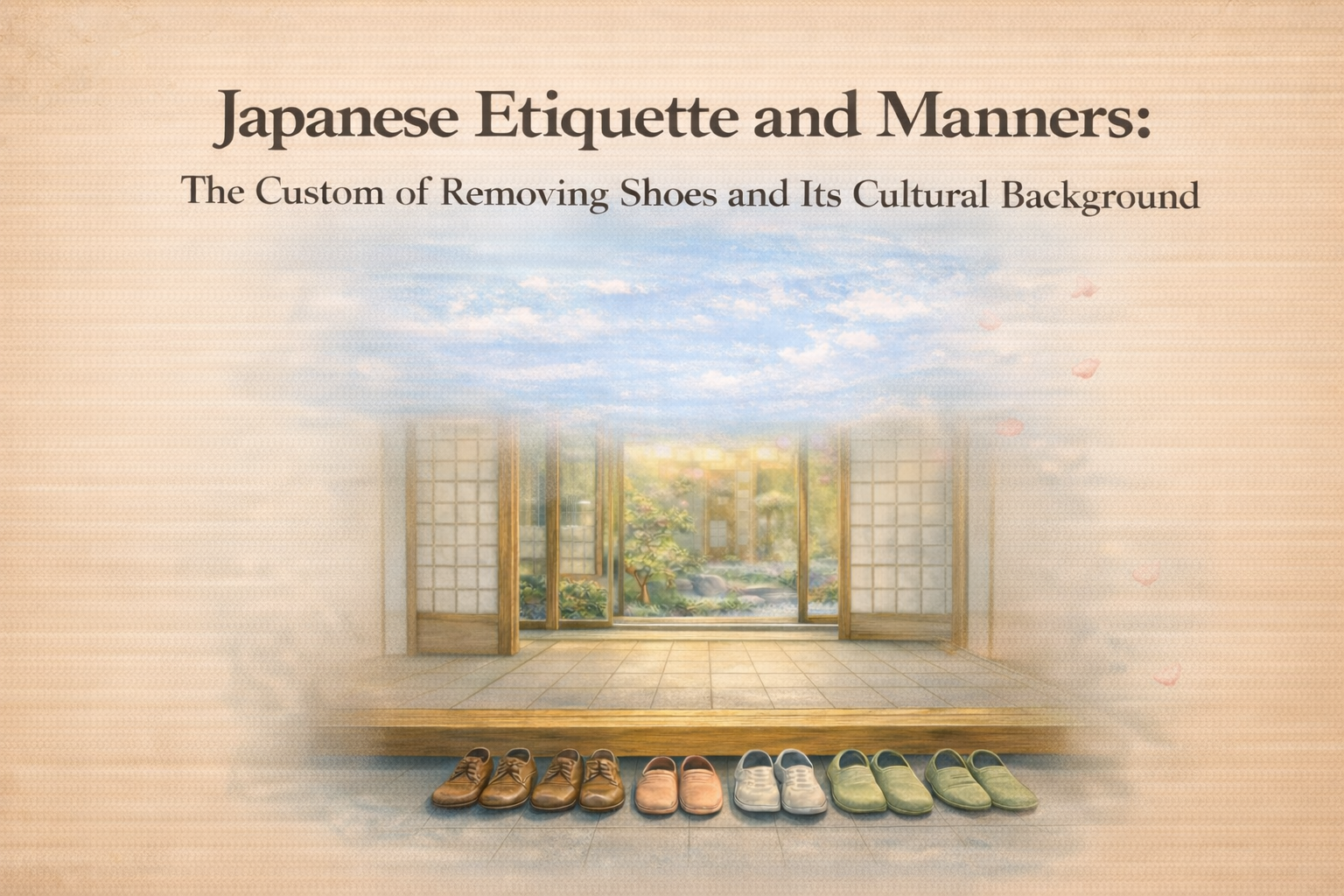
One of the customs that often surprises visitors to Japan is the practice of removing shoes before entering certain spaces. In many Western countries, it is common to enter a home while wearing shoes. In Japan, however, people are expected to take off their shoes in a wide range of places, including private homes, traditional inns, temples, and tea rooms.
This custom is not only about keeping spaces clean. It is closely connected to traditional living styles, cultural values, and even religious ideas. In this article, we will explain the background of this practice, how it is observed in modern Japan, how it compares with other countries, and the situations where visitors may feel unsure.
Historical Background of Removing Shoes
Several factors have shaped the custom of removing shoes in Japan.
One important factor is the traditional lifestyle of sitting and living close to the floor. Japanese homes have long been designed with tatami mats or wooden flooring, where people sit, relax, and sometimes sleep directly on the surface. Because of this, it was necessary to prevent dirt and dust from being brought indoors. Removing shoes at the entrance became a practical way to maintain cleanliness.
Religious influences have also played a role. In both Shinto and Buddhism, there is a strong emphasis on keeping spaces pure. The idea of not bringing outside impurities into homes or sacred places became widely accepted. This is reflected in the practice of removing shoes when entering temple halls or certain areas of shrines.
In addition, removing shoes was part of etiquette in samurai society. Sitting on tatami floors without shoes and setting aside one’s weapons were ways of showing that there was no hostile intent. Over time, the custom of removing shoes developed through the combination of residential design, religious values, and social etiquette.
Situations in Modern Japan Where Shoes Are Removed
Even today, there are many situations in Japan where people remove their shoes.
Homes
In Japanese homes, it is standard to take off shoes at the entrance, known as the genkan. There is usually a small step that separates the outside area from the interior. This physical boundary reflects the idea of keeping the inside clean and distinct from the outside.
Schools and kindergartens
In many schools, students change into indoor shoes. By separating outdoor and indoor footwear, the cleanliness of the school environment is maintained.
Traditional inns and tea rooms
Shoes are removed before entering rooms with tatami flooring. This helps protect the flooring, maintain cleanliness, and follow traditional etiquette. In tea rooms, removing shoes can also be understood as part of preparing oneself mentally and physically.
Izakaya (Japanese-style pubs)
In some izakaya, guests place their shoes in lockers at the entrance. A wooden tag or key is often used to identify the locker. This system reflects a combination of practicality and traditional style.
Hospitals and certain workplaces
In some facilities, especially those focused on hygiene such as pediatric clinics or rehabilitation centers, people are asked to remove their shoes and use indoor slippers.
Business visits
When visiting a private home or certain offices, you may be asked to remove your shoes. It is helpful to be aware of this possibility and be prepared to do so when appropriate.
Customs After Removing Shoes
There are also distinctive practices associated with what happens after shoes are removed.
In homes and traditional inns, slippers are usually provided. However, it is considered proper to remove slippers before stepping onto tatami mats. In addition, many places have separate slippers specifically for use in the restroom, reflecting a strong awareness of cleanliness.
In schools and workplaces, indoor shoes or slippers are commonly used. This separation between outdoor and indoor footwear helps keep interiors consistently clean.
The direction of shoes
After removing shoes, it is considered good manners to place them neatly with the toes pointing toward the exit. This has a practical aspect, as it makes them easy to put on when leaving. It is also seen as a considerate gesture, suggesting that one is ready to leave without causing inconvenience to others. Leaving shoes scattered or arranging them carelessly is generally avoided.
Avoid visiting barefoot
In a culture where shoes are removed, wearing socks is also an important aspect of etiquette.
Entering someone’s home or a tatami room barefoot may be seen as bringing in outside dirt directly. Even in summer, when people may wear sandals, it is not uncommon to carry socks for situations where shoes need to be removed.
Comparison with Other Countries
The custom of removing shoes is not unique to Japan. In countries such as those in Northern Europe and in Canada, where snow and mud are common, people often remove their shoes indoors.
In contrast, in many Western countries, it is still common to keep shoes on inside the home. This difference is partly related to lifestyle. In cultures where people primarily use chairs and beds rather than sitting on the floor, there has been less need to maintain the floor in a perfectly clean condition.
In Japan, removing shoes carries not only a practical meaning but also a cultural one. It reflects the idea of clearly distinguishing between “outside” and “inside.” This way of thinking can also be seen in architecture and social relationships, and it is an important concept for understanding Japanese culture.
Cultural Meaning
The custom of removing shoes reflects several key aspects of Japanese values.
Cleanliness
Cleanliness has long been regarded as an important virtue in Japanese society. Removing shoes helps maintain a clean living environment.
Distinction between inside and outside
Taking off shoes at the entrance is a symbolic act that separates the outside world from the interior space. This reflects a broader cultural tendency to distinguish clearly between different types of spaces.
Consideration for others
Removing shoes is also a way of showing respect for the place and for the people who use it. It expresses a willingness not to bring dirt inside and to follow established customs.
Situations That May Cause Confusion for Visitors
Visitors to Japan may sometimes feel unsure about this custom or make small mistakes, such as:
- entering a ryokan room while still wearing shoes
- walking on tatami while wearing slippers
- returning to the room while still wearing restroom slippers
- feeling embarrassed because of worn or damaged socks
These situations are easy to avoid with a bit of prior knowledge. Understanding the custom of removing shoes can help make a stay in Japan more comfortable and enjoyable.
Conclusion
The custom of removing shoes in Japan is not simply a practical rule. It reflects deeper cultural values, including cleanliness, respect, the distinction between inside and outside, and consideration for others.
For visitors, understanding this practice can be an important step toward a deeper appreciation of Japanese culture. Within the simple act of taking off one’s shoes lies a rich expression of everyday life and social values in Japan.

Comments