Japanese cuisine is widely appreciated around the world and is also recognised by UNESCO as an Intangible Cultural Heritage. From sushi and tempura to ramen and kaiseki cuisine, Japan offers a wide variety of dishes that are valued not only as food but also as part of a broader cultural experience.
To enjoy Japanese dining culture more fully, it is helpful to understand some of the manners associated with the table. These customs often reflect values such as cleanliness, gratitude, and consideration for others. This article explains basic table manners in Japan, some of their cultural background, and a few situations in which visitors may feel unsure.
The Use of Chopsticks
Chopsticks are one of the most recognisable features of Japanese dining culture, and there are several customs related to how they are used. These are not simply technical rules. In many cases, they are connected to broader ideas of respect, restraint, and avoiding actions that carry unwanted associations.
- Sashi-bashi (stabbing food with chopsticks): generally avoided, as it can recall funeral-related practices
- Watashi-bashi (resting chopsticks across a bowl): often seen as careless or as suggesting that the meal has been abandoned
- Utsushi-bashi (passing food directly from one pair of chopsticks to another): widely avoided because it resembles a funeral custom
- Mayoi-bashi (hovering chopsticks over dishes): can suggest indecision or poor manners
- Nigiri-bashi (holding chopsticks in a fist): often seen as rough or childish
These customs are often explained in relation to respect for food and to avoiding gestures associated with death or disorder. Many Japanese children learn proper chopstick use gradually at home and at school.
A common point of uncertainty for visitors is sushi. Some people try to spear it with chopsticks, but sushi may also be eaten with the hands, which is perfectly acceptable in many settings.
Greetings Before and After Meals
In Japan, it is customary to say set phrases before and after a meal. Before eating, people often say itadakimasu, and after finishing, gochisousama deshita.
Itadakimasu literally means “I humbly receive,” but in daily use it also expresses appreciation for the food and for those involved in preparing it. Gochisousama deshita conveys thanks for the effort, care, and hospitality behind the meal.
These expressions are often understood as reflecting a sense of gratitude toward food, nature, and the people who made the meal possible. Even when used in ordinary daily life, they help create a respectful atmosphere around eating.
Visitors do not need to use them perfectly, but even saying itadakimasu quietly before a meal is often appreciated.
Handling Bowls and Dishes
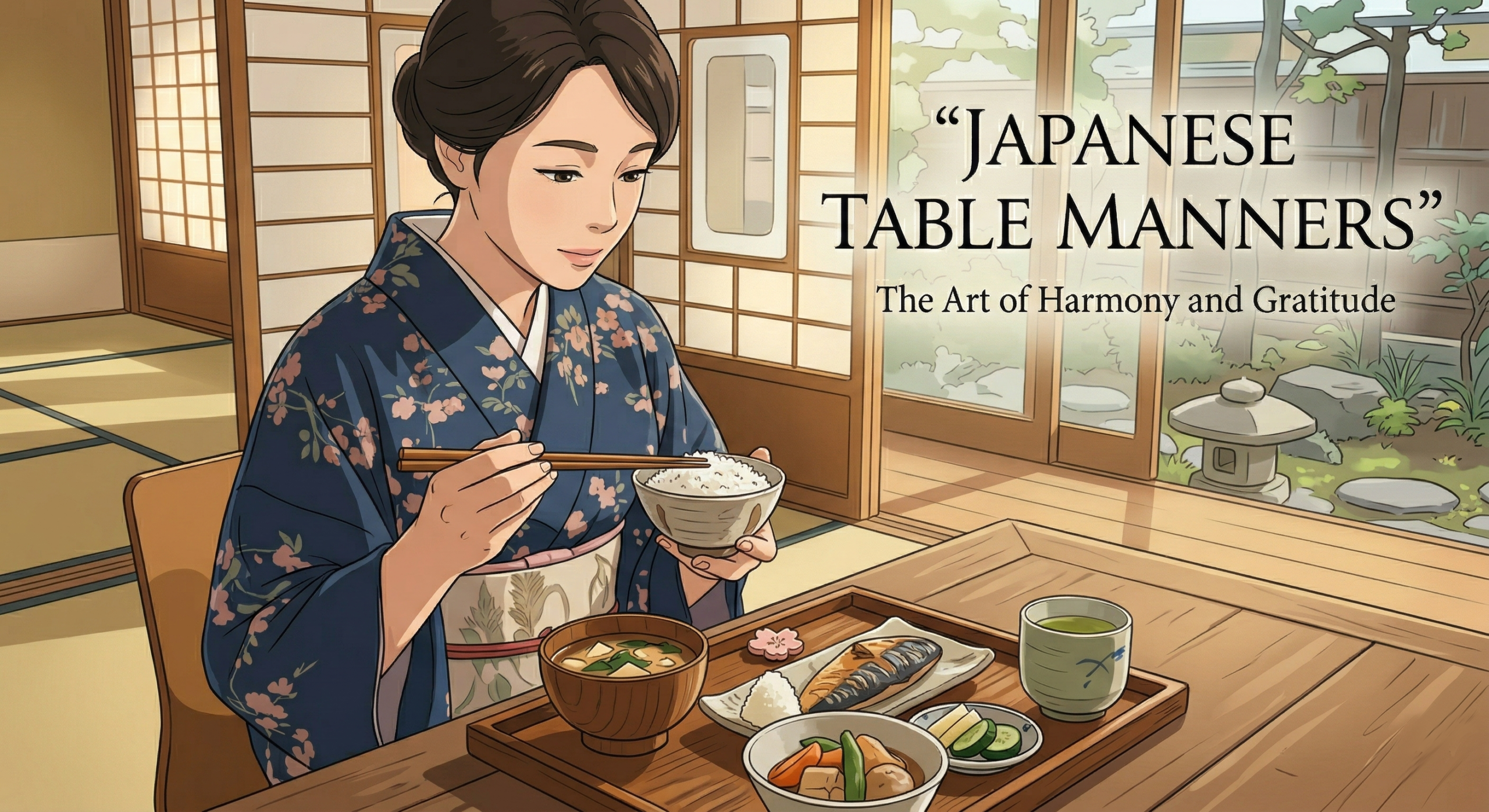
The way bowls and dishes are handled also carries meaning in Japanese table manners. Rice bowls and soup bowls are often lifted while eating. Leaving them on the table and bending all the way down toward them may look awkward or careless.
Japanese tableware has also developed as an important part of the dining experience. Ceramics and lacquerware are often appreciated not only for their practical use but also for their craftsmanship. Handling them carefully shows respect for both the meal and the traditions behind it.
When sharing food from a large plate, serving chopsticks are preferred where available. Using one’s own chopsticks for a shared dish may be seen as impolite, especially in more formal settings.
For example, when drinking miso soup, it is natural to lift the bowl gently with one hand while using chopsticks with the other.
Behaviour During Meals
During a meal, it is generally considered polite to sit upright and chew quietly. At the same time, there are some cases in which Japanese dining customs may differ from what visitors expect.
One well-known example is noodle dishes such as soba or ramen. Slurping is not necessarily considered rude in Japan and may even be treated as a normal part of eating noodles. It can help cool the noodles slightly and may also make it easier to enjoy their aroma.
For visitors, this can feel unfamiliar at first. There is no need to force it, but it is useful to know that quiet slurping is usually accepted in this context.
Manners for Drinks
When making a toast in Japan, people usually say kanpai. In more formal settings, it is often considered polite to hold your glass slightly lower than that of someone senior to you.
In drinking situations, especially in group settings, it is also common to pay attention to the glasses of others. Offering to pour for someone nearby before refilling your own glass is often seen as a considerate gesture.
In business meals and at izakaya, seating arrangements and small details of timing may also reflect hierarchy and group relationships. Visitors do not need to know every rule, but noticing these patterns can make social situations easier to follow.
For example, refilling only your own glass may appear a little self-focused in some settings, while offering to pour for others first is often seen positively.
Dining Out
Japanese dining culture includes many different types of establishments, and customs may vary slightly depending on the setting.
- Sushi restaurants: Sushi may be eaten with the hands or with chopsticks. Soy sauce is usually applied lightly to the fish rather than soaking the rice. Pickled ginger is generally used as a palate cleanser.
- Kaiseki restaurants: In more formal settings, attention is often given to the timing, order, and presentation of the dishes. A calm manner is usually more suitable than loud or casual behaviour.
- Izakaya: Even in relaxed settings, shared dishes are usually taken with communal chopsticks or serving utensils where provided.
- Ramen shops: Customs vary, but finishing a meal neatly and leaving the counter in an orderly condition is generally appreciated.
One point that sometimes causes uncertainty is sushi seasoning. Using too much soy sauce or changing the balance prepared by the chef may be seen as missing the intended style of the dish. When unsure, a simple and restrained approach is usually safest.
Conclusion
Japanese table manners are not simply a collection of arbitrary rules. They reflect broader cultural values, including gratitude, respect, cleanliness, and consideration for others.
For visitors, these customs may feel unfamiliar at first, but perfect execution is not the most important thing. A respectful attitude and a willingness to observe the setting usually matter more. With a basic understanding of these customs, dining in Japan can become not only more comfortable but also more meaningful as a cultural experience.