Discover Japan’s traditional arts, including tea ceremony and other cultural practices. Learn how these art forms reflect Japanese values such as harmony, simplicity, and mindfulness.
 Traditional Arts
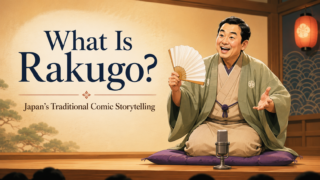
 What Is Rakugo? Japan’s Traditional Comic Storytelling Performed by a Single Storyteller
Discover Rakugo, Japan’s minimalist comic storytelling art. Learn how a single performer acts out an entire cast using only a fan, a towel, and the power of imagination, and find out how to experience this heartwarming tradition in Japan.
 Traditional Arts
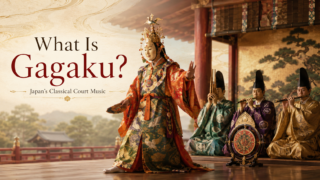
 What Is Gagaku? Japan’s Classical Performing Art Passed Down as Court Music
Unlock the secrets of Gagaku, Japan’s ancient court music and the world's oldest orchestra. Discover the cosmic harmony of the Shō, Hichiriki, and Ryūteki, and find out how to experience this mesmerizing blend of sound and ritual in Japan.
 Traditional Arts
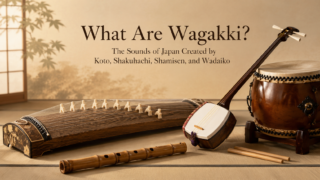
 What Are Wagakki? The Sounds of Japan Created by Koto, Shakuhachi, Shamisen, and Wadaiko
Discover the soulful sounds of Wagakki (traditional Japanese instruments). From the elegant resonance of the Koto to the meditative breath of the Shakuhachi, explore the unique acoustics, philosophy, and where to hear live music in Japan.
 Traditional Arts
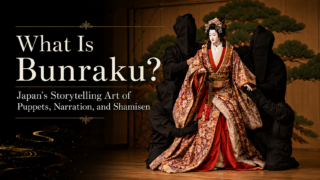
 What Is Bunraku? Japan’s Storytelling Art of Puppets, Narration, and Shamisen
Discover Bunraku, Japan's sophisticated storytelling art. Learn how three puppeteers move a single figure as one, how the Tayu voices an entire cast alone, and how to enjoy the deep human drama of duty and emotion on your first visit.
 Traditional Arts
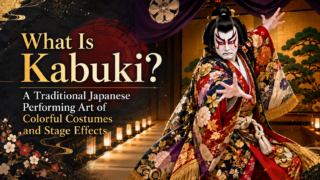
 What Is Kabuki? A Traditional Japanese Performing Art of Colorful Costumes and Stage Effects
Dive into Kabuki, Japan’s most dynamic performing art. Learn the secrets of Kumadori makeup, the dramatic Mie pose, and the hidden catwalk of the Hanamichi. Plus, discover practical tips like "Single-Act Tickets" for your first visit.
 Traditional Arts
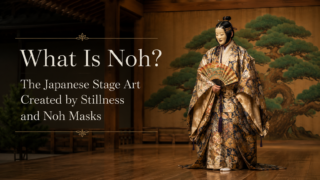
 What Is Noh? The Japanese Stage Art Created by Stillness and Noh Masks
Explore the profound world of Noh, Japan’s ancient art of stillness. Learn about the secrets of expressive Noh masks, the meaning of minimalist movements, and practical tips for experiencing this "sacred void" as a first-time visitor in Japan.
 Traditional Arts
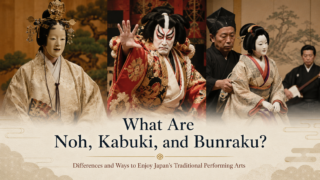
 What Are Noh, Kabuki, and Bunraku? Differences and Ways to Enjoy Japan’s Traditional Performing Arts
Planning to see traditional Japanese theater? Explore the spirit of Noh, Kabuki, and Bunraku. Learn what makes each special—from bold Kabuki makeup to the subtle masks of Noh—and how to enjoy an authentic performance on your trip.
 Traditional Arts
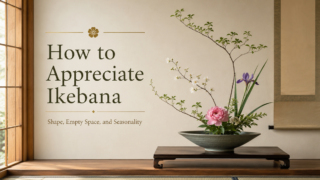
 How to Appreciate Ikebana: Shape, Empty Space, and Seasonality
Discover how to appreciate the profound beauty of ikebana. Learn to look beyond the blossoms to find meaning in the grace of lines, the power of negative space, and the harmony of the seasons.
 Traditional Arts
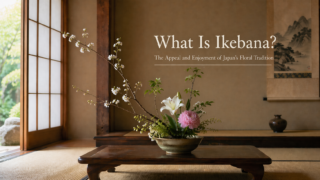
 What Is Ikebana? The Appeal and Enjoyment of Japan’s Floral Tradition
Discover what ikebana is, how it differs from ordinary flower arrangement, and how flowers, branches, vessels, and empty space express Japan’s seasonal beauty and aesthetics.
 Traditional Arts
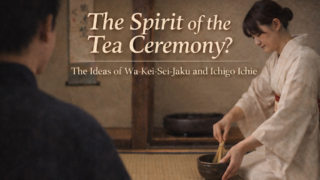
 What Is the Spirit of the Tea Ceremony? The Ideas of Wa-Kei-Sei-Jaku and Ichigo Ichie
Learn the spirit of the Japanese tea ceremony through the ideas of wa-kei-sei-jaku and ichigo ichie, and discover how harmony, respect, purity, and stillness shape this tradition.