Ikebana is one of Japan’s best-known traditional arts. Although it is often introduced in English simply as flower arrangement, that description does not fully capture its appeal. In ikebana, beauty is expressed not only through the colors and shapes of flowers, but also through the lines of branches, the relationship with the container, and the use of empty space. Within it, a distinctly Japanese sense of season, nature, and aesthetics appears in a quiet and refined way.
Some people interested in Japanese culture may become curious about ikebana alongside tea ceremony, gardens, Japanese food, and architecture. Ikebana is not so much a tradition of creating lavish decoration as it is a way of observing nature and deciding what to emphasize within a limited space, and what to leave out. This article explains what ikebana is, how it differs from other kinds of floral arrangement, and what makes it so appealing.
What Is Ikebana?
A Traditional Japanese Art of Arranging Flowers
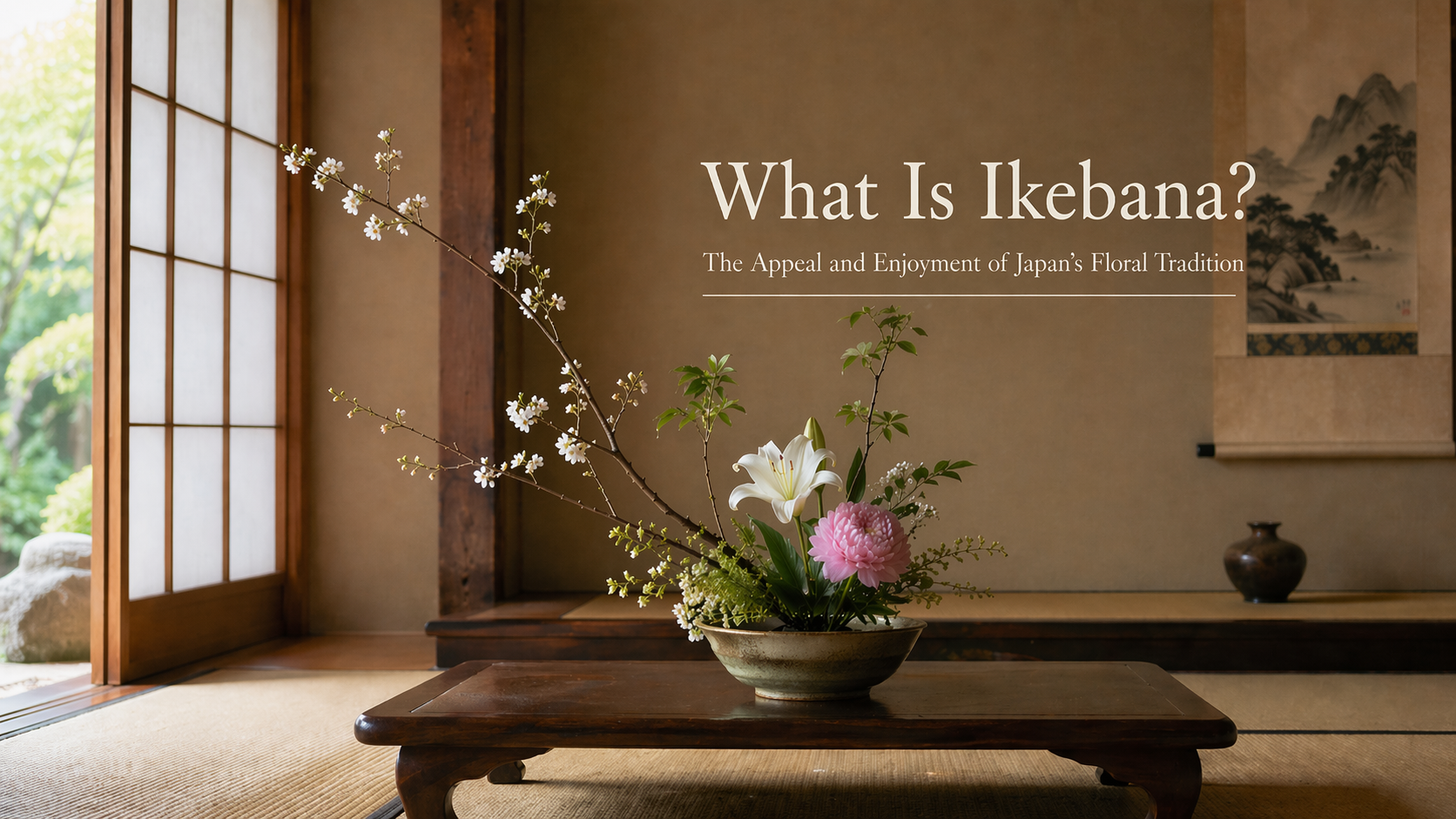
Ikebana is a traditional Japanese art that expresses the beauty of nature through flowers, branches, and leaves. In Japanese, it is called kadō or ikebana. At first glance, it may seem similar to ordinary flower arranging, since both involve placing flowers in a container. However, in ikebana, the composition includes not only which flowers are used, but also the direction they face, the length that is shown, and how they relate to the vessel.
For that reason, ikebana is not simply the act of arranging flowers. It is also a form of expression that reflects how nature is observed and how it is brought into a defined space. Even a single flower can become a complete work, while a larger number of flowers does not necessarily make the arrangement better. What is visible and what is left open are both understood as part of the composition.
Branches and Leaves Matter as Much as Flowers
In ikebana, beauty does not rest in the flowers alone. The line of a branch, the direction of a leaf, and the tilt of a stem all carry meaning. Rather than gathering only blossoms in order to create visual richness, ikebana values the question of how nature can be selected and brought to life.
Because of this, an ikebana arrangement may seem somewhat understated at first. However, when you look more closely, you begin to notice a quiet presence created by the flow of lines and the openness of space, even when only a small number of materials are used. This is one of the distinctive attractions of ikebana.
How Is It Different from Flower Arrangement?
It Is Not Defined Only by Quantity or Splendor
When ikebana is introduced to English-speaking readers, it is often described as Japanese flower arrangement. This is understandable, but the phrase alone does not fully express what makes ikebana unique. In many forms of flower arrangement, color combinations, fullness, and visual richness tend to draw the eye. Beauty may be associated with symmetry, abundant flowers, or a sense of fullness.
Ikebana invites a somewhat different way of looking. A work can feel complete even with very few flowers, and it can feel natural even when it is not perfectly symmetrical. What matters is not abundance, but the flow of lines and the breathing space within the composition.
Branches and Empty Space Also Carry Meaning
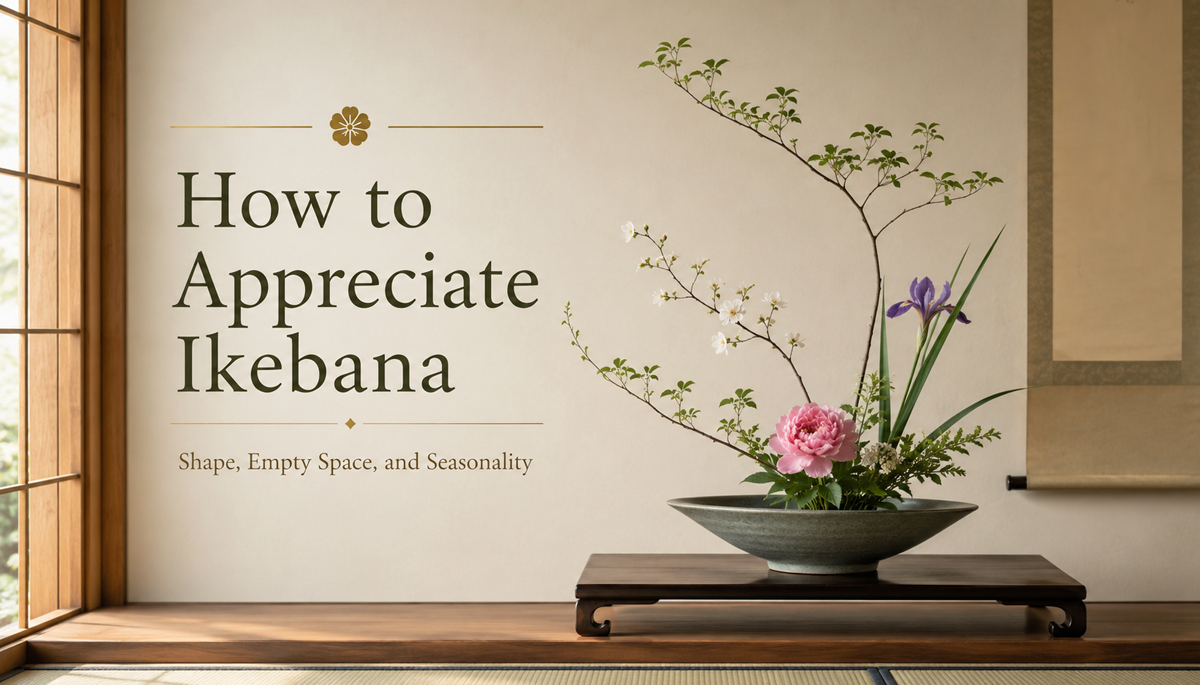
In ikebana, branches, leaves, and empty space are as meaningful as the flowers themselves. The direction of a single branch can change the impression of the whole work, and the open space between materials creates a sense of expansion. The composition depends not only on what is placed there, but also on what is intentionally left out.
This may feel fresh to first-time viewers. An arrangement can appear complete even without many flowers because space itself is being used as part of the work. In this sense, ikebana is not a culture of adding more and more elements, but one of quietly refining the essential.
It Suggests Nature Rather Than Reproducing It Literally
Ikebana does not aim to recreate the exact appearance of flowers growing in the wild. At the same time, it does not seek an artificial form that is entirely disconnected from nature. Its distinctive character lies in observing nature and expressing its atmosphere and movement within a limited space.
For that reason, ikebana often carries a sense of tension and stillness that does not emerge from simply combining beautiful flowers. Rather than a miniature copy of nature, it can be understood as an expression that suggests the movement and spacing found in nature.
What Ikebana Values
Seasonality
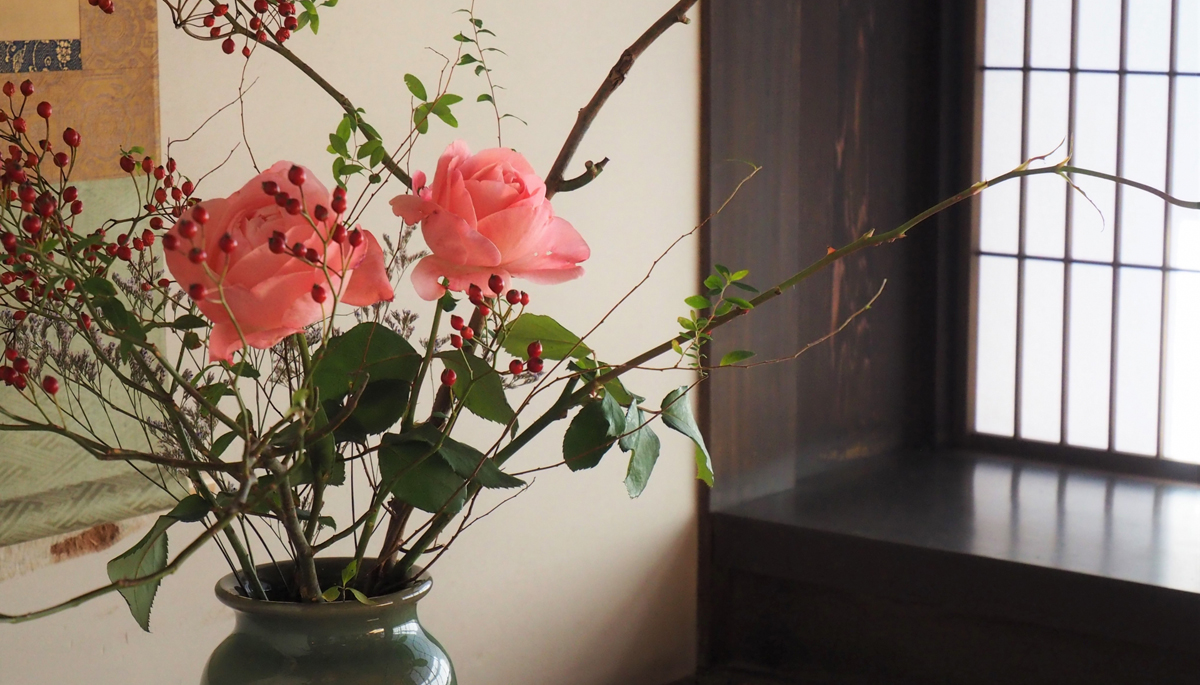
Seasonality is deeply important in ikebana. In spring, spring-like flowers and branches are chosen. In summer, arrangements may be composed in a way that suggests coolness. Autumn and winter also have their own characteristic lines, colors, and materials. The purpose is not simply to display flowers, but to reflect the atmosphere of a particular time of year within the work.
Because of this, even when the same vessel is used, the impression of the arrangement changes greatly from season to season. One of the pleasures of viewing ikebana lies in noticing how that season has been expressed.
A Way of Looking at Nature
In ikebana, the flowers are not treated simply as materials to be arranged however one likes. What matters is looking carefully at their original form and considering how their natural qualities can be brought out. A branch that rises straight upward has one kind of strength, while a softly curving stem has another character. Rather than imposing form unilaterally, ikebana involves arranging the materials in a way that responds to what they already contain.
This approach reflects a view of nature often found in Japanese culture. Instead of controlling nature or remaking it entirely according to human will, the aim is to discover the beauty already present and bring it out quietly through human hands.
The Beauty of Empty Space
In ikebana, empty space is also part of the work. Because some areas are left open, the presence of what is placed there becomes more striking. This is one reason why ikebana creates beauty not through quantity, but through composition as a whole.
When space is left open, the viewer’s attention is naturally drawn to each individual flower or branch. At the same time, a sense of stillness and breathing space enters the arrangement. This sensibility is also found in Japanese gardens and architecture: rather than filling everything, beauty is created by giving meaning to what remains open.
What Can Be Enjoyed in Ikebana?
Seeing the Overall Shape and Flow
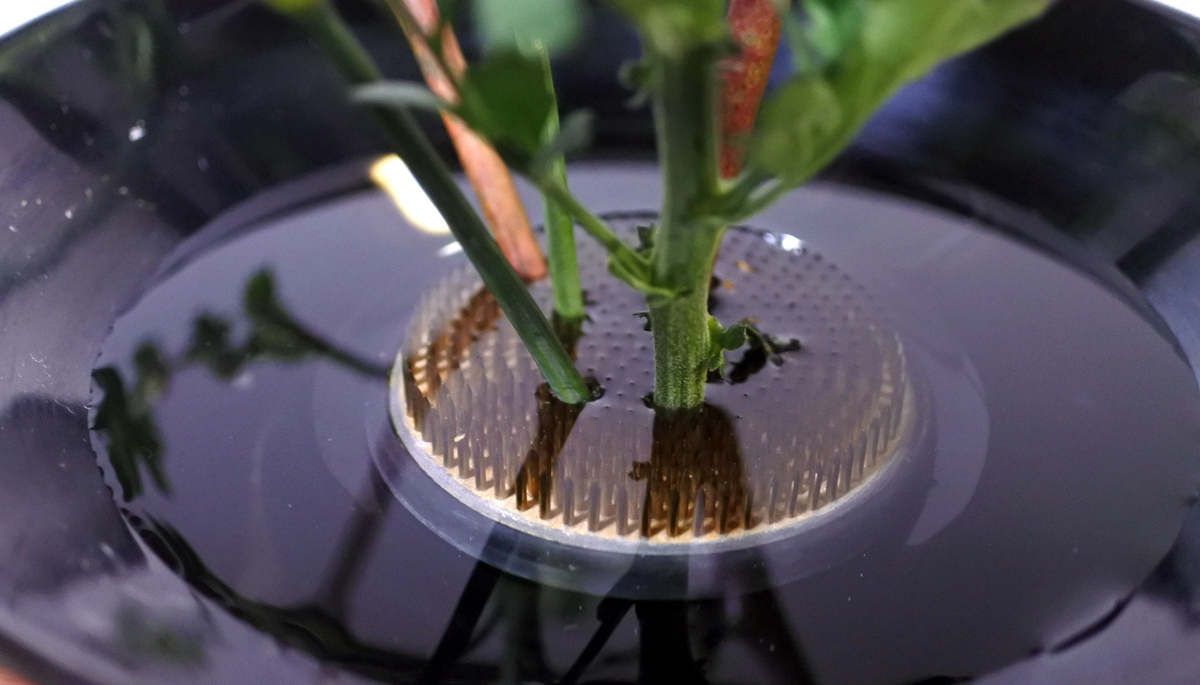
When viewing ikebana, it is helpful not to focus only on the kinds of flowers being used, but also on the overall shape and movement of the arrangement. As you look at where the height is, where the lines spread, and where the eye comes to rest, you begin to notice that the whole work often has a flowing structure, almost like a single line.
This can be even easier to sense in arrangements with fewer materials. Because each element stands out clearly, the intended direction and balance become more visible.
Noticing the Relationship with the Vessel
In ikebana, the vessel is also an important element. The impression of the work changes greatly depending on whether the vessel is tall or shallow, rustic or refined, subdued or bold. This may not be obvious at first, but even the same flowers can create a very different atmosphere when placed in a different container.
When viewing ikebana, paying attention to the harmony between the flowers and the vessel makes the experience richer. Ikebana is not a tradition in which flowers are appreciated in isolation. It is also a cultural form completed through their relationship with the vessel.
Appreciating It as Part of a Space
An ikebana work becomes easier to appreciate when it is seen not only on its own, but also in relation to the space in which it is placed. The same materials can feel different in a traditional Japanese room and in a modern exhibition setting. When the surroundings are quiet and uncluttered, the lines and spaces within the arrangement often become more visible.
For that reason, when enjoying ikebana, it is worth paying attention not only to the work itself, but also to where it is placed and what kind of atmosphere surrounds it. This makes it easier to see that ikebana is not merely decoration, but a form of expression that exists together with space.
The Value of Encountering Ikebana in Japan
It Offers a Clear Sense of Japanese Aesthetics
Ikebana is one of the cultural arts through which Japanese aesthetics and ways of seeing nature can be felt especially clearly. Valuing the seasons, finding beauty in empty space, and sensing depth within restraint are all ideas that also appear in gardens, tea ceremony, Japanese food, and architecture. Through ikebana, these broader cultural sensibilities become easier to notice.
For that reason, ikebana is not only for people who already have a strong interest in flowers. It can also serve as an excellent point of entry for anyone who wants to understand Japanese culture more deeply.
It Becomes Easier to Understand Through Exhibitions and Hands-On Experience
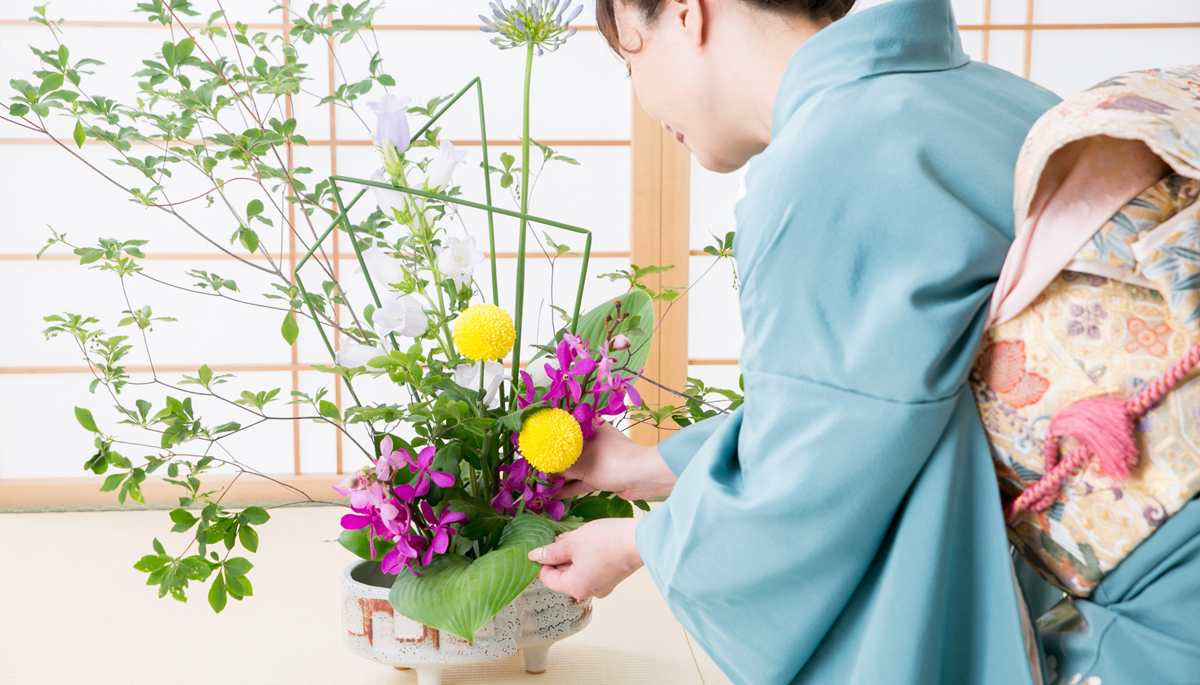
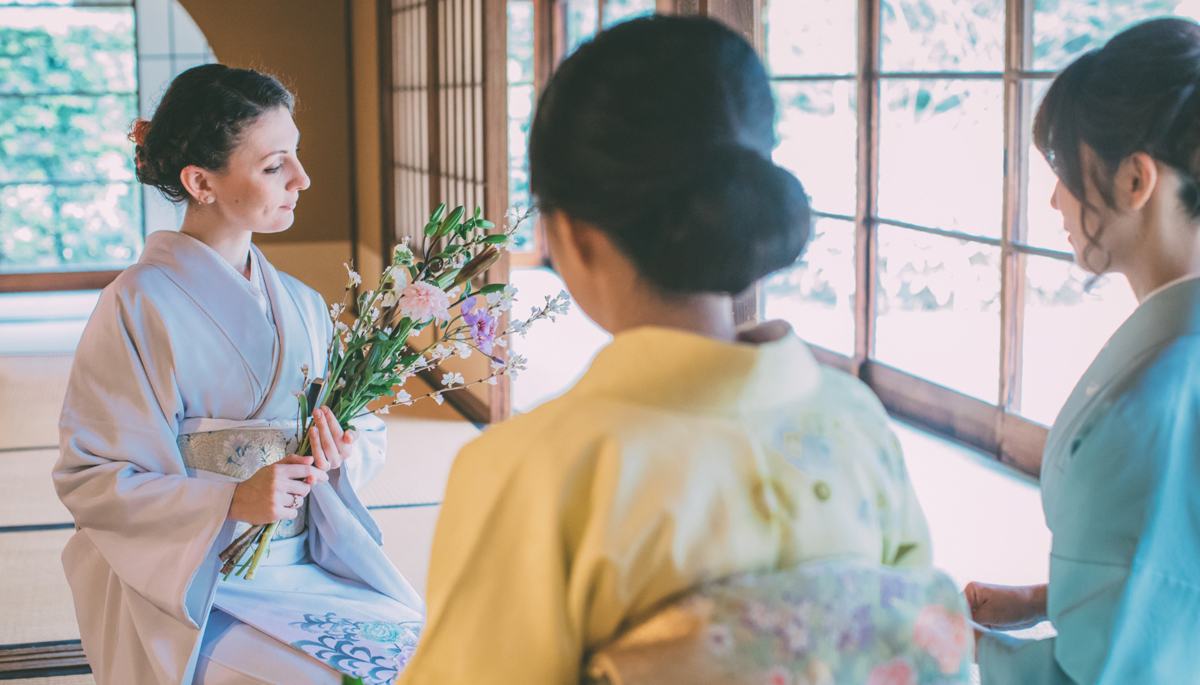
In Japan, there are opportunities to encounter ikebana in cultural institutions, exhibitions, and hands-on workshops. It can be enjoyable simply to view finished works, but actually trying to arrange materials yourself can make the values of ikebana easier to understand.
At such moments, you may find yourself thinking less about where to place something and more about what to leave open. This can reveal aspects of ikebana that are not immediately obvious from looking at finished arrangements alone. The fact that it can be enjoyed both through viewing and through practice is one of its attractions.
In Japan, the Relationship with Space Is Easier to Feel
The appeal of ikebana becomes clearer when it is seen not only as an isolated arrangement, but as something connected to the space around it. In Japanese rooms, cultural facilities, temples, or spaces close to the atmosphere of a tea room, the relationships among flowers, vessel, empty space, and background are often easier to grasp naturally.
Photos can certainly convey beauty, but when you see ikebana in an actual space, the scale, the spread of the lines, and its quiet presence become much more tangible. The value of encountering ikebana in Japan lies precisely in being able to experience it together with the atmosphere of the place.
Conclusion
Ikebana is a traditional Japanese floral art, but its essence does not lie in creating spectacular displays. Its appeal lies in quietly expressing the beauty of nature and the changing seasons through flowers, branches, leaves, vessels, and empty space. Although the appearance may seem restrained, it clearly reflects a distinctly Japanese sense of aesthetics and a way of engaging with nature.
For those who want to understand Japanese culture more deeply, ikebana can be an excellent point of entry. Once you begin to look not only at the kinds of flowers used, but also at the flow of lines, the relationship with the vessel, and the use of space, the work begins to appear differently. If you have a chance to encounter ikebana through an exhibition or workshop in Japan, it may become one of the most memorable cultural experiences of your trip.