The Japanese tea ceremony is one of Japan’s best-known traditional cultural practices. It is often introduced as an experience centered on drinking matcha, but its appeal goes far beyond the tea itself. In a quiet setting, participants spend time paying close attention to utensils, movements, seasonal beauty, and consideration for others. That is where the depth of the tea ceremony lies.
Some people planning a trip to Japan may be interested not only in shrines, temples, gardens, and Japanese food, but also in cultural experiences that feel distinctly Japanese. For such visitors, the tea ceremony can offer an accessible way to encounter Japanese aesthetics and ideas of hospitality. This article explains what the tea ceremony is, what makes it special, and what first-time visitors may want to know before taking part.
What Is the Tea Ceremony?
The tea ceremony is a traditional Japanese cultural practice in which matcha is prepared and served to guests. In Japanese, it is commonly called sadō or chanoyu. In English, it is often referred to as the tea ceremony, but that expression does not fully capture what it is. The tea ceremony is not simply a ritual. It is a cultural practice centered on welcoming others and sharing time and space through tea.
In the tea ceremony, importance is placed not only on the bowl of tea itself but also on everything surrounding it. The choice of utensils, the flowers arranged in the room, and the hanging scroll selected for the season are all part of the hospitality offered to the guest. Visitors do not simply drink matcha. They also take in the atmosphere of the space and the thoughtfulness expressed through each detail.
This is what makes the tea ceremony different from drinking tea in everyday life. It is not only about enjoying tea as a beverage. It is also about the host and the guest sharing a limited moment with care and attention. For that reason, the movements are calm, unnecessary actions are avoided, and the atmosphere carries a quiet sense of focus. To first-time visitors, it may look formal. However, it becomes easier to understand when seen not as a set of rigid rules, but as a culture in which consideration for others is expressed through form.
What the Tea Ceremony Values
To understand the tea ceremony, it is important to look at what it values. One well-known phrase associated with tea is wa-kei-sei-jaku. It refers to harmony, respect, purity, and tranquility.
Wa, or harmony, refers not only to harmony among the people present, but also to harmony with utensils, space, and the season. For example, the utensils and room arrangement may differ between summer and winter. By preparing the setting according to the season, the host allows the guest to appreciate the beauty of that particular time of year.
Kei, or respect, means showing regard for others. The host treats the guest with care, and the guest is also expected to show respect to the host and to the utensils being used. Even a simple act such as holding a tea bowl reflects that attitude.
Sei, or purity, does not simply mean cleanliness in a practical sense. It also relates to the idea of keeping both the utensils and the space pure so that the mind, too, may become clear. Visible cleanliness and inner attitude are linked in a way that is characteristic of the tea ceremony.
Jaku, or tranquility, refers to a calm state of mind removed from noise and distraction. In a tea room, time often feels different from ordinary life. Voices naturally become softer, movements slow down, and attention turns more easily to what is in front of you. Part of the appeal of the tea ceremony lies in this stillness, which allows people to notice details they might otherwise overlook.
Another phrase often mentioned in relation to tea is ichigo ichie. It means that each meeting and each moment is unique and will never come again in exactly the same form. Even when tea is served in a similar setting, the season, the weather, the people present, and the combination of utensils will always be different. That is why each occasion is treated as something precious. This idea may also feel familiar to travelers, because it overlaps with the sense of treasuring a journey that happens only once.
What You Can Experience in a Tea Ceremony
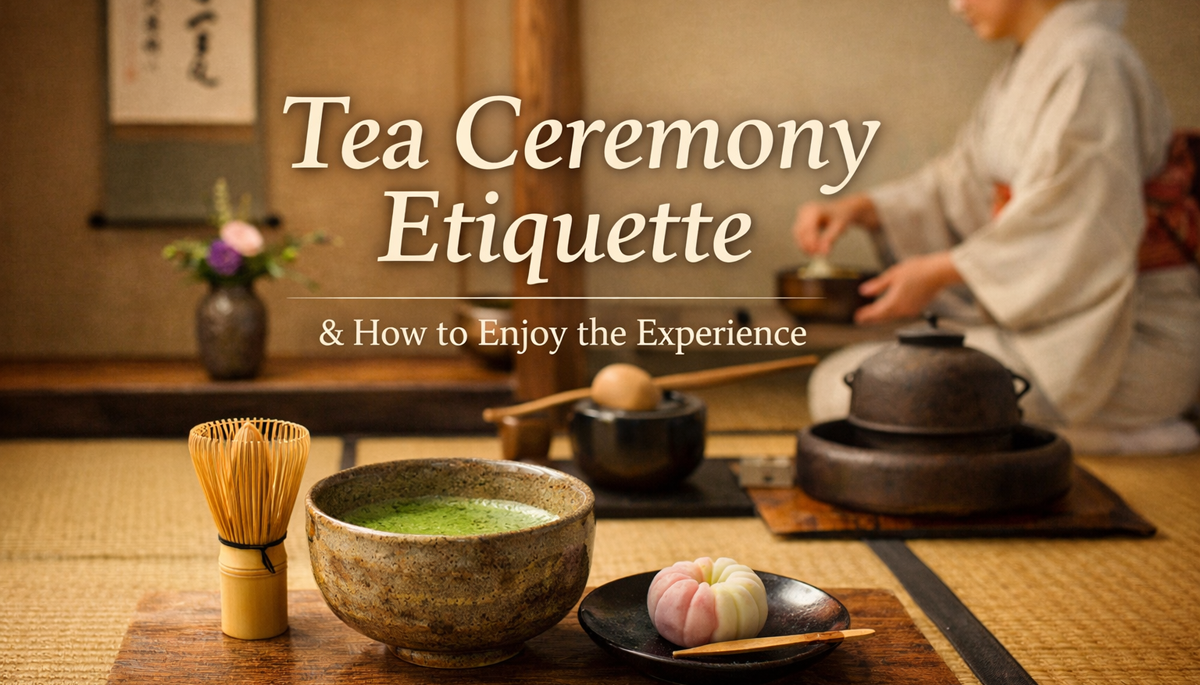
People who are not familiar with the tea ceremony may wonder what actually happens during the experience. In tea ceremony programs designed for visitors, the experience often begins with entering the venue and taking in the atmosphere. You may be guided into a tatami room or a space overlooking a garden, then seated in a quiet environment. At that point, a different kind of time has already begun.
In many cases, Japanese sweets are served first. Their role is not only visual beauty. They also help bring out the flavor of the matcha. Eating something sweet before drinking the tea makes it easier to appreciate the gentle bitterness and aroma of matcha. This, too, reflects a typically Japanese sensitivity to balance in taste.
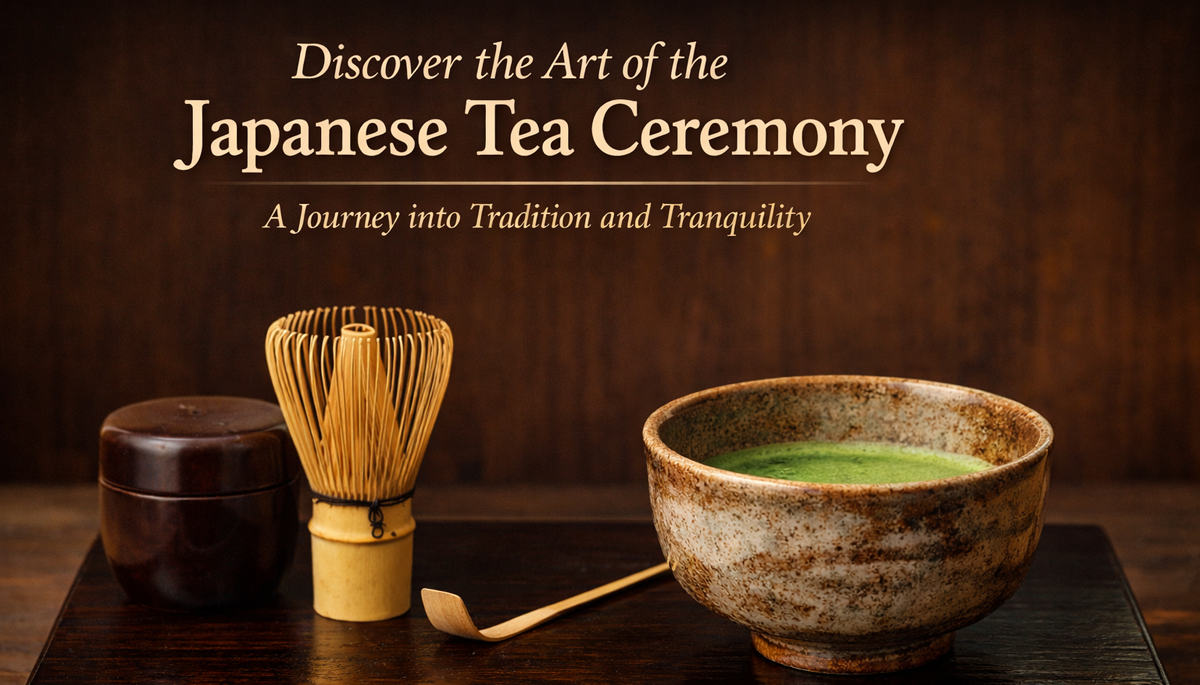
After that, the matcha is prepared. For many first-time visitors, watching the tea being whisked in the bowl with a bamboo whisk is a memorable moment. However, the interest of the experience lies not only in that movement. The placement of the utensils, the order in which they are handled, and the moments when a bow is made all have meaning. As guests observe these details, they begin to sense the care that has gone into the setting as a whole.
Drinking the matcha is also not something done only for the sake of finishing the tea. Looking at the shape and color of the bowl and feeling its texture in the hands are also part of the experience. The utensils are practical objects, but beauty is also highly valued. As a result, guests enjoy not only the drink itself, but also the vessel in which it is served.
Tea ceremony experiences for travelers are often arranged in a way that is easier to join than a full formal tea gathering, which makes them more approachable for beginners. Some venues provide explanations in English, and many are designed so that visitors can participate even without prior knowledge of etiquette. There are also programs that include wearing a kimono, which may be an appealing option for those who want to experience several aspects of Japanese culture at once.
What First-Time Visitors Should Know
Even people who are interested in the tea ceremony may feel uneasy and wonder whether joining without knowing the etiquette would be disrespectful. In programs designed for travelers, however, it is not necessary to know every detail beforehand. What matters most is taking part with respect for the setting.
One important thing to keep in mind is to behave quietly. In the tea ceremony, the calm atmosphere is part of the experience itself. Speaking too loudly or moving in a rushed way can disturb the mood of the space. When listening to explanations, it helps to keep your attention on what is happening in front of you. That alone often deepens the impression the experience leaves.
It is also important to follow the guidance you are given. Seating positions, the order in which utensils are viewed, and the way sweets and tea are received may differ slightly from place to place. When unsure, it is better to follow the instructions of the host or guide rather than act on your own assumptions. Being a beginner is not a problem, but ignoring the explanation can make the experience feel out of step with the setting.
Photography is something that should be checked in advance. Some programs allow it, but not every moment is open to free photography. Since the tea ceremony places value on quiet attention, it is best to respect the atmosphere if photography is restricted.
Special clothing is not usually required, but calm and simple clothing suits the setting better. Since shoes are often removed in tatami rooms, it can also help to give a little thought to what you wear on your feet. Some venues offer accommodations for visitors who find sitting in seiza difficult, so if you are concerned about that, it is a good idea to check when making a reservation.
The tea ceremony is not a place where people compete in perfect correctness. Even with limited knowledge, it is possible to appreciate its charm if you participate with respect for the people and the space around you. In fact, rather than worrying too much about exact procedure, it may be easier to feel the value of this tradition by paying attention to the quiet flow of time and to the experience of facing a single bowl of tea.
Why It Is Worth Experiencing in Japan
It is possible to learn something about the tea ceremony through books and videos, but the impression becomes quite different when it is experienced in Japan. One reason is that the tea ceremony is a cultural practice shaped by the entire space. The size of the room, the feel of the tatami, the seasonal flowers, the view outside the window, the texture of the bowl, and the aroma of the matcha are all elements that are difficult to fully understand through a screen. Many aspects only become clear when you are physically present.
Another reason is that Japanese ideas of hospitality appear naturally throughout the experience. In the tea ceremony, the setting is prepared for the sake of the guest in ways that reach even the smallest details. It is not a culture that tries to impress through obvious display. Instead, care is often found in quiet and unobtrusive places. Because of that, some visitors may come away feeling that the experience was not flashy, yet remained deeply memorable.
Travel in Japan can easily become busy, with shrines, temples, shopping, food, and transportation filling the schedule. In the middle of that kind of journey, a tea ceremony offers a chance to pause. Spending time in a quiet space with a single bowl of matcha has a different value from moving quickly from one sightseeing spot to another. Among travel memories, it often remains not as an intense stimulation, but as a calm and lasting impression.
Many people associate the tea ceremony most strongly with Kyoto, but it can also be experienced in Tokyo and in many other parts of Japan. Opportunities may be found in tea rooms within gardens, cultural facilities, accommodations, and visitor-oriented experience venues. Since the atmosphere differs slightly from place to place, travelers can choose an experience that fits their itinerary. That flexibility is another attraction for overseas visitors.
Conclusion
The tea ceremony is not simply a way of drinking matcha. It is a distinctly Japanese cultural practice in which people spend time in a quiet setting while giving care to utensils, movements, seasonal beauty, and respect for others. Formal movements often attract attention, but behind them lies a way of thinking centered on preparing a space with consideration for another person.
For those interested in Japanese culture, the tea ceremony can be an excellent point of entry. By sitting in the space yourself, receiving a bowl of matcha, and spending time in stillness, Japanese aesthetics and ideas of hospitality begin to feel more immediate. For travelers who want to include a calm cultural experience in their trip, the tea ceremony can become a particularly memorable choice.