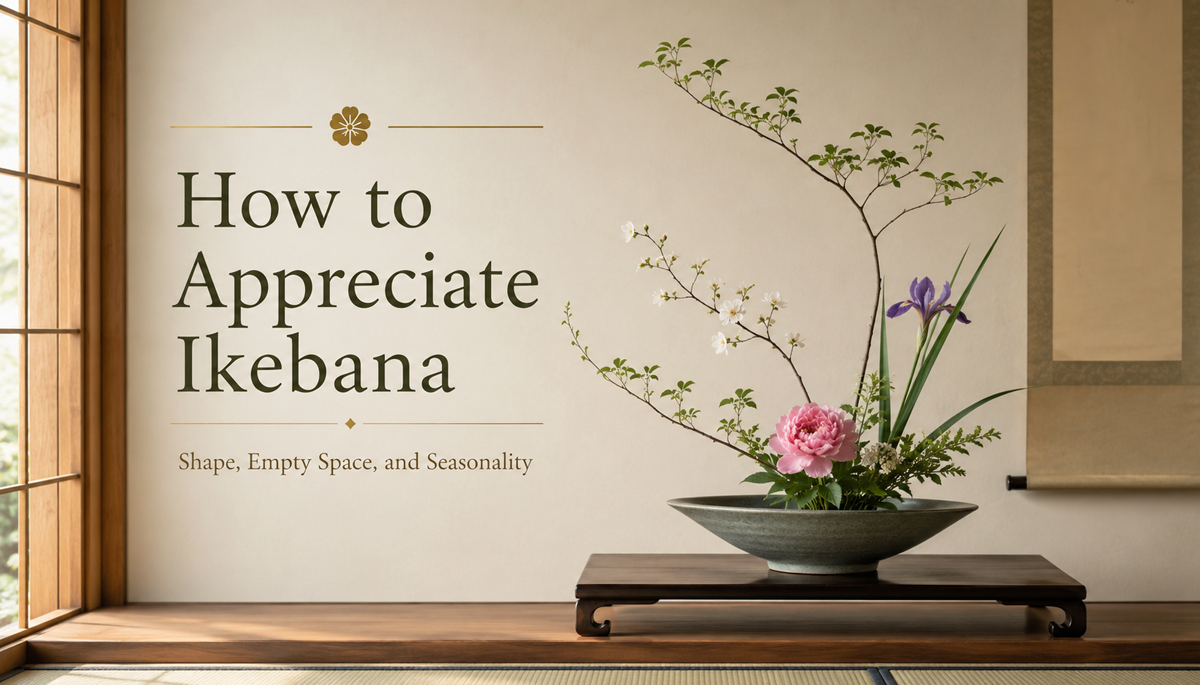
Ikebana is not simply about decorating with beautiful flowers. A work of ikebana is created through flowers, branches, leaves, the vessel, and even the open space around them. For this reason, when you encounter ikebana for the first time, its appeal becomes clearer if you pay attention to the overall shape and use of space, rather than focusing only on the names or colors of the flowers.
Ikebana is known in English as ikebana, but it is enjoyed in a different way from ordinary flower arrangement. Some works use many flowers and appear colorful, but in ikebana, the beauty of lines, the quietness of empty space, and the feeling of the season are especially important. This article explains the main points to notice when viewing ikebana, especially for first-time visitors.
Look at the Overall Shape First
Look at the Composition, Not Only the Flowers
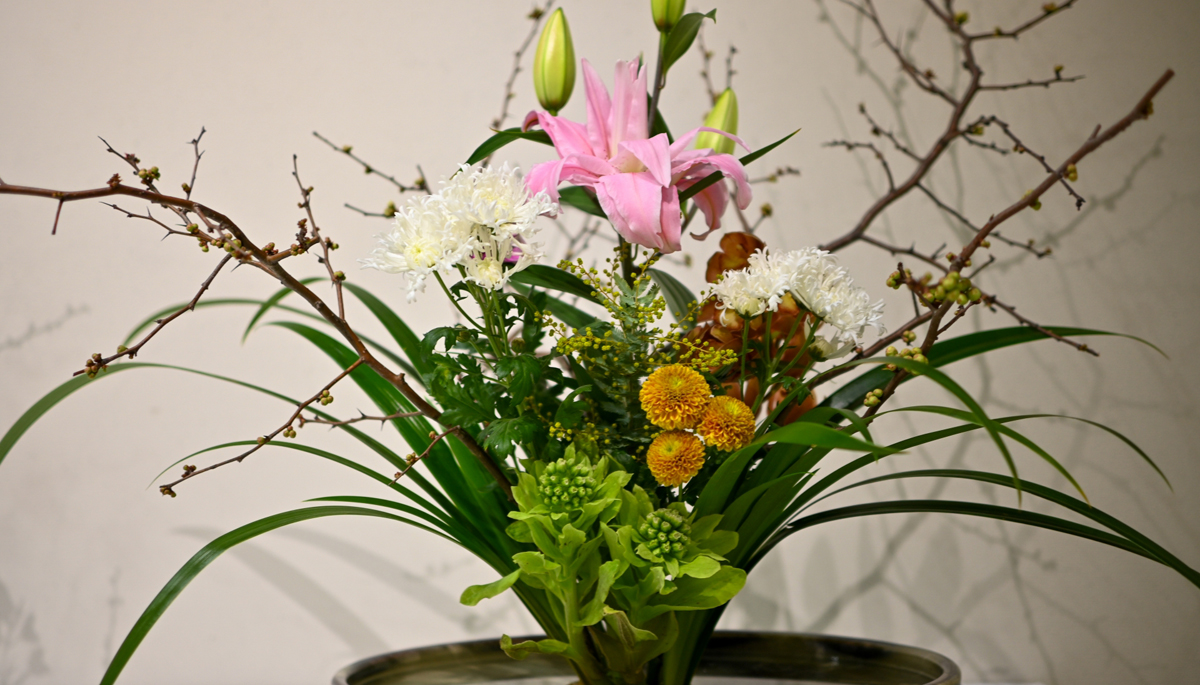
When you see an ikebana work, your eyes may first go to the types and colors of the flowers. Of course, noticing the flowers themselves is one way to enjoy the work. However, in ikebana, the overall composition is just as important as the materials.
Try noticing where the tall branches extend, where the lower flowers are placed, and in which direction the lines move. Then you can begin to see the movement of the whole work. Even if only a few flowers are used, the direction of the branches and the angle of the stems can create a sense of space. In ikebana, it is helpful to focus not on how many flowers are used, but on how each material is brought to life.
Notice Height and Width
Ikebana works often have both height and width. A branch that grows straight upward can give a sense of strength. A branch that extends sideways can create depth and openness. Flowers or leaves placed lower in the arrangement may help give the whole work a calm and stable feeling.
When you stand in front of an ikebana work, try moving your eyes slowly from top to bottom, or from left to right. You may notice that the flowers and branches are not placed separately without connection. Instead, they create one continuous flow as a whole.
Enjoy Beauty That Is Not Perfectly Symmetrical
Ikebana works are not always made to be perfectly symmetrical. In fact, a branch extending to one side or a flower placed slightly off-center can create a natural sense of movement. Because the two sides are not exactly the same, the work may have a feeling of depth, tension, or lingering beauty.
For some English-speaking readers, the word “balance” may bring to mind symmetry or an evenly arranged shape. In ikebana, however, beauty does not always depend on symmetry. It is easier to understand the beauty of ikebana when you observe how the natural character of each branch or flower is used while the whole work remains in harmony.
Enjoy the Beauty of Lines
The Direction of Branches Shapes the Impression
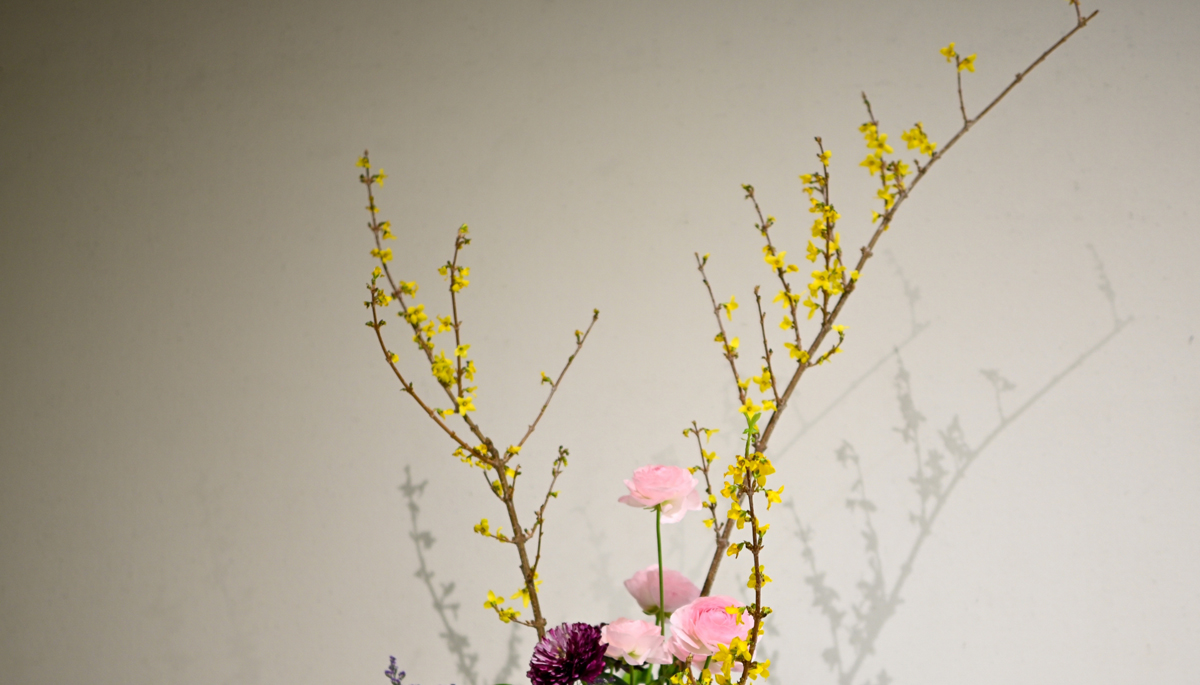
In ikebana, the lines made by branches are very important. The direction in which a branch extends can greatly change the impression of the whole work. A branch rising upward may express life and energy. A branch flowing diagonally may create movement. A curved branch may suggest the passage of time, as if it has grown naturally over many years.
When viewing ikebana, try following the lines of the branches with your eyes, not only the colors of the flowers. By tracing these lines, you can gradually see where the work is spreading and where its center of balance lies.
Pay Attention to Stems and Leaves
Stems and leaves are also important parts of ikebana. Even when the flower seems to be the main feature, the angle of a stem or the direction of a leaf may support the atmosphere of the whole work. A single leaf can add depth or make a flower stand out more clearly.
In works with only a small number of flowers, the role of stems and leaves becomes easier to see. If you think about which leaves have been kept and which have been removed, you can begin to imagine what the artist wanted to emphasize.
Feel the Movement of Nature
The lines in ikebana are not only neat, artificial straight lines. They often make use of the natural curves, angles, and growth patterns of branches. Because of this, an ikebana work may suggest movement, such as a branch swaying in the wind or a plant growing toward the light.
Ikebana does not copy nature exactly as it is. Instead, it expresses the feeling of nature. By paying attention to the lines of branches and stems, you can more easily sense the natural movement that remains within the materials.
Look at the Empty Space
Empty Space Is Also Part of the Work
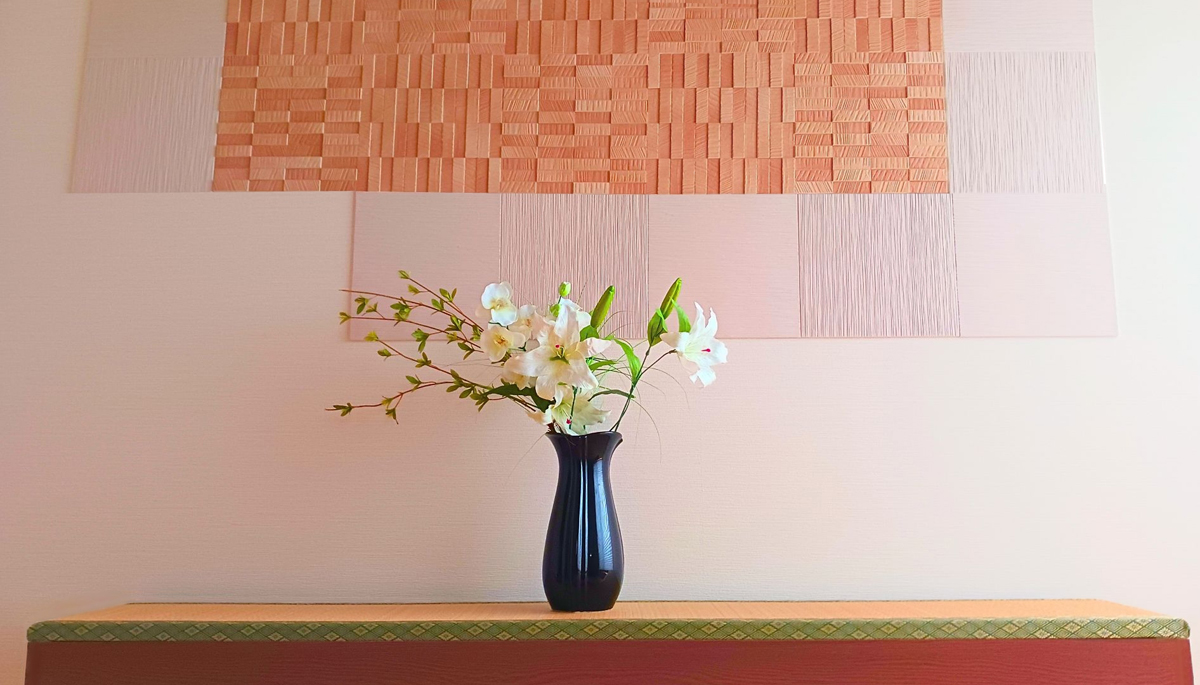
One of the most important points in viewing ikebana is noticing the empty space. Empty space refers to the areas where no flowers or branches are placed. At first, these spaces may seem plain or unfinished. However, in ikebana, the space left open is also considered part of the work.
Because there is empty space, the shapes of the flowers and branches become clearer. When the space is not filled with too many materials, a single flower or branch can have a stronger presence. The beauty of ikebana is created not only by what is placed, but also by its relationship with what is left open.
Empty Space Creates Stillness
Many ikebana works give a quiet impression. This quietness does not come only from soft colors. Empty space creates a kind of pause or breathing room within the whole work.
When many materials are packed tightly together, the viewer’s attention is spread across many things. In contrast, when there is empty space, the eyes naturally turn to each flower, branch, or leaf. In that pause, a sense of stillness and calm appears. When enjoying ikebana, it helps to think of the open areas as meaningful parts of the work.
Empty Space and Japanese Aesthetics
The idea of valuing empty space can also be seen in Japanese gardens, tea ceremony, calligraphy, and architecture. Instead of filling everything, leaving open space gives the viewer room to imagine.
In ikebana, empty space is not simply a blank area. It is an important element that makes the flowers and branches stand out and gives depth to the work. When viewing ikebana, try asking yourself why a certain area has been left open. This can help you understand the unique aesthetic sense of ikebana.
Read the Sense of Season
Seasonality in the Materials
Seasonality is very important in ikebana. In spring, cherry blossoms or fresh young branches may be used. In summer, leaves or materials that suggest coolness may appear. In autumn, colored leaves or berries may be used. In winter, bare branches or evergreen plants may create a seasonal atmosphere. By observing the materials, you can feel the season expressed in the work.
When viewing an ikebana work, it is helpful to ask, “What season does this work express?” The season can appear not only in the type of flower, but also in the colors, the condition of the branches, and the use of leaves.
Feeling the Season Through Color
Seasonality can also be expressed through color. Spring works may use soft colors. Summer works may use fresh greens or whites that suggest coolness. Autumn works may include deep reds or yellows, while winter works may have calmer and more subdued colors.
However, in ikebana, the season is not always shown in an obvious way. Sometimes the season is suggested gently through a quiet combination of colors. This subtlety is one of the pleasures of viewing ikebana.
Expressing the Passing of the Seasons
In ikebana, beauty is not limited to flowers in full bloom. Buds, flowers just beginning to open, slightly leaning branches, and even withered leaves may have meaning within a work. Nature is always changing, and expressing that change is also an important part of ikebana.
For this reason, a modest-looking material or an imperfect shape in an ikebana work is not necessarily a flaw. It may express the passing of the season or the natural state of plants. Ikebana values not only complete and showy beauty, but also the beauty found in the middle of change.
Look at the Relationship with the Vessel
The Vessel Supports the Work
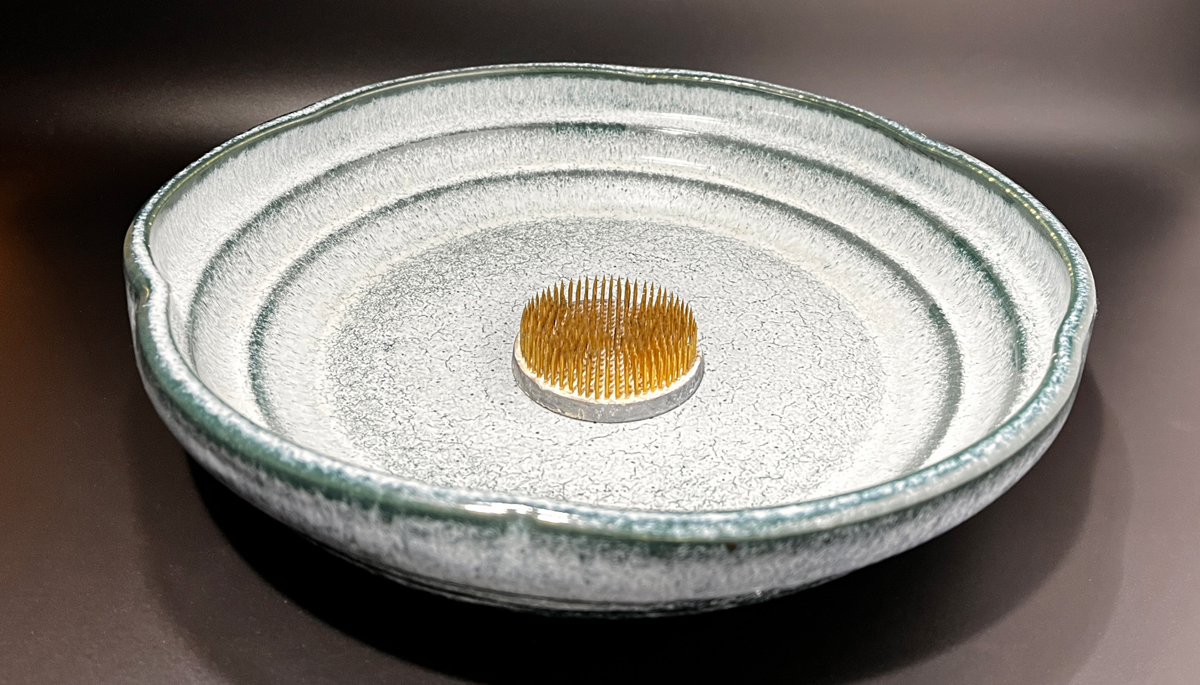
In ikebana, the vessel is also part of the work. No matter how beautiful the flowers are, the whole impression will not feel complete if the vessel does not match them. The shape, height, color, and texture of the vessel strongly affect how the materials appear.
A shallow vessel can make the spread of the materials easier to see. A tall vessel can emphasize the vertical movement of branches. A simple, rustic vessel can bring out a natural feeling, while a calm-colored vessel can make the colors of the flowers stand out. When viewing ikebana, it is worth paying attention to how the flowers and the vessel support each other.
The Texture of the Vessel Creates Atmosphere
The material and texture of the vessel also affect the impression of the work. A ceramic vessel may give warmth. A metal or glass vessel may create a different kind of tension. A rough-textured vessel can feel close to nature, while a smooth vessel can create a more refined atmosphere.
In ikebana, the vessel is not just a container. The overall atmosphere is created when the materials and the vessel respond to each other. When viewing a work, looking at the role of the vessel can deepen your understanding of the arrangement.
Look at the Relationship with the Space
The Place Changes the Impression
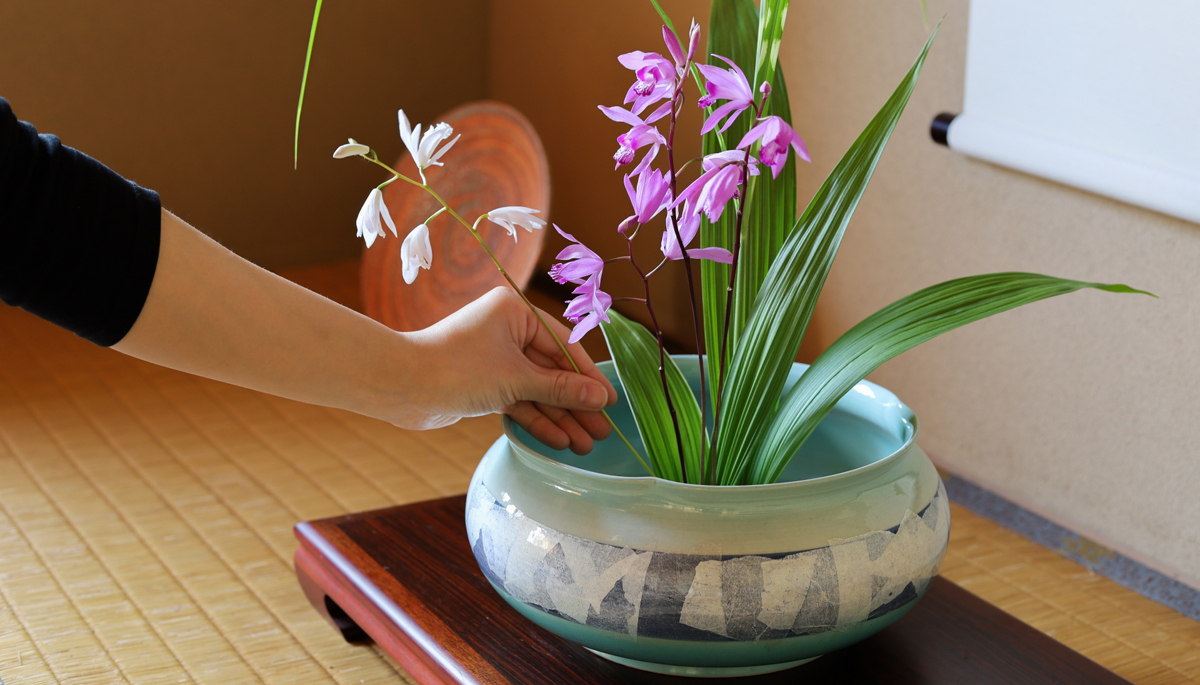
The impression of an ikebana work changes depending on where it is placed. The same materials can look different in a traditional Japanese room and in a modern gallery. The background, the light, the color of the floor and walls, and the quietness of the surrounding space all affect how the work appears.
For this reason, when viewing ikebana, it is important not to see the work in isolation from its surroundings. Notice where it is placed, how much space is around it, and how it fits with the background. This helps you see how the work lives within the space.
Harmony with Tokonoma and Japanese Rooms
In traditional Japanese spaces, flowers are often displayed in a tokonoma, an alcove used for hanging scrolls, flowers, and other carefully chosen items. An ikebana work placed in a tokonoma helps create the atmosphere of the entire room.
When ikebana is displayed in a tokonoma or a Japanese-style room, it is not complete only by itself. It creates one space together with the hanging scroll, walls, tatami, and light. One of the appeals of seeing ikebana in Japan is that this relationship with space is easier to feel.
Notice the Space Around the Work
An ikebana work needs space around it. If many objects are placed too close to the work, the lines of the branches and the empty space become harder to see. On the other hand, when there is enough space around the work, its shape and stillness stand out more clearly.
When viewing ikebana at an exhibition or cultural facility, it is worth noticing not only the work itself, but also the distance between works and the way light falls on them. By including the surrounding space in your view, you can better understand that ikebana is an art form that exists together with space.
How to Enjoy Ikebana for the First Time
Do Not Search Too Hard for the “Correct” Answer
When viewing ikebana for the first time, you may wonder where you are supposed to look or what the “correct” interpretation is. However, you do not need specialized knowledge from the beginning. It is enough to notice where your eyes are drawn, which part feels quiet, and where you sense movement.
Of course, learning about schools and forms can deepen your understanding. But at first, simply paying attention to the lines, empty space, and seasonality can make the experience enjoyable. Rather than trying to find the correct answer, it is better to look carefully at the impression the work gives you.
Step Back and Look from a Distance
Ikebana can look different when viewed from close up and from a little farther away. From close up, you can see the shapes of the flowers and leaves. From farther away, you can see the overall composition and the use of space.
At an exhibition, try looking closely first, then taking a step back. You may see the flow of the whole work, the empty space, and the relationship between the materials more clearly. Even a small work can reveal its use of space more clearly when viewed from a little distance.
Use the Title and Explanation as Clues
At exhibitions, a title or explanation may be displayed with the work. It may include the materials used, the season, or the artist’s intention. Looking at the work first is valuable, but reading the explanation afterward can help you notice meanings you may have missed.
If an English explanation is available, it can be especially helpful for visitors from overseas. Even when there is no explanation, you can still enjoy imagining the intention behind the work by observing the materials, the vessel, and the use of space.
Conclusion
When viewing ikebana, its appeal becomes clearer when you pay attention not only to the names and colors of the flowers, but also to the overall shape, the lines of the branches, the empty space, the sense of season, the relationship with the vessel, and the space where the work is placed. Ikebana is not an art form that uses many flowers simply to create a luxurious display. It is a practice that quietly expresses the beauty of nature through limited materials and space.
Even without expert knowledge, there are many ways for first-time viewers to enjoy ikebana. Start by slowly noticing which lines leave an impression, where the empty space appears, and what season the work suggests. Once you understand a few basic ways of looking, the beauty of empty space and the Japanese way of looking at nature may begin to feel more familiar.