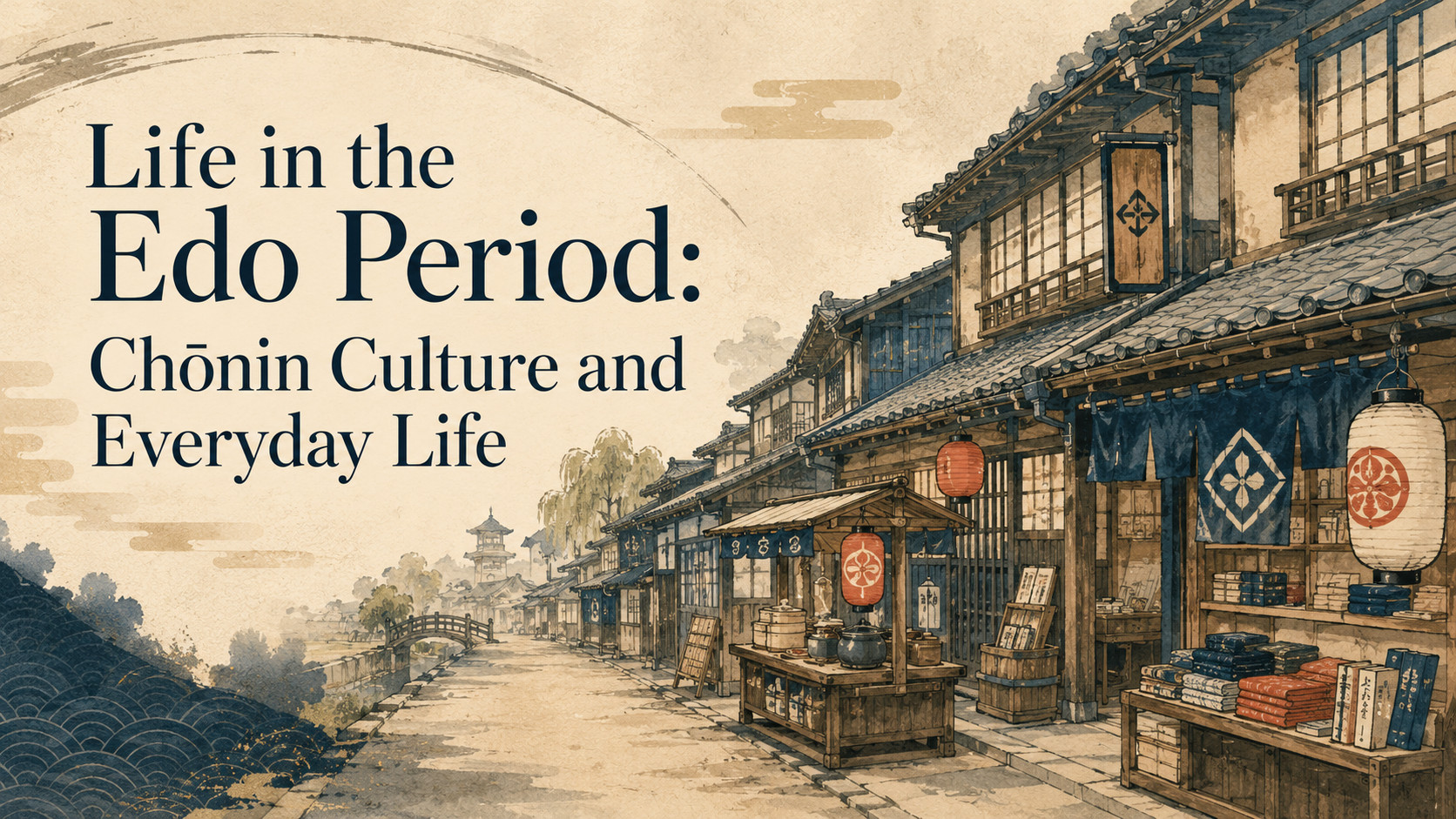
For many readers outside Japan, the Edo period may first bring to mind words such as samurai and shogun. It is true that Edo-period Japan was governed by a warrior government centered on the shogun. However, the culture that connects to modern Japan was not shaped by samurai alone.
Merchants and craftsmen living in cities such as Edo, Osaka, and Kyoto also played a major role in developing food culture, publishing, performing arts, festivals, and everyday aesthetics. Elements such as ukiyo-e prints, kabuki, popular books, temple schools, public baths, food stalls, and festivals spread through urban life during this period and remain connected to Japanese culture today.
This article looks at chōnin culture and everyday life in the Edo period, exploring how people worked, lived, learned, and enjoyed themselves.
- What Kind of Period Was the Edo Period?
- Who Were the Chōnin?
- The City of Edo and Life in Row Houses
- Food and Food-Stall Culture
- Clothing and Personal Appearance
- Work and the World of Commerce
- Learning and Temple Schools
- Ukiyo-e and Publishing Culture
- Kabuki, Yose, and the Spread of Entertainment
- Seasonal Events and Faith
- What Chōnin Culture Left to Modern Japan
- Conclusion
What Kind of Period Was the Edo Period?
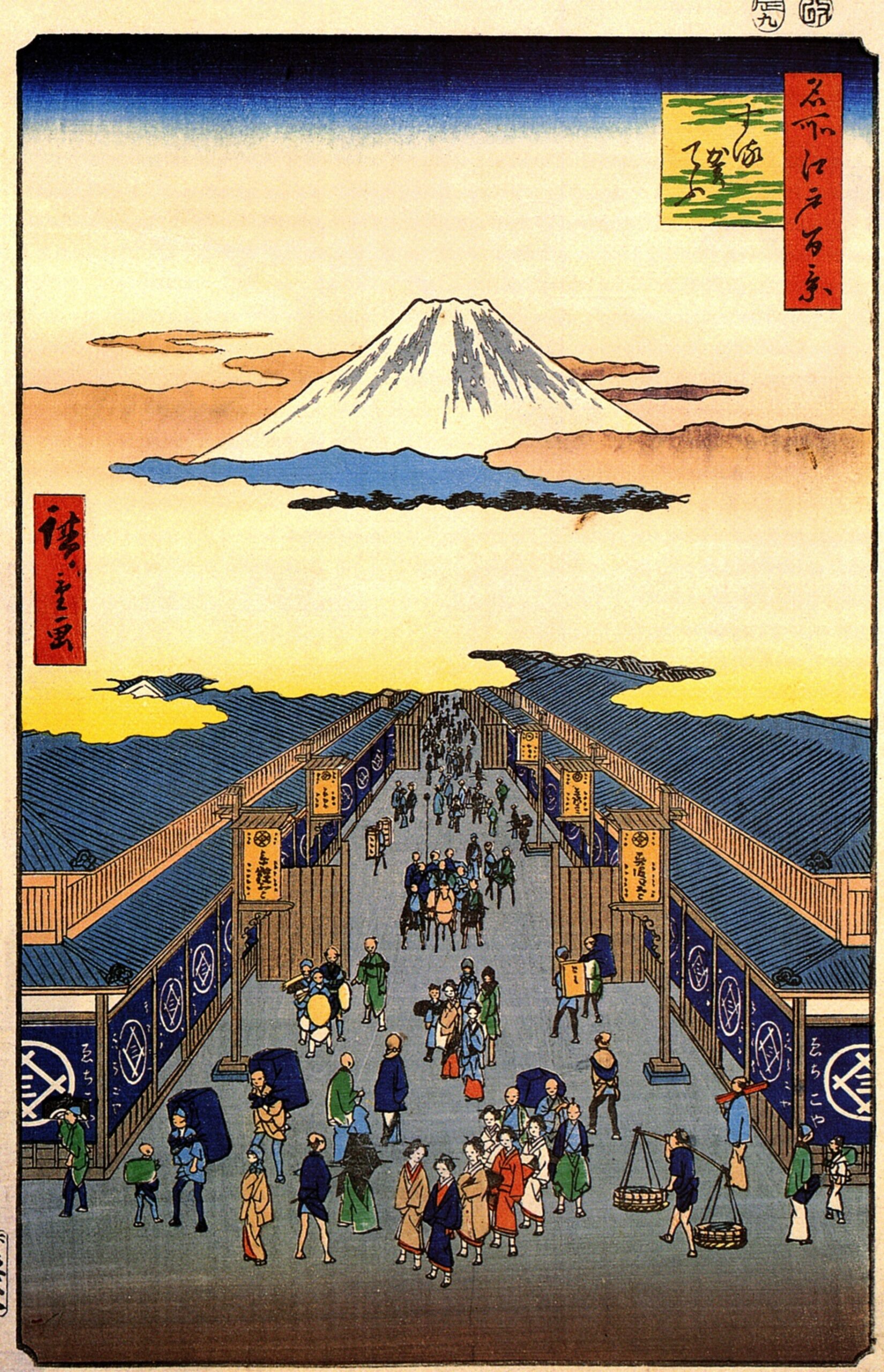
Utagawa Hiroshige, “Suruga Street,” from One Hundred Famous Views of Edo. (Image: Wikimedia Commons / Public Domain)
The Edo period lasted from 1603, when Tokugawa Ieyasu established the Edo shogunate, until 1868, when the shogunate came to an end with the Meiji Restoration. For about 260 years, Japan experienced no major nationwide civil wars, and society remained relatively stable.
This long period of peace had a major influence not only on the role of the samurai, but also on the lives of townspeople. During times of warfare, protecting castles and territories had been one of society’s major concerns. In the Edo period, however, urban development, commercial expansion, transportation networks, publishing culture, and entertainment became increasingly prominent.
Edo-period society was based on a status order that included samurai, farmers, and townspeople. Samurai handled politics and administration, farmers supported society through agricultural production and taxes, and townspeople carried out commerce and handicrafts.
In practice, however, society cannot be explained by status divisions alone. In cities, townspeople gained economic power and came to play an important role as creators and consumers of culture.
Who Were the Chōnin?
In the Edo period, the term chōnin mainly referred to merchants and craftsmen living in cities. Merchants dealt in rice, fish, vegetables, clothing, tools, paper, oil, sake, and other goods. Craftsmen supported daily life through work such as carpentry, metalworking, dyeing, joinery, barrel-making, tatami-making, tile-making, and hairdressing.
Townspeople were not a ruling class like the samurai, but they were responsible for much of the practical work that made urban life function. In a large city such as Edo, samurai residences, townspeople’s districts, and temple and shrine lands spread across the city, and many people were connected through daily consumption and work.
Some merchants, such as money changers and kimono dealers, acquired great wealth. At the same time, many small merchants and craftsmen lived by their daily work. The lives of townspeople varied widely, from wealthy merchants to people living in modest row houses.
Chōnin culture emerged from the work, consumption, entertainment, faith, and learning of these people. Unlike samurai culture, it strongly reflected urban life, trends, humor, practicality, and a sense of the seasons.
The City of Edo and Life in Row Houses
Edo was one of the representative cities of the Edo period. Samurai, townspeople, craftsmen, monks, merchants, servants, and many others lived there, and the city developed into a large and densely populated urban center.
One essential element of townspeople’s lives was the nagaya, or row house. A row house was a long building divided into small units where multiple families or single people lived. Rooms were not spacious, and kitchens, wells, and toilets were sometimes shared.
From a modern perspective, such living conditions may seem inconvenient. Yet row-house life also created close relationships among neighbors. People greeted one another, watched over children, and sometimes supported each other in matters such as fires, illness, and work-related problems.
Fire was a serious concern in Edo. Wooden houses stood close together, and daily life depended on the use of fire. For this reason, firefighting and fire prevention were important parts of urban life. Row-house living was built on the careful use of limited space, shared community life, and the constant tensions of a crowded city.
Food and Food-Stall Culture
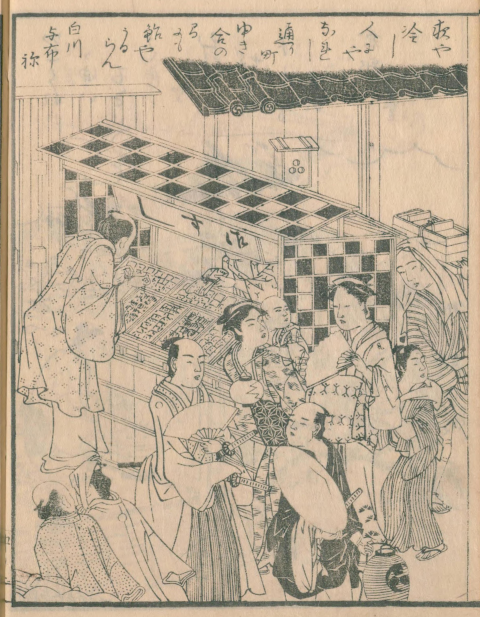
A sushi stall in Nihonbashi, Edo. Sushi developed as a quick urban food suited to the busy lives of townspeople. (Image: Wikimedia Commons / Public Domain)
Food culture in the Edo period was closely connected with the development of urban life. Rice formed the center of the diet, while miso soup, pickles, fish, vegetables, and tofu were also commonly eaten. Meals differed depending on region, status, and income, but in cities, eating out and buying prepared food became increasingly common.
In Edo, foods such as soba, sushi, tempura, and eel became popular. Today, sushi and tempura are sometimes seen as refined or high-end Japanese cuisine, but in Edo, they also spread as quick and convenient foods eaten outside the home.
For example, Edo-style nigiri sushi developed as food that could be eaten at stalls. At the time, pieces of nigiri sushi were said to be much larger than today’s sushi, perhaps two or three times the modern size. They suited the lives of busy townspeople who wanted to eat quickly during work or while out in the city.
Tempura was also enjoyed casually at shops and stalls. Tempura served on skewers could be eaten on the spot, giving it a feeling closer to street snacks than to the elegant tempura cuisine of today. Soba was also well suited to busy townspeople who wanted to finish a meal in a short time.
Seen this way, several foods that now represent Japanese cuisine developed within the urban lifestyle of Edo’s townspeople, where food needed to be quick, tasty, and convenient. Edo food culture was not only about formal cuisine. It was also an everyday eating-out culture rooted in the lives of working people.
Clothing and Personal Appearance
The clothing of Edo-period townspeople varied according to status, occupation, season, and fashion. The basic garment was the kimono, but differences in fabric, patterns, colors, and obi styles expressed people’s lifestyles and tastes.
The shogunate repeatedly issued laws discouraging luxury. From the viewpoint of social order, townspeople dressing too extravagantly could be regarded with suspicion. As a result, townspeople kept their appearance modest on the surface while showing ingenuity through color, pattern, fabric, and accessories.
One aesthetic that developed in this context was iki. Iki refers to a sense of refinement that does not show off, but instead conveys sophistication through restraint. During the Edo period, sumptuary laws sometimes limited bright colors and luxurious clothing. Under such restrictions, townspeople found subtle differences in calm colors such as brown, gray, and indigo, and enjoyed fashion through these nuances.
A representative phrase is shijūhacha-cha hyaku-nezumi, meaning “forty-eight browns and one hundred grays.” Rather than referring strictly to exactly forty-eight or one hundred colors, the phrase expresses the Edo taste for subtle variations in color. The ability to find refinement in colors that may appear plain at first glance reveals the aesthetic sensibility of chōnin culture.
Another interesting idea in Edo clothing was ura-masari, or “inner superiority.” This refers to paying attention to linings or inner details that are not immediately visible from the outside. The exterior might appear restrained, but a glimpse of the lining or a small detail could reveal beauty and taste. This approach shows how townspeople transformed restrictions into refined creativity rather than simply accepting them as limitations.
Hairstyles and grooming were also important. Hairdressers were one of the occupations that supported town life, and hairstyles could reflect age, gender, marital status, and occupation. Personal appearance was not merely a matter of looks. It also showed one’s position within society.
Work and the World of Commerce
The lives of townspeople were closely tied to work. Merchants bought and sold goods, while craftsmen used their skills to make and repair things or provide services. Unlike modern office work, home and workplace were often closely connected.
In merchant houses, the head of the household, family members, and live-in apprentices or servants sometimes lived and worked together to support the shop. Apprentices learned business manners, reading, writing, calculation, and customer service while living in the household. Commerce was not only about selling goods. It depended on trust, relationships, bookkeeping, and a sense for money.
In the world of craftsmen, mastering technique was essential. Carpenters, plasterers, dyers, metalworkers, joiners, and many others each possessed specialized skills. Work that involved tools, materials, and learning by hand formed the foundation of town life.
In Edo-period townspeople’s society, work and daily living were more closely connected than they often are today. Shopfronts, workshops, streets, and row houses were linked together, and the whole town functioned as a place of both work and life.
Learning and Temple Schools
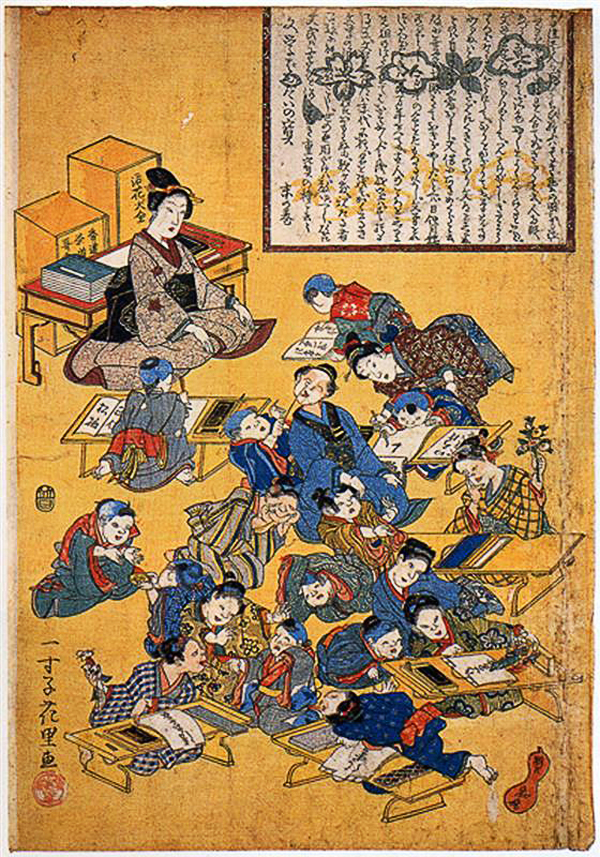
A terakoya, or private school for common children, in the Edo period. Reading, writing, and arithmetic supported the growth of publishing culture. (Image: Wikimedia Commons / Public Domain)
One factor that supported Edo-period chōnin culture was the spread of reading, writing, and arithmetic. At terakoya, or temple schools, children learned reading, writing, abacus calculation, letter writing, and practical knowledge needed for everyday life.
Temple schools were different from educational institutions for samurai. They were also open to the children of townspeople and farmers. For merchants, keeping accounts was necessary, and the ability to read and write letters was useful in daily life. For the children of craftsmen and merchants, reading, writing, and calculation were practical skills.
By the late Edo period, many temple schools existed throughout Japan. The exact number of schools and the literacy rate are interpreted differently by researchers, but it is generally thought that reading and writing had spread widely among common people, especially in urban areas. This spread of literacy was closely connected with the development of chōnin culture.
As more people became able to read, stories, guidebooks, practical manuals, ukiyo-zōshi, comic fiction, and popular novels were enjoyed by a wider audience. The broad acceptance of publishing culture and ukiyo-e in the Edo period was supported by this spread of reading and writing.
Edo-period chōnin culture was not rich in entertainment alone. As reading, writing, business knowledge, and practical learning spread, readers and audiences capable of receiving urban culture also developed.
Ukiyo-e and Publishing Culture
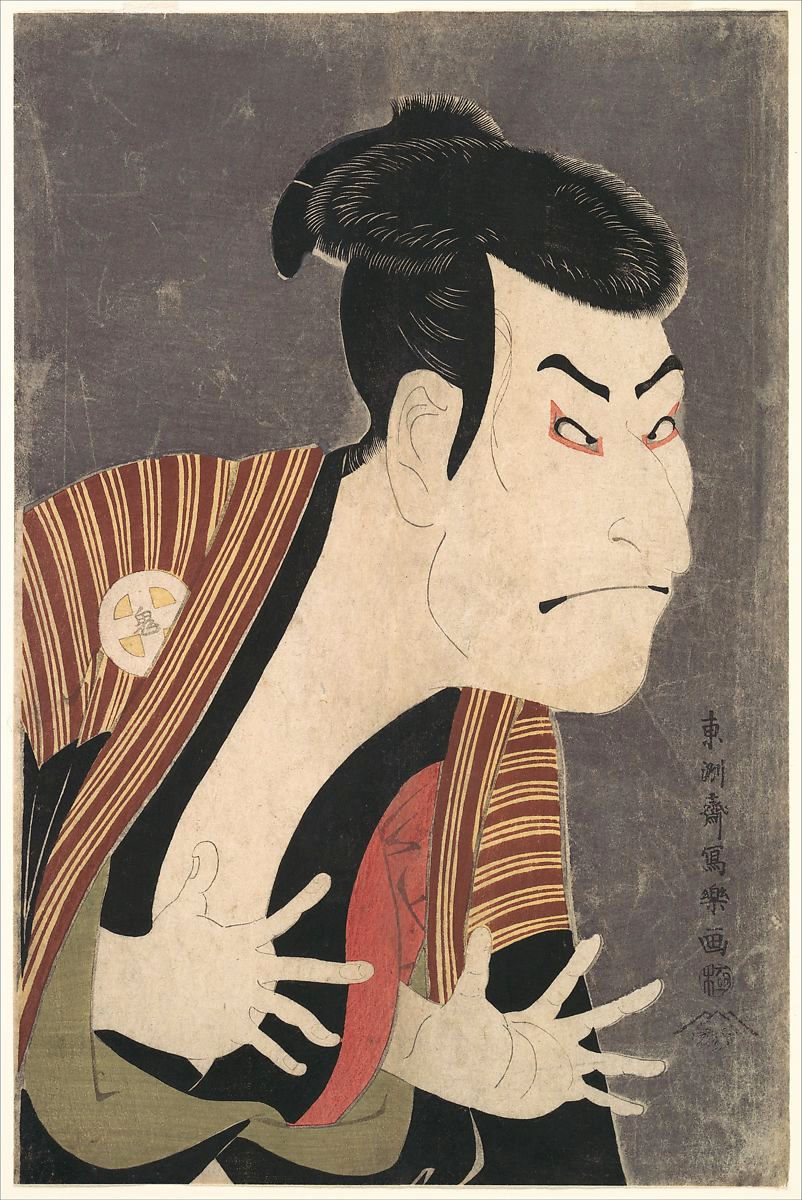
Tōshūsai Sharaku’s portrait of kabuki actor Ōtani Oniji II. Actor prints were part of the popular visual culture enjoyed by Edo townspeople. (Image: Wikimedia Commons / Public Domain)
One of the representative forms of Edo-period chōnin culture was ukiyo-e. Ukiyo-e was a visual culture that reflected the interests of townspeople, including actors, beautiful women, famous places, landscapes, stories, and seasonal events.
Unlike expensive one-of-a-kind paintings, ukiyo-e could be produced in multiple copies through woodblock printing. For this reason, it spread as a medium that a relatively broad range of people could enjoy. Actor prints showing kabuki performers, pictures of fashionable women, and landscapes of famous places served as both information and entertainment for people of the time.
Publishing culture also developed greatly. Stories, comic fiction, guidebooks, cookbooks, and guides to temple and shrine visits were produced in many forms. Reading was not only a form of learning, but also a form of enjoyment.
Ukiyo-e and printed books had the power to spread trends in Edo. Images of popular actors, fashionable kimono, famous landscapes, and talked-about stories circulated through printed media, influencing people’s tastes and behavior.
Kabuki, Yose, and the Spread of Entertainment
Edo-period townspeople enjoyed many kinds of entertainment. One representative example was kabuki. Kabuki was a comprehensive form of entertainment that combined drama, music, costume, stage design, and the appeal of performers. Popular actors were like stars, and they were often depicted in ukiyo-e prints.
At yose theaters, people enjoyed rakugo storytelling, kōdan narrative performance, acrobatics, mimicry, and other forms of entertainment. The cultures of laughter and storytelling were closely connected with the everyday sensibilities of townspeople. The enjoyment of listening to stories, laughing at human mistakes, and satirizing society formed an important part of urban culture.
Visits to temples and shrines, as well as pleasure trips to famous places, were also forms of entertainment. While such outings often had religious purposes, people also enjoyed meals, souvenirs, and sightseeing along the way. For people in the Edo period, travel and temple visits were major pleasures that allowed them to step outside daily life.
The spread of entertainment was connected with the economic power of townspeople, the population of cities, the development of transportation, and systems of publishing and advertising. Edo-period chōnin culture grew richly not only through work, but also through play and enjoyment.
Seasonal Events and Faith
Seasonal events and religious faith were deeply connected with daily life in the Edo period. New Year, Setsubun, the Doll Festival, the Boys’ Festival, Tanabata, Obon, and moon viewing all marked the rhythm of the year.
Visits to temples and shrines, festivals, and fair days were essential parts of townspeople’s lives. On festival days, the town became lively, stalls and attractions appeared, and people gathered together. Places of faith were sites of prayer, but they were also places where people met, shopped, and enjoyed entertainment.
Seasonal events were also connected with food, clothing, and housing. Seasonal dishes, changes of clothing, decorations, gift-giving, and cleaning all helped create rhythm in daily life.
To understand Edo-period chōnin culture, it is important to look not only at entertainment and commerce, but also at these annual events. People confirmed their connections with faith, family, and community while sensing the changes of the seasons in daily life.
What Chōnin Culture Left to Modern Japan
Edo-period chōnin culture left many influences on modern Japanese culture. Food culture such as sushi, soba, tempura, and eel, as well as kabuki, rakugo, ukiyo-e, festivals, townhouses, craftsmanship, and the atmosphere of shopping streets, all have connections to Edo-period urban culture.
Of course, modern life and Edo-period life are very different. The status system, sanitary conditions, medical care, housing, transportation, and labor conditions were vastly different from those of today. Even so, the enjoyment of the seasons, respect for tools, lively town life, craftsmanship, and the habit of finding pleasure in daily life are areas where we can still sense connections with the Edo period.
Chōnin culture was not a culture handed down from above. It grew from the work, consumption, learning, and leisure of people living in cities. That may be why many parts of it still feel familiar today.
Conclusion
Learning about life in the Edo period helps us understand a broader side of Japanese culture that cannot be seen through the politics of the samurai and the shogunate alone. Townspeople supported cities through commerce and craftsmanship, and developed a rich everyday culture through food, clothing, housing, learning, entertainment, and faith.
Row-house life, food-stall culture, temple-school learning, ukiyo-e and publishing, kabuki and yose theaters, and seasonal events all give us concrete glimpses of urban life in the Edo period. They show people who lived with ingenuity under limited conditions, enjoyed trends, and valued human connections.
By tracing Edo-period chōnin culture, we can see many elements that continue into modern Japanese culture. When we look at history not only as a broad political flow, but also through daily life and the liveliness of the town, the Edo period becomes more familiar and more three-dimensional.