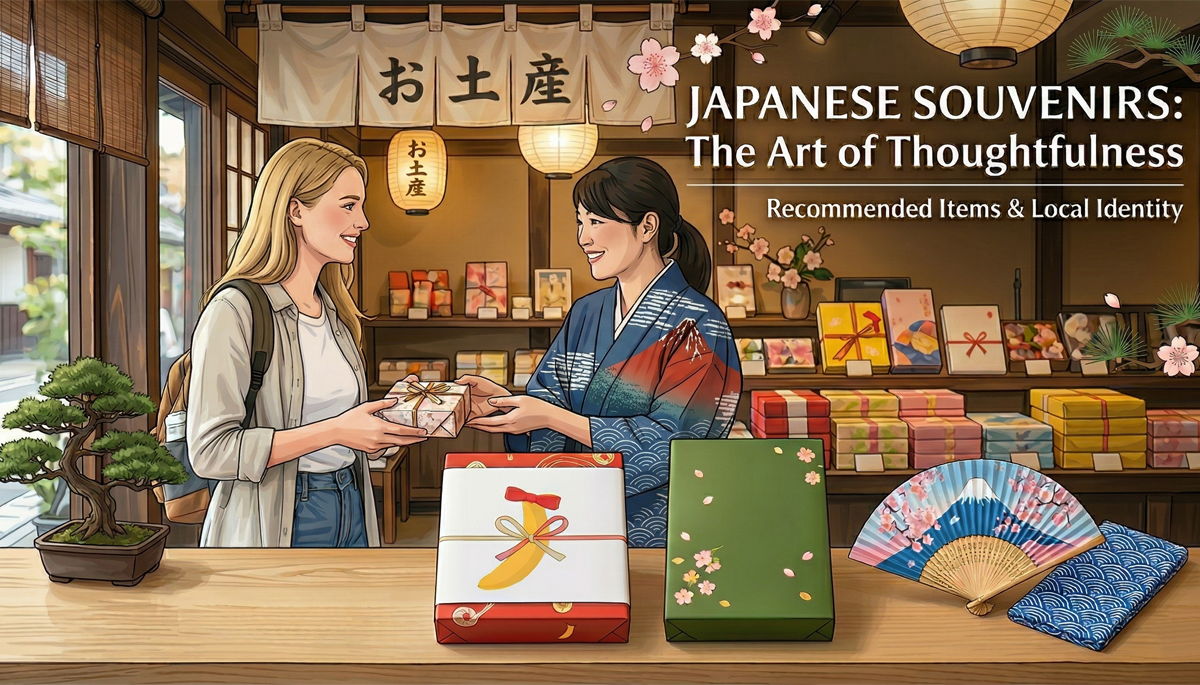
Buying souvenirs is one of the pleasures many visitors look forward to when travelling in Japan. In Japanese culture, souvenirs, or omiyage, are not simply reminders of a trip. They are also a way of showing thoughtfulness toward family members, friends, colleagues, and others.
In this sense, souvenir giving is often connected to consideration and appreciation. Understanding this background helps visitors see that shopping for souvenirs in Japan is not only about buying things. It can also be part of understanding everyday Japanese culture.
Characteristics of Souvenir Culture in Japan
Souvenir culture in Japan has several features that visitors may notice.
A way of showing thoughtfulness and appreciation
Bringing back souvenirs is often a way of showing that you remembered the people around you while you were away. In workplaces, families, and neighbourhood relationships, this can be understood as a small but meaningful gesture of appreciation.
A culture of sharing
In Japan, individually wrapped sweets are very common as souvenirs. This makes them easy to distribute among several people without extra preparation. It also suits situations in which one item is shared within a group, such as in an office or classroom.
A balance of practicality and appearance
Japanese souvenirs are often chosen not only for usefulness but also for their presentation. Packaging, colour, and seasonal design are often treated as part of the gift itself. For that reason, many souvenirs are appreciated both as objects and as expressions of aesthetic care.
Popular Souvenirs
The following types of souvenirs are especially popular with international visitors.
Traditional Japanese sweets
Wagashi, or traditional Japanese sweets, are a common choice. Matcha-flavoured treats, yokan (sweet bean jelly), and monaka (crispy wafers with sweet filling) are widely available. Seasonal sweets such as sakura-flavoured treats or chestnut desserts are also appreciated. Their packaging is often part of their appeal.
Snacks and instant foods
Matcha or sakura-flavoured KitKats, regional versions of Pocky, and cup noodles are easy to buy and easy to carry. They are familiar enough to feel approachable, while still offering a taste of Japan.
Traditional crafts and everyday goods
Items such as folding fans, tenugui hand towels, chopsticks, and furoshiki wrapping cloths are practical and portable. At the same time, they often reflect Japanese design and craftsmanship.
Cosmetics and over-the-counter products
Japanese skincare products and everyday health items are also popular. Face masks, eye drops, lip balms, and cooling patches are especially common choices. Visitors should, however, check local rules before bringing medicines home.
Regional Souvenirs
Different regions of Japan are known for different souvenirs, often connected to local ingredients, traditions, or image.
- Hokkaido: Shiroi Koibito, Yubari melon products, and instant Sapporo ramen
- Kyoto: Yatsuhashi, matcha sweets, and traditional goods such as washi paper and folding fans
- Tokyo: Tokyo Banana, ningyo-yaki, and anime or character goods
- Okinawa: Chinsuko, beni-imo tarts, awamori, and Shisa figurines
For many visitors, regional souvenirs are one of the most enjoyable ways to experience local identity within Japan.
Where to Buy Souvenirs
Japan offers many convenient places to buy souvenirs, and each has its own advantages.
Airports
Airport shops are useful for last-minute shopping and often carry a wide range of popular items in one place.
Shinkansen stations and department store food halls
Shinkansen stations and depachika food halls are especially good for regional sweets and well-packaged gifts.
Tourist shopping streets
Shopping streets in sightseeing areas often offer local crafts, handmade goods, and region-specific snacks.
Convenience stores
Convenience stores are also helpful for small, affordable gifts and easy-to-carry snacks that can be found almost anywhere in Japan.
Tips for Choosing Souvenirs
A few practical points can make choosing souvenirs easier.
- Lightweight and easy to carry: items should fit comfortably into luggage
- Long shelf life: packaged foods and sweets are often safer choices for travel
- Distinctively Japanese: products with Japanese flavours, patterns, or cultural associations are often especially appreciated
- Limited or seasonal items: exclusive products can feel more memorable as gifts
In many cases, a good souvenir is something that is both easy to give and clearly connected to the place you visited.
Items Restricted on Planes and Ships
When buying souvenirs, it is also important to think about transport and import rules.
- Liquids: bottles over 100ml cannot usually be carried in hand luggage and must be placed in checked baggage
- Fresh foods: fruit, meat, fish, and other fresh items are often restricted depending on the destination
- Medicines: over-the-counter medicines sold in Japan may not always be allowed elsewhere
- Strong-smelling foods: certain foods may cause problems during travel, especially on long international flights
- Ship transport: alcohol and hazardous goods may also be restricted under transport rules
Checking regulations in advance can help avoid problems at the airport or after arrival.
Conclusion
Souvenir culture in Japan reflects the importance of thoughtfulness and human relationships in everyday life. For visitors, choosing souvenirs can be more than a practical shopping activity. It can also be a way of understanding how gifts function within Japanese culture.
With options ranging from traditional sweets and crafts to regional specialities and useful everyday goods, souvenir shopping can become part of the travel experience itself. By choosing carefully and checking transport rules in advance, visitors can bring home gifts smoothly and share a part of their experience in Japan with others.