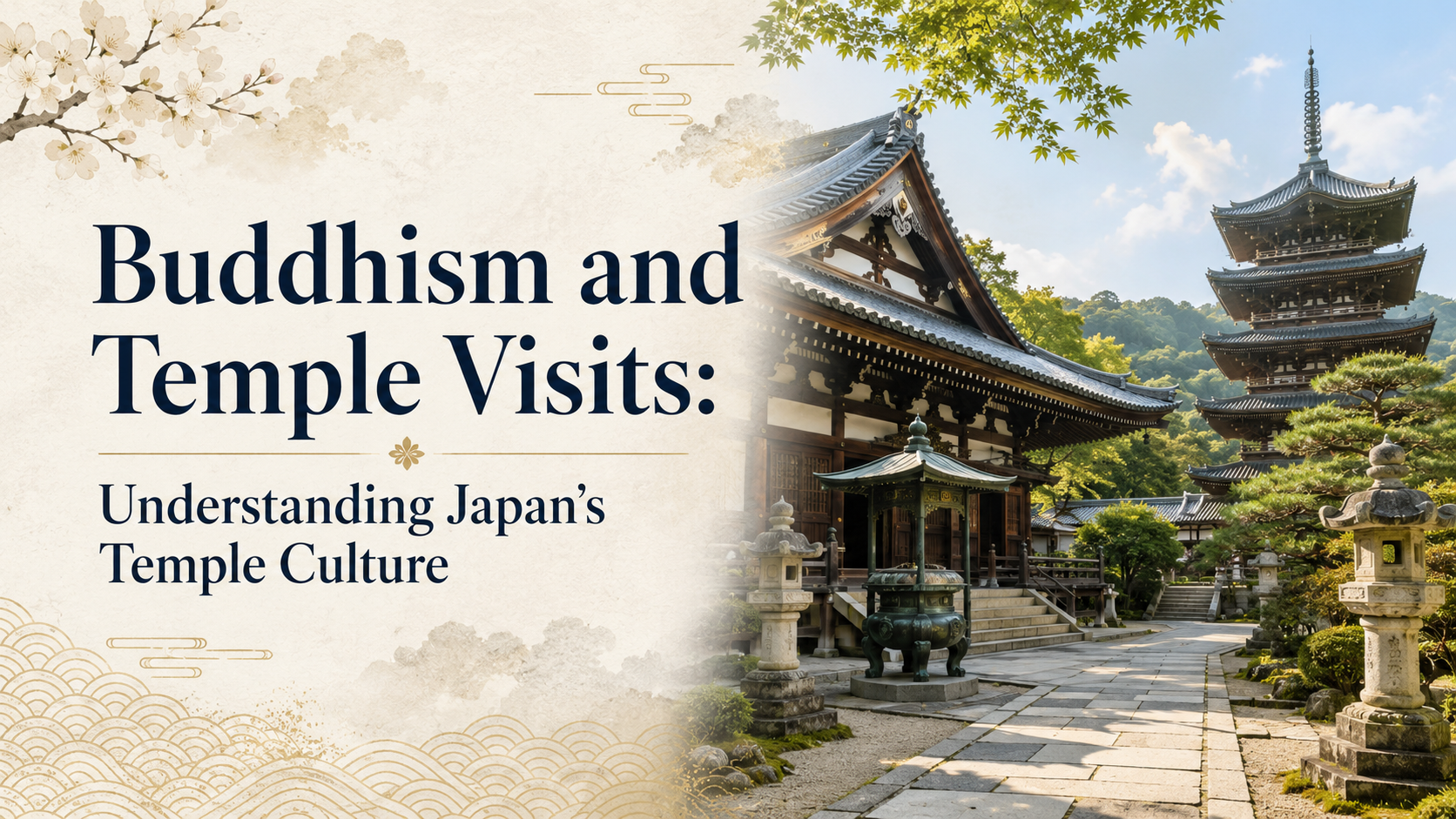
When traveling in Japan, you will see temples in many different places: not only famous temples in Kyoto and Nara, but also temples in towns, mountains, and seaside villages. Some temples have large main halls and five-story pagodas, while others are small local temples that have long been part of daily life in the community.
Temples are deeply connected with Buddhism, which was introduced to Japan from the Asian continent. They can be visited as sightseeing destinations, but they are originally religious spaces where Buddhist figures are enshrined, prayers are offered, ancestors are honored, and Buddhist teachings are studied.
Japanese Buddhism has developed its own cultural character over a long history, while also interacting with Shinto and local customs. The influence of Buddhism can be seen in many aspects of Japanese culture, including temple architecture, Buddhist statues, gardens, annual events, and funeral rites.
This article introduces the basics of Buddhism in Japan, along with the main things to see and the etiquette to know when visiting temples.
- What Is Buddhism?
- Characteristics of Japanese Buddhism
- What Kind of Place Is a Temple?
- The Difference Between Shrines and Temples
- What to Look For When Visiting Temples
- Etiquette When Passing Through the Temple Gate
- Purifying Yourself at a Basin or Incense Burner
- How to Pray at the Main Hall
- Admission Fees and Areas Open to Visitors
- Points to Remember When Taking Photos
- Etiquette for Receiving Goshuin
- Amulets, Ofuda, and Buddhist Prayer Beads
- Zazen, Sutra Copying, and Shojin Ryori
- Staying at a Temple Lodging
- Annual Events and Temples
- What International Travelers Should Know
- What Temple Visits Reveal About Japanese Culture
What Is Buddhism?
Buddhism is a religion that began in India around the 5th century BCE. Its founder is known as Shakyamuni, or Shaka in Japanese, and is often referred to in English as the Buddha.
Buddhism teaches a path for looking directly at suffering and confusion, which are unavoidable parts of human life. It seeks to understand the causes of suffering and cultivate a calmer state of mind. In Japan, Buddhism has not only been a matter of religious belief, but has also had a major influence on views of life and death, manners, art, architecture, gardens, and literature.
Buddhism is believed to have reached Japan around the 6th century. Buddhist statues, scriptures, and knowledge of temple architecture were brought from the continent, and Buddhism spread while becoming closely connected with government, institutions, and culture.
Over time, especially through the Nara, Heian, and Kamakura periods, various Buddhist schools developed. Today, Japan has many Buddhist traditions, including Jodo-shu, Jodo Shinshu, Nichiren Buddhism, Shingon Buddhism, Tendai Buddhism, and Zen Buddhism.
Characteristics of Japanese Buddhism
Japanese Buddhism has several notable characteristics.
One is that Buddhism is deeply connected with daily life and important moments in life. Buddhist ideas are strongly reflected in funerals, memorial services, Obon, Higan, and visits to family graves, all of which are related to honoring ancestors and remembering those who have passed away.
Another characteristic is its close connection with art and culture. Many elements of Japanese culture are related to Buddhism, including Buddhist statues, Buddhist paintings, temple architecture, gardens, bells, sliding-door paintings, sutra copying, and the tea ceremony.
In Japan, Shinto and Buddhism also coexisted for a long period. Shrines and temples may stand close to each other, and both Shinto and Buddhist elements can sometimes be seen in local festivals and events. During the Meiji period, policies were introduced to separate Shinto and Buddhism, but in everyday culture, their influences still overlap in many ways.
Understanding this background makes temple visits more than simple sightseeing. They become an opportunity to learn about Japanese faith, customs, and ways of life.
What Kind of Place Is a Temple?
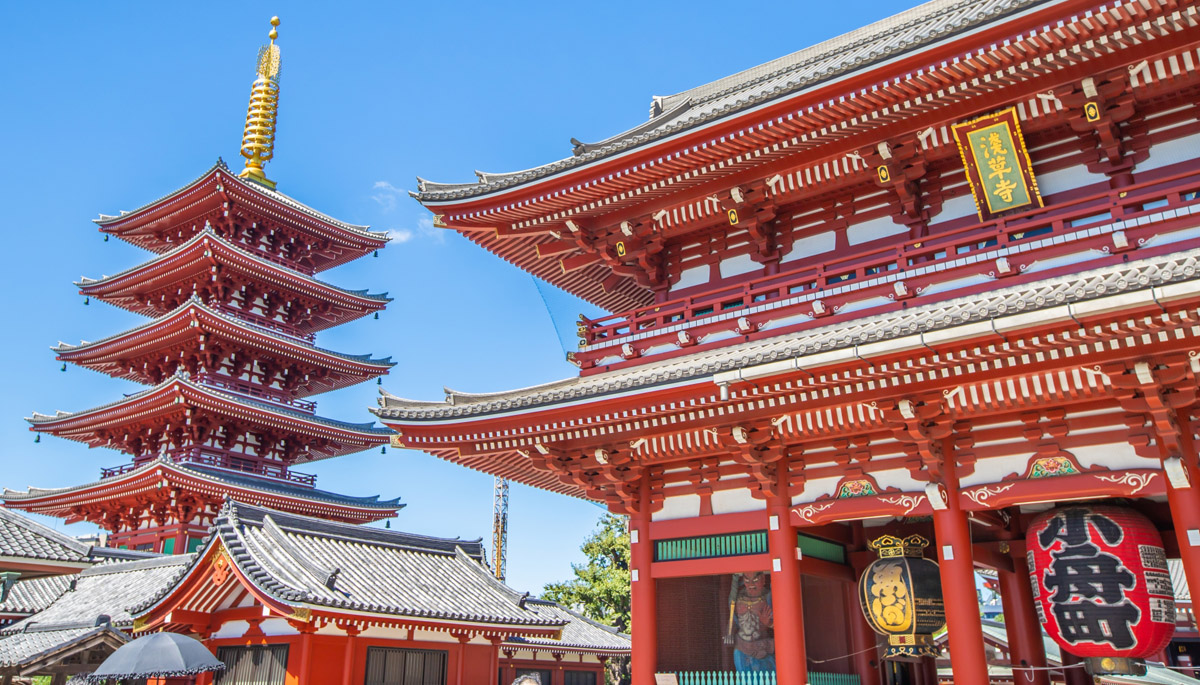
A temple is a place where Buddhist statues are enshrined, monks preserve and pass down Buddhist teachings, and visitors offer prayers. Temples may also be referred to as jiin, bukkaku, or garan in Japanese.
A temple may include various buildings and spaces, such as a main hall, temple gate, pagoda, bell tower, monks’ quarters, cemetery, and garden. The main hall is the central building where the most important Buddhist image of that temple is enshrined. The temple gate marks the entrance to the temple and may symbolize a boundary between the ordinary world and the world of Buddhist teachings.
Five-story and three-story pagodas are among the symbolic forms of Buddhist architecture. They originally developed as structures connected with the worship of relics of the Buddha, known as busshari. In Japan, pagodas are also widely admired as representative features of temple landscapes.
The bell tower holds a large Buddhist bell. Joya no Kane, or the New Year’s Eve bell, is one of Japan’s well-known year-end customs. The sound of the bell is associated with clearing away worldly desires and welcoming the new year with a purified state of mind.
The Difference Between Shrines and Temples
When traveling in Japan, you may visit both shrines and temples during the same trip. Both are important religious sites in Japanese culture, but they are based on different traditions.
Shrines are Shinto facilities where kami, or Shinto deities, are enshrined. They usually have torii gates at the entrance, and the common style of worship is two bows, two claps, and one bow.
Temples are Buddhist facilities where Buddhist images are enshrined and prayers and memorial services are conducted according to Buddhist teachings. They usually have temple gates at the entrance, and visitors generally pray quietly with their hands together, without clapping.
However, because Shinto and Buddhism coexisted in Japan for a long time, they are not completely separate in actual cultural practice. When visiting as a traveler, it is useful to remember the basic distinction: torii gates and clapping at shrines, temple gates and quiet prayer with joined hands at temples.
What to Look For When Visiting Temples
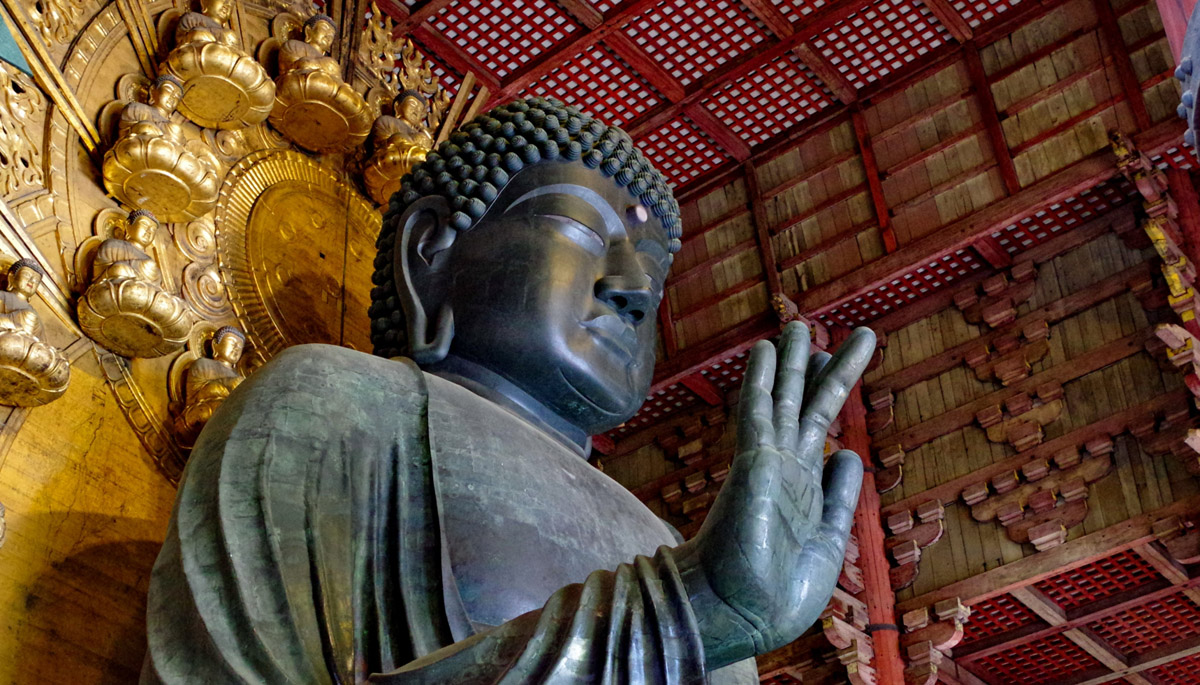
When visiting a temple, looking beyond the size and beauty of the buildings can help deepen your understanding.
The first thing to notice is the honzon, or principal image. This is the most important Buddhist figure enshrined at the temple. Depending on the temple, the honzon may be Shaka Nyorai, Amida Nyorai, Yakushi Nyorai, Kannon Bosatsu, Fudo Myo-o, or another Buddhist figure.
Buddhist images include various types, such as Nyorai, Bosatsu, Myo-o, and Tenbu. You do not need to memorize all the difficult classifications, but paying attention to a statue’s expression, posture, hand gestures, and objects it holds can help you gradually sense its role and meaning.
Architecture is another important part of temple visits. The main hall, temple gate, pagoda, corridors, roof shapes, wooden joinery, and carvings all reflect the characteristics of different periods and regions. At old temples, the buildings themselves often have historical value.
Gardens are also important. Rock gardens at Zen temples, pond-centered gardens, moss gardens, and gardens famous for cherry blossoms or autumn leaves all reflect Buddhist views of the world and nature. Sitting quietly and looking at a garden can offer a calm experience that is different from simply walking around the buildings.
Etiquette When Passing Through the Temple Gate
When entering a temple, it is polite to bow lightly in front of the temple gate. The gate is the entrance to the temple and can be understood as a boundary between the everyday world and a space where you encounter Buddhist teachings.
It is also considered polite to avoid stepping on the threshold of the gate. The threshold marks the boundary of the building, and in traditional Japanese etiquette, it is better to step over it rather than on it.
Inside the temple grounds, avoid speaking loudly or running. A temple may be a sightseeing destination, but it is also a place of prayer and memorial rituals. If you take photos, be careful not to disturb other visitors or monks.
Purifying Yourself at a Basin or Incense Burner
Some temples have a purification basin near the entrance. As at shrines, visitors may cleanse their hands and mouth before going to the main hall. If ladles are provided, the general order is to cleanse the left hand, the right hand, the mouth, the left hand again, and finally the handle of the ladle.
In front of the main hall, you may also see an incense burner. Visitors sometimes offer incense sticks and gently draw the smoke toward themselves. Incense smoke has meanings related to purifying the body and mind and making an offering to the Buddha.
When offering incense, observe the movement of the people around you and do it quietly. Be careful with fire, and place used matches or remaining embers in the designated area.
Not every temple has a purification basin or incense burner. It is enough to follow the signs and local customs at each temple.
How to Pray at the Main Hall
When praying at a temple, people generally do not clap their hands as they do at a shrine. Instead, they quietly place their hands together in prayer and bow their head.
If there is an offertory box in front of the main hall, place your offering into it quietly. If there is a bell or a large metal Buddhist instrument called a waniguchi hanging near the front, gently shake the rope to sound it. Then place your hands together in front of your chest and pray quietly.
Some people pray for personal wishes, but in Buddhism, temple visits may also be a time to express gratitude, remember those who have passed away, or calm the mind.
After praying, bow once and make space for the next visitor. At crowded temples, avoid standing in one place for too long and follow the flow of people around you.
Admission Fees and Areas Open to Visitors
At famous temples, an admission fee may be required to enter certain areas, such as the main hall, garden, treasure hall, or other cultural spaces. These fees are used to maintain buildings, gardens, and cultural properties.
Some temples have free areas within the grounds and paid areas for specific buildings or gardens. Check the reception area and signs, and follow the designated route.
In some viewing areas, you may need to remove your shoes before entering a building. The place to remove shoes, the use of shoe bags, and whether photography is allowed differ from temple to temple. Checking the instructions at the entrance will help you avoid mistakes.
To protect cultural properties, some places do not allow visitors to touch pillars, sliding doors, Buddhist statues, or exhibits. Old wooden buildings and Buddhist images can be easily damaged, so view them from an appropriate distance without touching them.
Points to Remember When Taking Photos
At temples, some places allow photography, while others do not. Gardens and building exteriors are often open to photography, but the interiors of main halls, Buddhist statues, painted screens, treasure halls, and ongoing Buddhist services may be off-limits.
If there is a sign saying that photography is prohibited, be sure to follow the rule. Even when no sign is visible, it is better to avoid taking close-up photos of Buddhist statues, monks, or other visitors.
Some temples prohibit the use of tripods, monopods, drones, or selfie sticks. Especially at crowded sightseeing temples, it is important not to block pathways for photos or enter restricted areas.
A temple is a place of faith and cultural heritage before it is a place for taking beautiful photos. If you keep in mind the need to protect buildings and Buddhist images and respect the quiet time of other visitors, your behavior will naturally become more considerate.
Etiquette for Receiving Goshuin
At some temples, you can receive goshuin. A goshuin is given as proof of a temple visit and is not the same as an ordinary souvenir stamp.
Before receiving a goshuin, first pray at the main hall. Then go to the nokyosho or shuinjo, where goshuin are offered. If you have a goshuincho, open it to the page where you would like the goshuin to be written and hand it over.
At crowded temples, you may receive a numbered ticket and wait, or only pre-written goshuin on paper may be available. Some temples have fixed hours for goshuin, so avoid making requests just before closing time.
While waiting for the goshuin to be written, remain quiet. Avoid asking too many questions, rushing the staff or monks, or making special requests.
Amulets, Ofuda, and Buddhist Prayer Beads
At temples, you can receive amulets, ofuda, and Buddhist prayer beads.
Amulets are given for various wishes, such as good health, traffic safety, academic success, safe childbirth, and protection from misfortune. Like shrine amulets, they are not simply souvenirs, but should be treated with care as objects connected with prayer.
Ofuda are talismans meant to be enshrined at home or in the workplace. Rather than treating them as casual items to take home from a trip, it is better to receive them with some thought about where and how they will be kept.
Buddhist prayer beads, or juzu, are tools used in Buddhist prayer. In Japan, they are often used at funerals and memorial services, but they may also be used during prayer or sutra copying at temples. You can buy prayer beads at temples, though their forms may differ depending on the Buddhist school.
Zazen, Sutra Copying, and Shojin Ryori
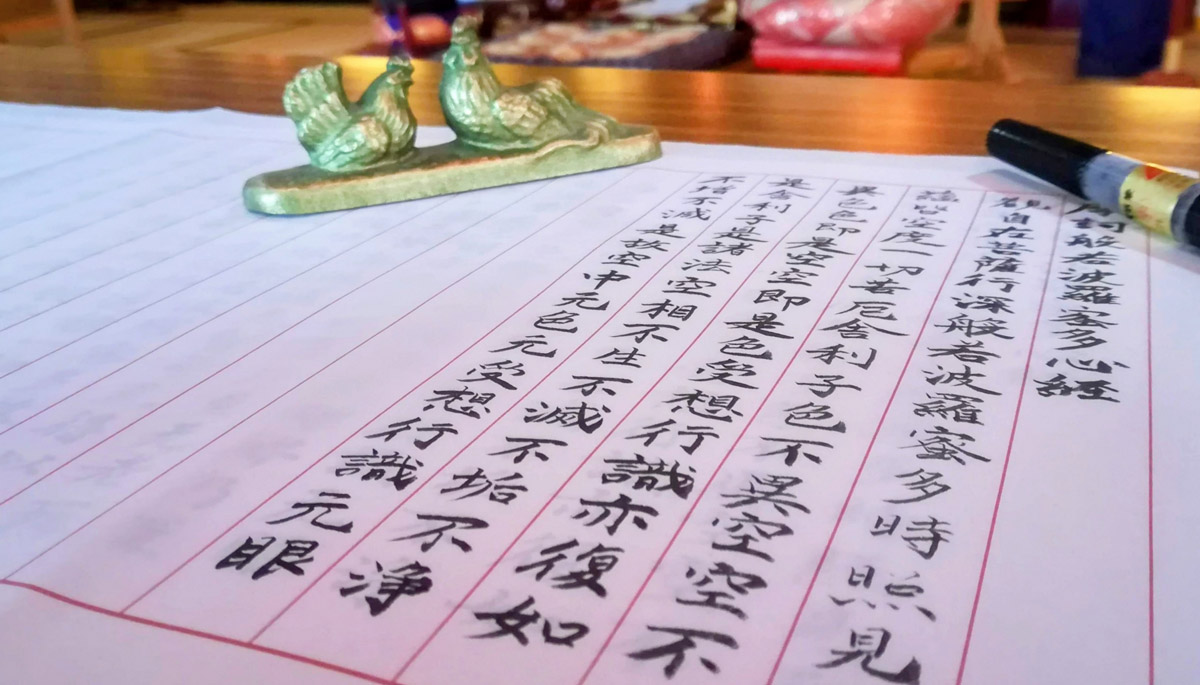
Some temples offer opportunities to experience Buddhist culture, not only to pray or look around.
Zazen is a form of seated meditation in which you adjust your posture and sit quietly to calm the mind. Zen temples in particular may offer zazen experiences. Some temples also have short programs for travelers.
Sutra copying, or shakyo, is the practice of copying Buddhist scriptures by hand. Writing each character carefully creates a quiet moment of concentration. Beautiful handwriting is less important than the attitude of calmly facing the practice.
Shojin ryori is a type of cuisine based on Buddhist ideas. It avoids meat and fish and is centered on vegetables, tofu, beans, seaweed, and other plant-based ingredients. It can sometimes be enjoyed at temples or temple lodgings and offers a chance to understand the relationship between Buddhism and Japanese food culture.
Staying at a Temple Lodging
Some temples have lodging facilities known as shukubo. Originally, shukubo were places for monks and pilgrims to stay, but today some temples also welcome general travelers.
At a shukubo, guests may be able to experience morning prayers, zazen, sutra copying, and shojin ryori. Unlike an ordinary hotel, a temple lodging offers a quiet experience closer to temple life.
However, shukubo often have their own rules, such as curfews, meal times, bathing times, and quiet hours. It is important to remember that you are staying at a religious facility and to follow the instructions given there.
In areas where temple lodging culture is well developed, such as Mount Koya, more shukubo now accommodate travelers from overseas. For those who want to experience Japanese Buddhist culture more deeply, staying at a temple can become a memorable part of the trip.
Annual Events and Temples
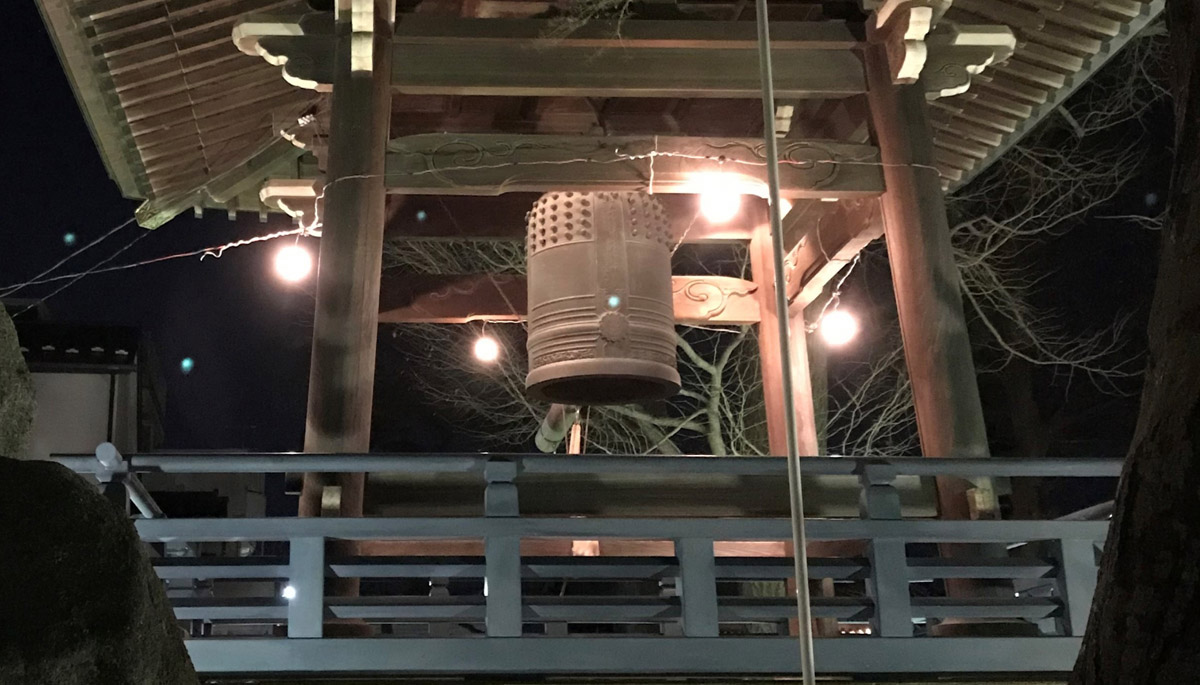
Temples are deeply connected with Japan’s annual events.
Joya no Kane, the ringing of the temple bell on New Year’s Eve, is one of the representative Buddhist customs at the end of the year. At many temples, bells are rung as people reflect on the past year and welcome the new one.
Obon is an event for welcoming and honoring the spirits of ancestors. The timing and style differ by region, but it may include visits to family graves, Bon Odori dances, and floating lanterns. These customs show the connection between Buddhism and local culture.
Higan is a period around the spring and autumn equinoxes, when people visit family graves and hold memorial observances. In Japan, it has become a seasonal custom for families to remember their ancestors and visit graves during these times of year.
In this way, temples are not only sightseeing destinations, but also places connected with Japanese views of the seasons, family, ancestors, and life and death.
What International Travelers Should Know
You do not need detailed knowledge of Buddhism to visit a temple. What matters most is to remember that it is a place of faith and to behave quietly and respectfully.
Bow lightly before passing through the temple gate, place your hands together without clapping at the main hall, do not take photos in prohibited areas, and do not touch Buddhist statues or cultural properties. Knowing these basic points will help you visit temples with confidence.
Some temples have cemeteries attached to them. A cemetery is not a sightseeing area, but an important space connected with the deceased and their families. Avoid taking photos of gravestones without permission or walking around a cemetery out of curiosity.
Etiquette may differ depending on the temple’s Buddhist school or local customs. You do not need to memorize every small difference. The most important thing is to check the guidance at the site and avoid disturbing others as they pray or visit.
What Temple Visits Reveal About Japanese Culture
Temples show how Japanese people have accepted Buddhism and incorporated it into daily life and culture. The expressions of Buddhist statues, the quiet main hall, the scenery of gardens, the sound of bells, the scent of incense, and the sight of people joining their hands in prayer all reveal deep layers of Japanese culture.
Temple visits are not only about enjoying historical buildings and beautiful gardens. They are also a way to encounter many elements of Japanese culture, including faith, views of life and death, ancestor memorials, art, and local communities.
When traveling in Japan, it is worth paying attention not only to famous temples but also to small temples rooted in local communities. They reveal the connection between Japanese Buddhist culture and everyday life, which may not always be visible in ordinary travel guides.