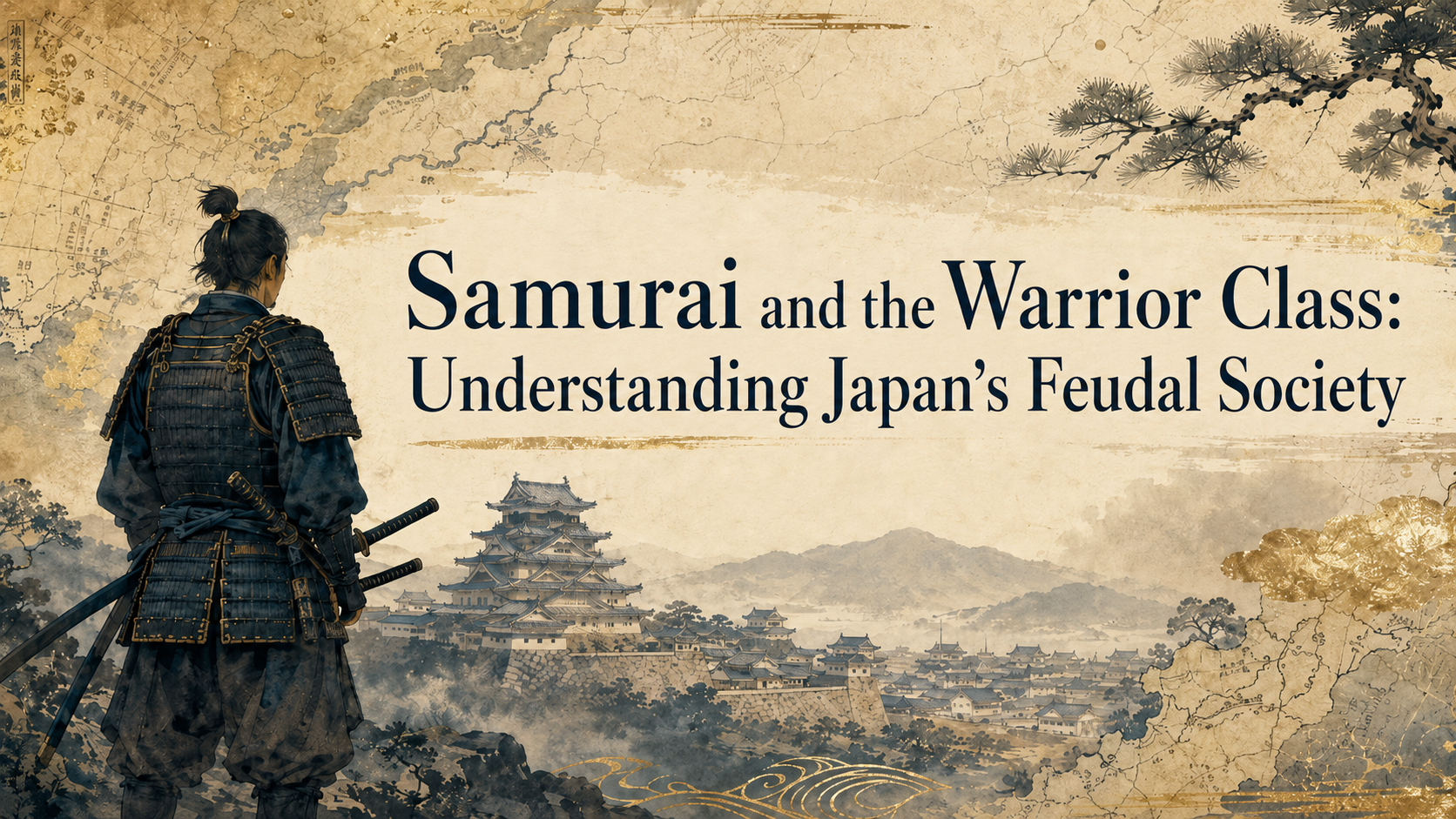
Samurai and the warrior class are essential to understanding Japanese history. Today, the word “samurai” often brings to mind sword-carrying warriors or the spirit of bushido. In reality, however, samurai were not simply people who fought in battle. They also governed land, took part in politics, and supported the social order of local communities.
This article introduces how samurai and the warrior class emerged, and what roles they played within Japan’s feudal society.
- The Difference Between Samurai and Bushi
- How the Warrior Class Emerged
- The Kamakura Shogunate and the Age of Warriors
- The Warring States Period and the Rule of Daimyo
- The Warrior Class in the Edo Period
- The Idea of Bushido
- The Meiji Restoration and the End of the Warrior Class
- Samurai and the Warrior Class Today
- Conclusion
The Difference Between Samurai and Bushi
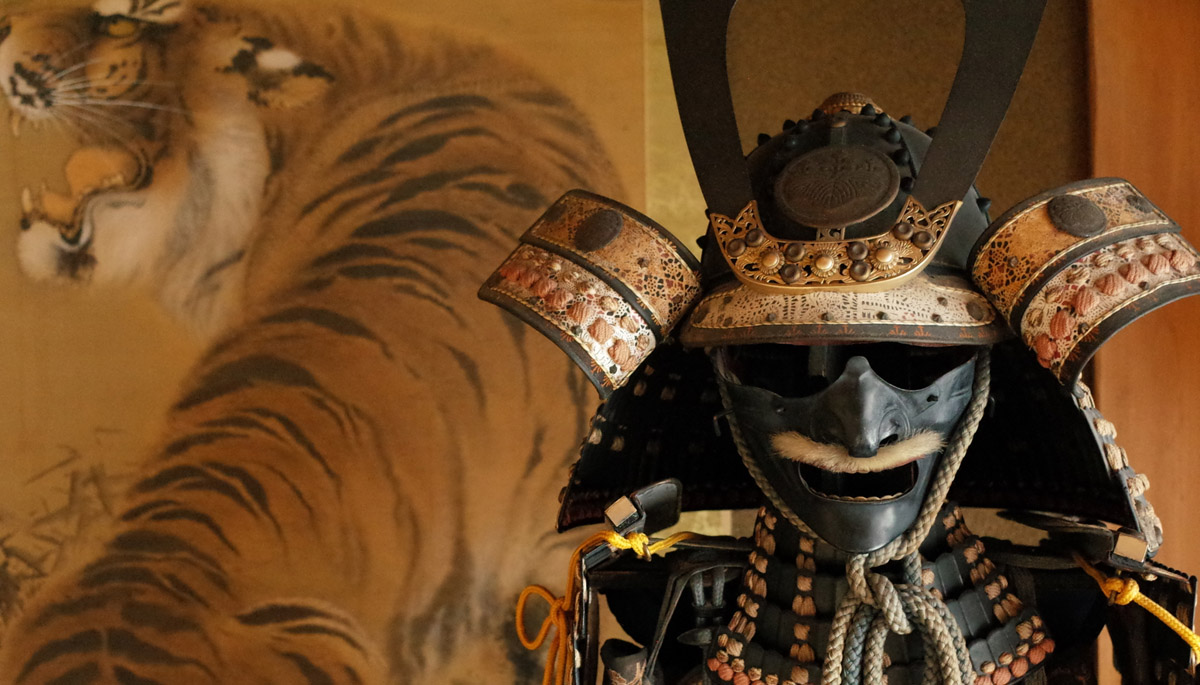
The words “samurai” and “bushi” are often used almost interchangeably in everyday language. However, their original meanings have slightly different nuances.
The word “samurai” comes from the old verb saburau, meaning “to serve” a noble or powerful person. By contrast, bushi refers to people who possessed military power and whose role was connected to warfare.
Over time, armed people who served their lords came to stand at the center of politics and society, and the words samurai and bushi came to be used in closely related ways. The word “samurai” is widely known overseas, but when understanding Japanese history, it is important to remember that samurai were both warriors and members of the ruling class.
How the Warrior Class Emerged
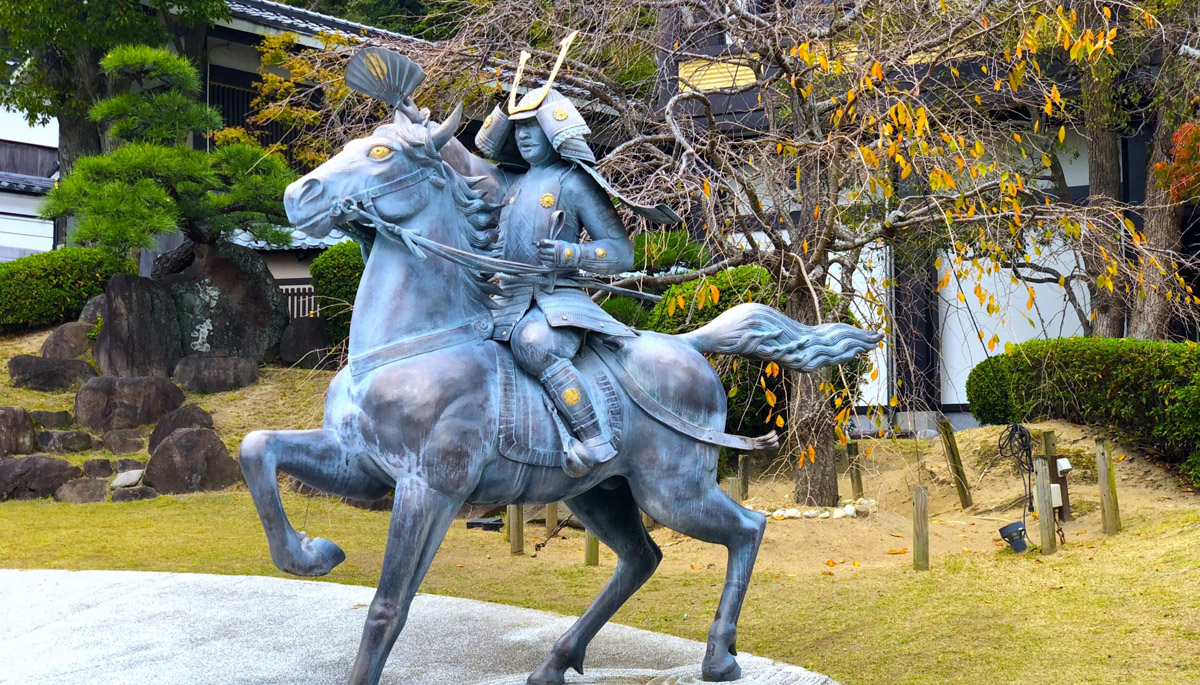
Before warriors came to the forefront of history, Japan’s political center was the imperial court and the aristocracy. During the Heian period, nobles in Kyoto handled political affairs, and society was supported by income from estates in the provinces.
However, disputes over land and problems with public order increased in the provinces. The central aristocracy could no longer manage local areas sufficiently, and armed groups began to gain influence as they protected land. This development led to the growth of the warrior class.
Warriors did not rule the entire country from the beginning. At first, they gained power as local influential families or as people responsible for protection and security. Gradually, they built a society based on land, military power, and lord-vassal relationships.
The Kamakura Shogunate and the Age of Warriors
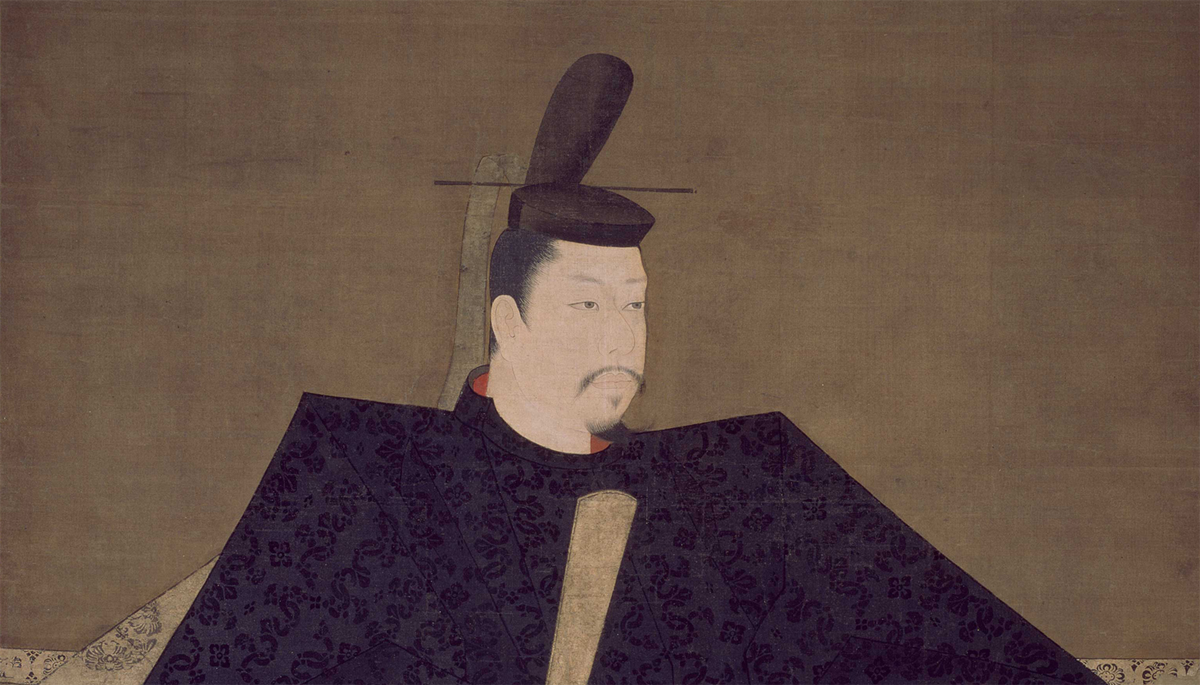
Minamoto no Yoritomo
A major turning point came with the establishment of the Kamakura shogunate. In the late 12th century, Minamoto no Yoritomo established his military government in Kamakura, marking the beginning of warrior rule.
Under the Kamakura shogunate, politics was built on the lord-vassal relationship between the shogun and warriors known as gokenin. This relationship was called go-on to hoko, or “favor and service.” The shogun recognized the land rights of the gokenin and guaranteed their right to protect lands inherited from their ancestors. This was go-on, or favor. In return, the gokenin responded to that favor by joining battles and serving the shogunate. This was hoko, or service.
This relationship of “recognizing land rights” and “responding with loyalty and military service” is an important system for understanding Japan’s feudal society. It was not merely a contract. There was also a strong sense that a warrior should repay the favor received from his lord by risking his household and his life. The later emphasis on loyalty was also shaped by this kind of lord-vassal relationship.
What matters here is that the power of warriors was not based on military force alone. They managed land, maintained local order, and protected their status and rights within relationships with their lords.
This strong attachment to land is also reflected in the term issho-kenmei. Today, the word is usually written as issho-kenmei and means “doing one’s best,” but its older form referred to “one place,” meaning a single piece of land that a warrior protected with his life. For warriors, land was not only a source of income. It also supported the survival and honor of the family.
Warrior society was therefore not only a society of battle. It was also a society built around protecting land and family.
The Warring States Period and the Rule of Daimyo
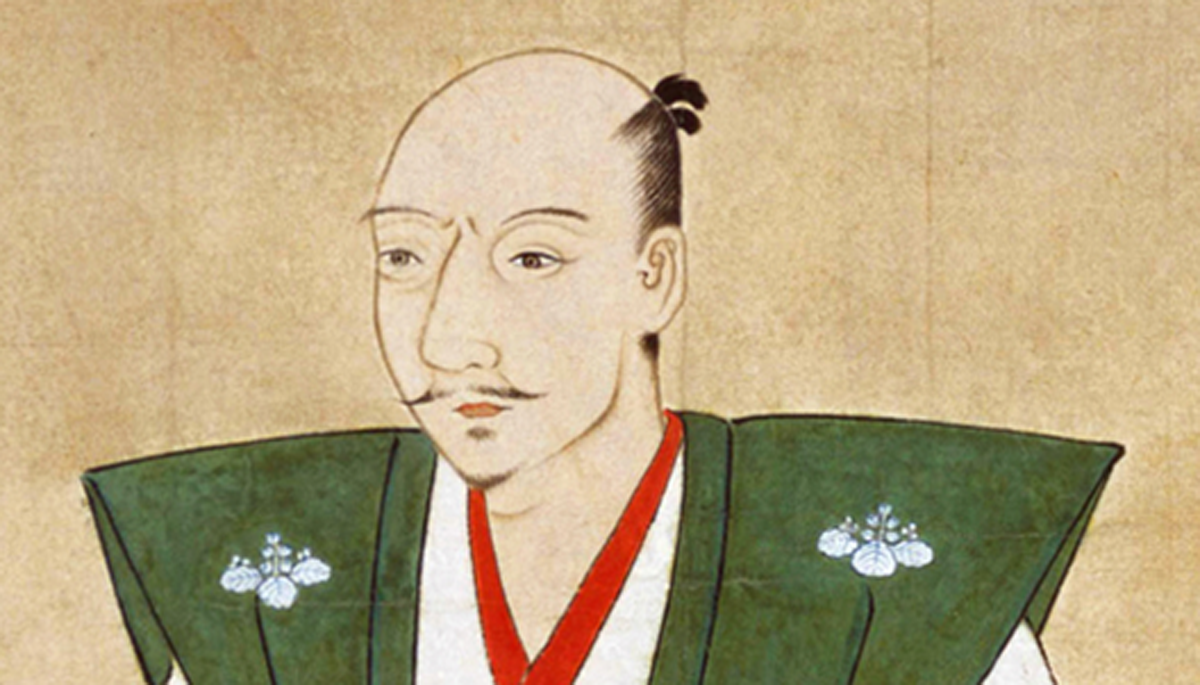
Oda Nobunaga
In the latter half of the Muromachi period, powerful warriors in different regions expanded their influence, leading Japan into the Warring States period. During this era, regional rulers known as sengoku daimyo appeared and governed their own territories.
The sengoku daimyo focused not only on military strength for winning battles, but also on managing territory, controlling farming communities, developing castle towns, and supporting commerce. The Warring States period is often associated strongly with warfare, but it was also an era in which systems of regional rule developed significantly.
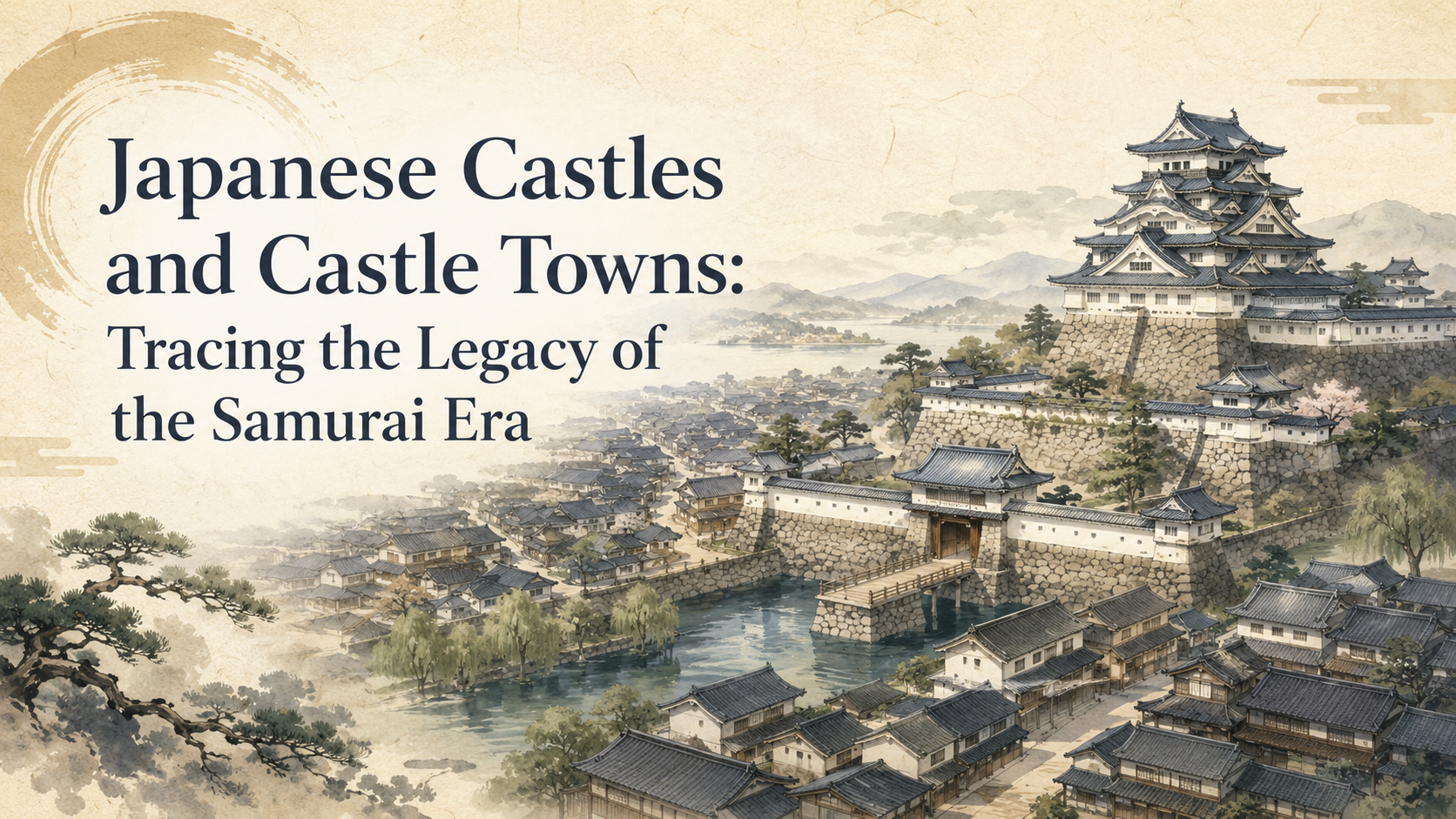
Castles were not merely military facilities. They were also centers of politics and the economy. Around castles, warriors, merchants, and craftsmen gathered, and castle towns began to form. The castle ruins and old castle-town streets found across Japan today can be seen as traces of this age of warriors.
The Warrior Class in the Edo Period
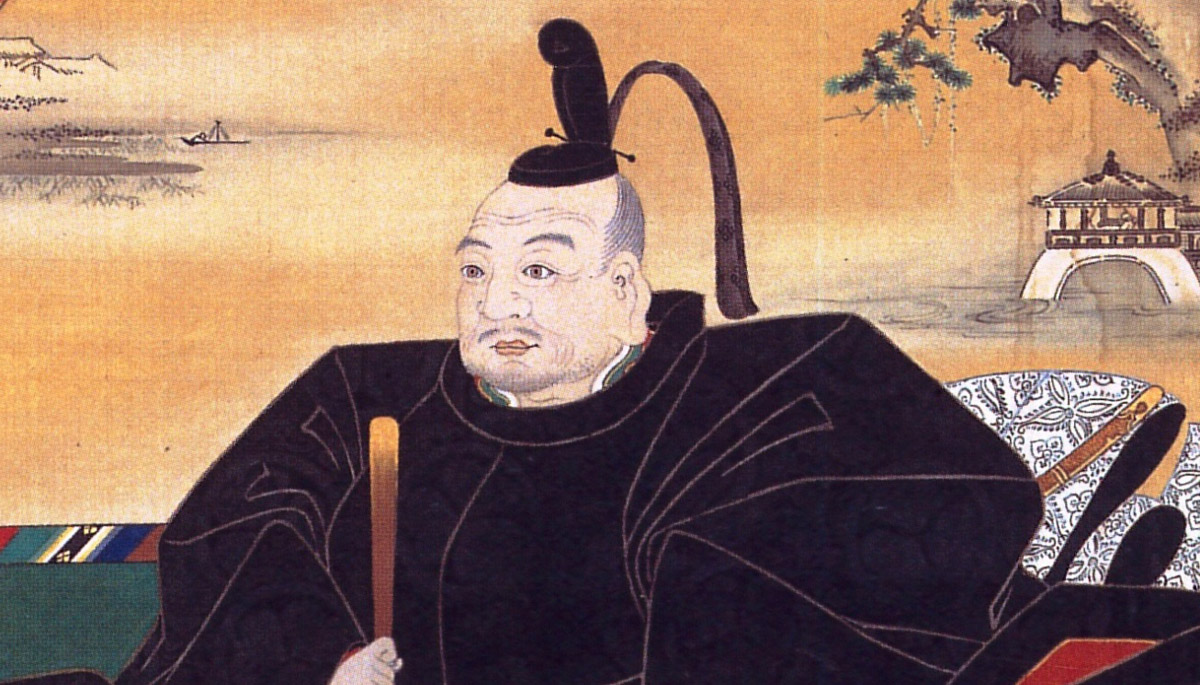
Tokugawa Ieyasu
When Tokugawa Ieyasu established the Edo shogunate, Japan entered a long period of peace. In the Edo period, samurai increasingly became officials serving the shogunate or domains, rather than warriors fighting on the battlefield.
Edo society was organized around a status order that included samurai, farmers, and townspeople. Samurai were considered the ruling class. They were allowed to use family names and wear swords. At the same time, they were also obligated to serve their lord and work for their domain or the shogunate.
As peace continued, the qualities expected of samurai changed. In addition to the ability to wield a sword on the battlefield, learning, administrative ability, etiquette, and self-discipline came to be valued. Although swords symbolized samurai status, they were not to be drawn carelessly. The attitude of possessing power while restraining its use came to be respected as part of the samurai ideal.
This change transformed samurai from mere warriors into a ruling class responsible for governing society. Confucian ideas also spread, and values such as loyalty, propriety, and the continuation of the family became deeply connected with the samurai way of life.
The Idea of Bushido
When discussing samurai, the word “bushido” often appears. Bushido is known as a term that expresses the ethics and ideals of the warrior class, but its meaning changed over time.
In periods marked by warfare, courage and loyalty to one’s lord were strongly emphasized. As seen in the Kamakura-period idea of go-on to hoko, samurai loyalty was deeply connected with protecting land and family.
In the Edo period, as society became more peaceful, the ideal form of the samurai was reconsidered. While opportunities to fight in battle decreased, etiquette, responsibility, self-discipline, and honor came to be emphasized. The sword was understood not only as a symbol of military power, but also as a symbol of self-control.
However, it would be too simple to treat bushido as one fixed set of rules. Samurai values differed depending on the period, region, and social rank. The image of bushido that has been passed down to the present also includes elements that were organized and idealized in later periods.
The Meiji Restoration and the End of the Warrior Class
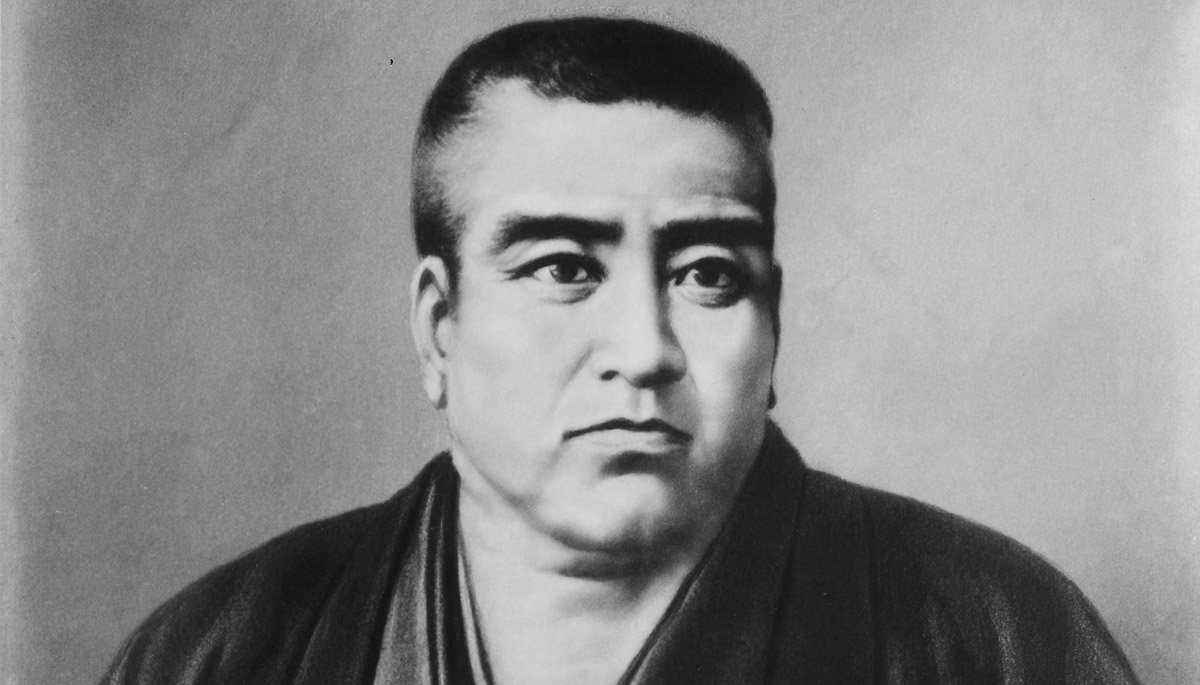
Saigou Takamori
In the second half of the 19th century, the Meiji Restoration brought the Edo shogunate to an end, and Japan moved toward becoming a modern nation-state. In this process, the samurai status system was also abolished.
With the abolition of domains and the establishment of prefectures, samurai were no longer in a position to receive stipends from their domains as before. The prohibition of sword-wearing and the abolition of the status system brought the warrior class to an end as a formal institution.
Yet samurai culture and values did not disappear entirely. Images of etiquette, responsibility, honor, and self-cultivation continued to remain in the language used to discuss Japanese culture after the modern period began. Through castles, samurai residences, castle towns, martial arts, and historical dramas, memories of the samurai remain closely connected to Japanese culture and tourism today.
Samurai and the Warrior Class Today
Of course, samurai no longer exist as a social class in modern Japan. Even so, samurai continue to attract strong interest both in Japan and overseas as symbols of Japanese culture.
From an overseas perspective, samurai are often portrayed as brave warriors, sword masters, and people who valued honor. Historical samurai, however, were more complex. They were warriors, landholders, officials, and members of a status group responsible for preserving their family.
Understanding samurai is not only about learning the history of warfare in Japan. It also means understanding social systems built around land, relationships between lords and vassals, status order, urban development, and changes in etiquette and values.
Conclusion
Samurai and the warrior class were central figures in shaping Japan’s feudal society. Their roles changed over time, from provincial warriors in the Heian period, to gokenin under the Kamakura shogunate, to sengoku daimyo, and eventually to officials in the Edo period.
Samurai were not merely warriors. They governed land, served their lords, protected their families, and supported the social order. By learning this history, castles, castle towns, martial arts, etiquette, and bushido can be understood in a more layered and realistic way.
Behind the word “samurai” lies the history of a warrior class that changed over many centuries. To understand Japanese culture more deeply, it is important to look not only at the heroic image of the samurai, but also at the roles they played within society.