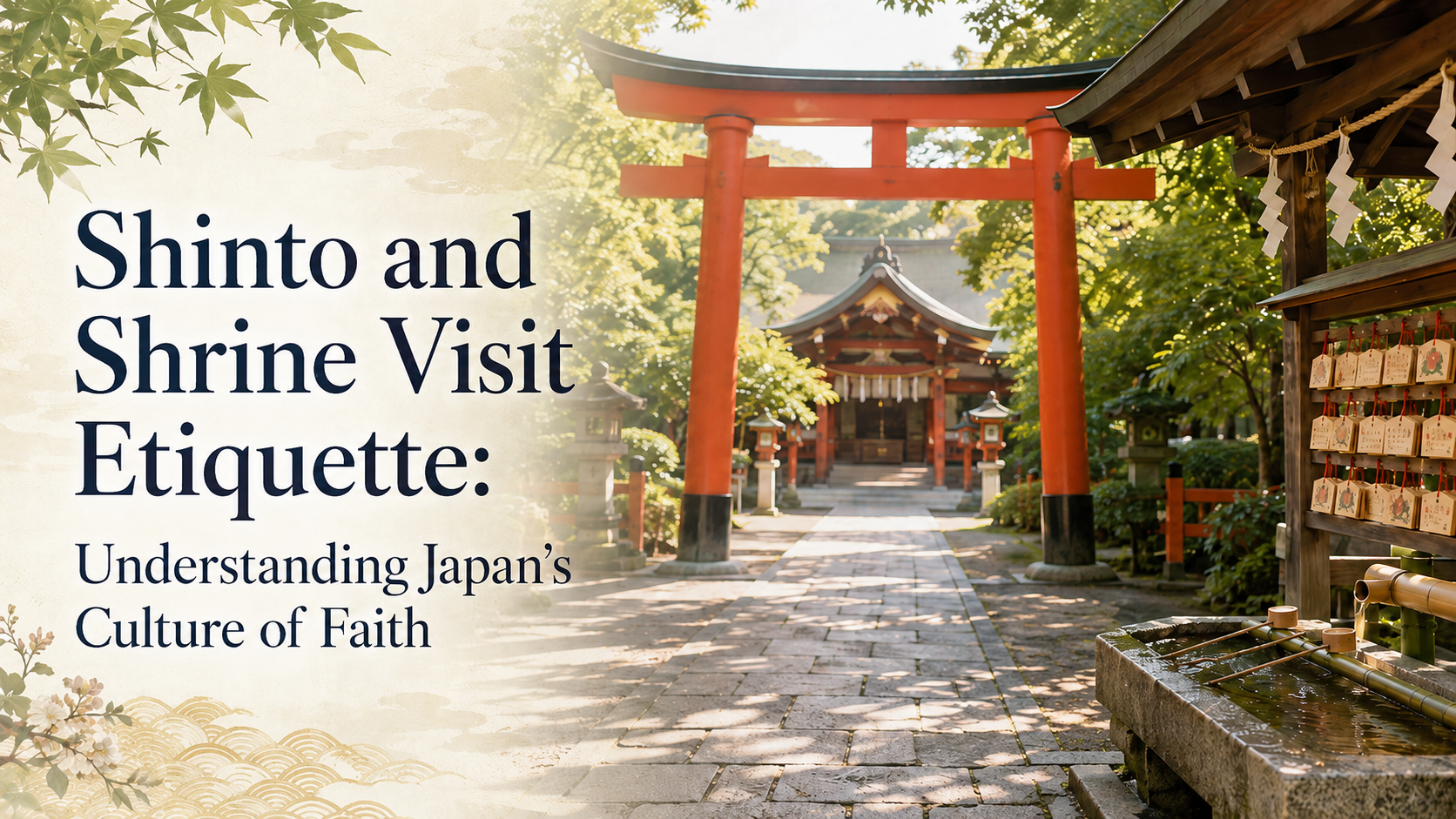
When traveling in Japan, you will often see shrines in many different places: in towns, at the foot of mountains, by the sea, or deep within forests. Some are famous shrines with large torii gates, while others are small local shrines quietly cared for by the people of the community.
Shrines are closely connected with Shinto, Japan’s traditional belief system. They can be visited as sightseeing destinations, but they are originally sacred places where deities are enshrined and people offer prayers.
Shinto is slightly different from religions centered on a specific founder or a single sacred text. It has long been rooted in Japanese life and culture as a belief system that respects the deities believed to dwell in nature, ancestors, local places, and everyday life.
This article introduces the basic ideas of Shinto and the shrine visit etiquette that is useful to know when visiting a shrine in Japan.
- What Is Shinto?
- What Kind of Place Is a Shrine?
- The Difference Between Shrines and Temples
- Etiquette When Passing Through a Torii Gate
- Purifying Yourself at the Chozuya
- How to Pray at the Worship Hall
- The Meaning of Saisen Offerings
- Omikuji and Ema
- Omamori and Goshuin
- Points to Remember When Taking Photos
- Clothing and Behavior
- Festivals and Shrines
- What International Travelers Should Know
- What Shrines Reveal About Japanese Culture
What Is Shinto?
Shinto is a belief system that has been passed down in Japan since ancient times. At its foundation is the idea of sensing and respecting sacred power in nature, such as mountains, rivers, the sea, rocks, trees, wind, thunder, and the sun.
The “kami” of Shinto are somewhat different from the idea of one absolute God in English. In Japanese, there is an expression, “yaoyorozu no kami,” often translated as “eight million kami.” It refers to the idea that countless deities exist.
In Shinto, kami may dwell in nature itself. They may also be worshipped as deities who protect a local area, agriculture, fishing, learning, business, matchmaking, safe childbirth, and many other aspects of life. In some cases, historical figures or ancestors are also enshrined as kami.
Shinto is also deeply connected with daily life. Many events in Japanese life are related to Shinto, including the first shrine visit of the New Year, Shichi-Go-San celebrations for children, wedding ceremonies, ground-breaking rituals before construction, and local festivals. Even people who do not strongly think of themselves as religious may visit shrines for seasonal events or important moments in life.
What Kind of Place Is a Shrine?
A shrine is a place where Shinto deities are enshrined. It can be understood as a place where kami dwell or where kami are welcomed.
At the entrance to many shrines, you will find a torii gate. A torii acts as a boundary between the everyday world and the sacred space of the shrine. Once you pass through the torii, the area beyond it is considered sacred ground.
Inside the shrine grounds, there are usually a shrine approach, a purification basin, a worship hall, and a main sanctuary. The shrine approach is the path leading toward the deity. The purification basin is where visitors cleanse their hands and mouth. The worship hall is where visitors offer prayers, while the main sanctuary is the most important building, where the kami is enshrined. In most cases, visitors do not enter the main sanctuary.
A shrine may be a sightseeing destination, but it is also an important place of prayer for local people. You can enjoy taking photos and walking through the grounds, but it is important to behave calmly and respectfully.
The Difference Between Shrines and Temples
When traveling in Japan, you may have opportunities to visit both shrines and temples. Some places may look similar at first, but shrines are Shinto facilities, while temples are Buddhist facilities.
Shrines usually have torii gates and enshrine kami. Temples, on the other hand, have Buddhist statues, pagodas, and other Buddhist structures. Prayers and memorial services are conducted according to Buddhist teachings.
However, Shinto and Buddhism have coexisted in Japan over a long history. For this reason, shrines and temples may stand close to each other in the same area. In Japanese life, Shinto and Buddhist customs also often exist side by side. For example, people may visit a shrine at New Year, while funerals are often held in a Buddhist style.
This flexible relationship with faith is one of the important features of Japanese culture.
Etiquette When Passing Through a Torii Gate
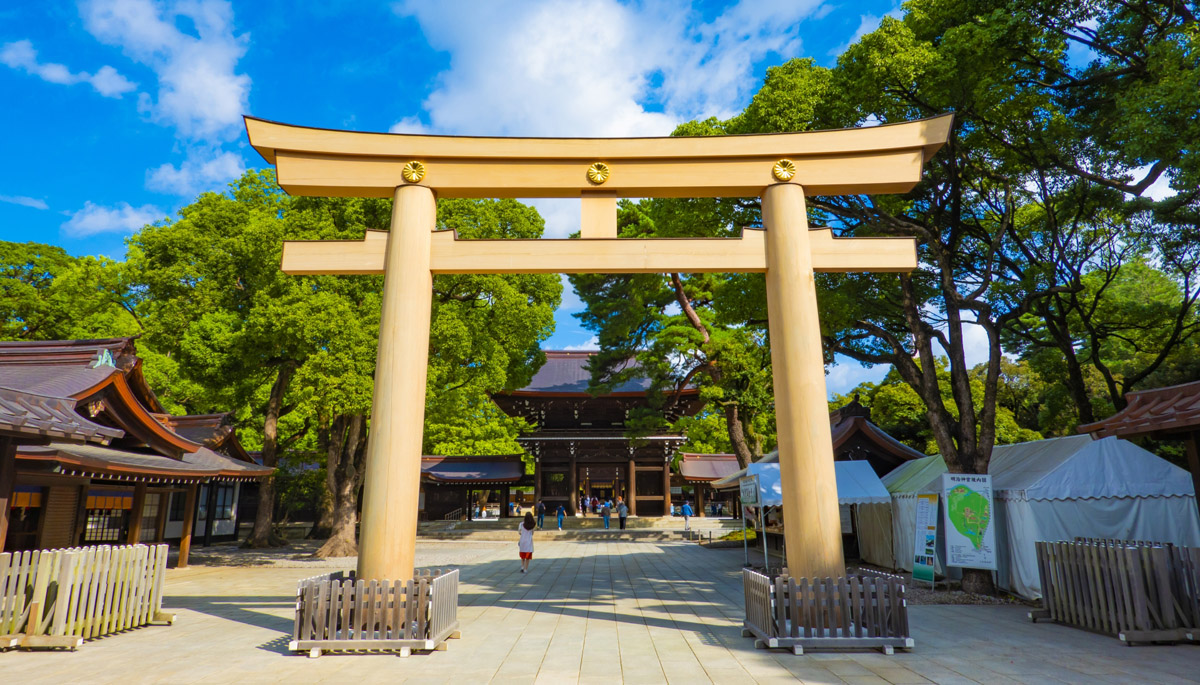
When entering a shrine, it is polite to bow lightly before passing through the torii gate. Since the torii is regarded as the entrance to a sacred space, the bow shows respect before entering the shrine grounds.
When walking along the shrine approach, it is generally considered proper to avoid walking directly in the center. The center of the path is called seichu and is traditionally regarded as the path for the kami. At busy sightseeing spots, it is not always possible to follow this strictly, but when you can, it is polite to walk slightly to the left or right.
Avoid speaking loudly or running through the grounds. A shrine is not a park or theme park, but a place of prayer. Keeping this in mind helps you behave naturally and respectfully.
Purifying Yourself at the Chozuya
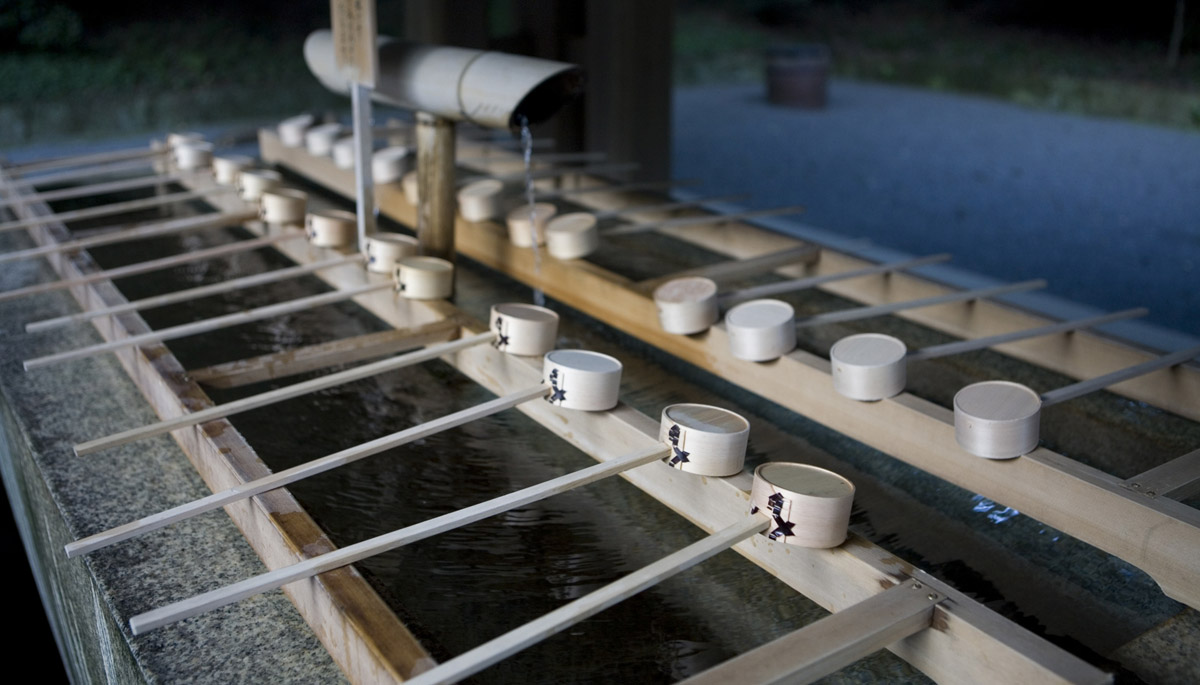
Before going to the worship hall, visitors usually cleanse their hands and mouth at the chozuya, the purification basin. This is a ritual for purifying the body and mind before approaching the deity.
The general procedure is as follows.
First, hold the ladle with your right hand and scoop up water. Use the water to cleanse your left hand. Next, switch the ladle to your left hand and cleanse your right hand. Then hold the ladle with your right hand again, pour a little water into your left hand, and use that water to rinse your mouth. Do not put your mouth directly on the ladle. Finally, cleanse your left hand once more, tilt the ladle upright so that water runs down the handle, and return it to its original place.
Today, some shrines no longer provide ladles for hygiene reasons and instead use running water for purification. In that case, simply follow the instructions provided at the shrine.
Chozu is not only a formal action. It is also a moment to calm your mind before approaching the deity. By doing it slowly and respectfully, you can feel the atmosphere of the shrine more deeply.
How to Pray at the Worship Hall
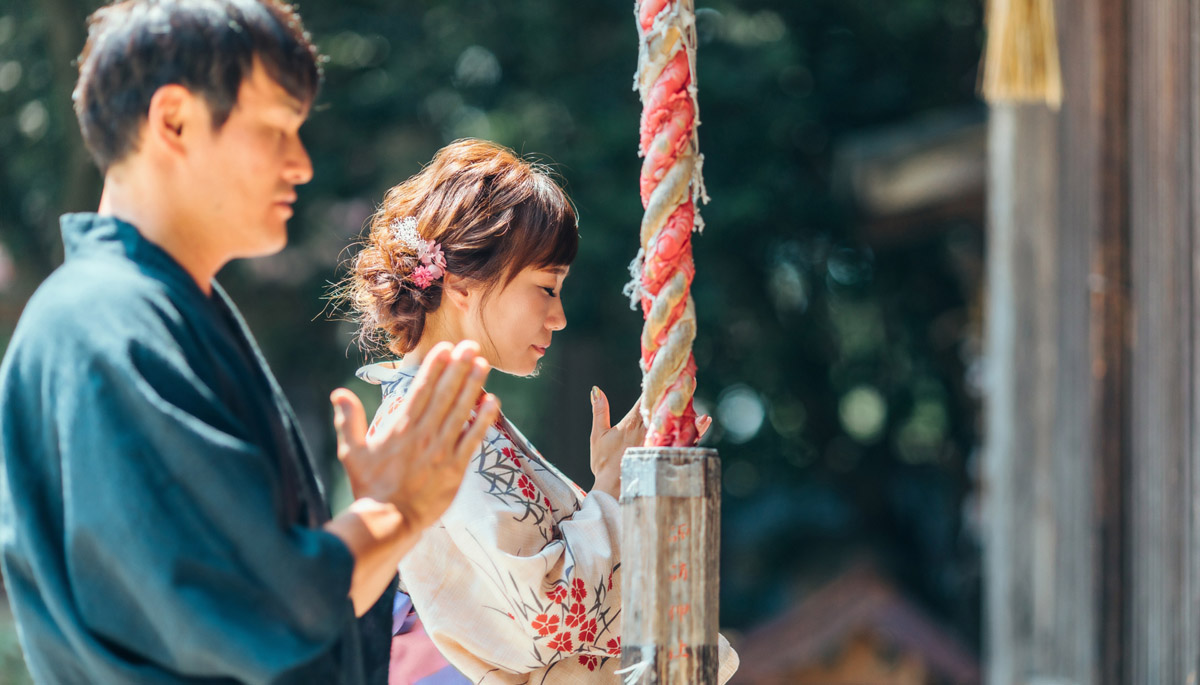
The basic way to pray at a shrine is known as “two bows, two claps, and one bow.” This is the common form used at many shrines.
When you stand in front of the worship hall, first bow lightly. If there is an offertory box, quietly place your offering into it. If there is a bell, ring it. The sound of the bell is said to let the deity know that you have come to worship. It is also understood as a way of purifying the heart.
After that, bow deeply twice. Then clap your hands twice in front of your chest. Bring your hands together and offer your prayer. You may make a wish, but it is also good to begin with a feeling of gratitude toward the deity. Finally, bow deeply once more.
Some shrines have their own special forms of worship. For example, Izumo Taisha is known for the custom of “two bows, four claps, and one bow.” If a shrine has special instructions, follow the guidance shown on the shrine grounds.
The Meaning of Saisen Offerings
Saisen, or an offering of money, expresses gratitude and prayer to the deity. There is no fixed amount. It does not need to be a large sum; an amount that matches your own feeling is enough.
In Japan, the five-yen coin is sometimes considered auspicious because the word for “five yen,” go-en, sounds the same as the word for “connection” or “good relationship.” However, it is not necessary to prepare a five-yen coin.
When placing money into the offertory box, do not throw it forcefully. Placing it quietly is more respectful. At crowded shrines, observe the movement of the people in front of you and pray calmly.
Omikuji and Ema
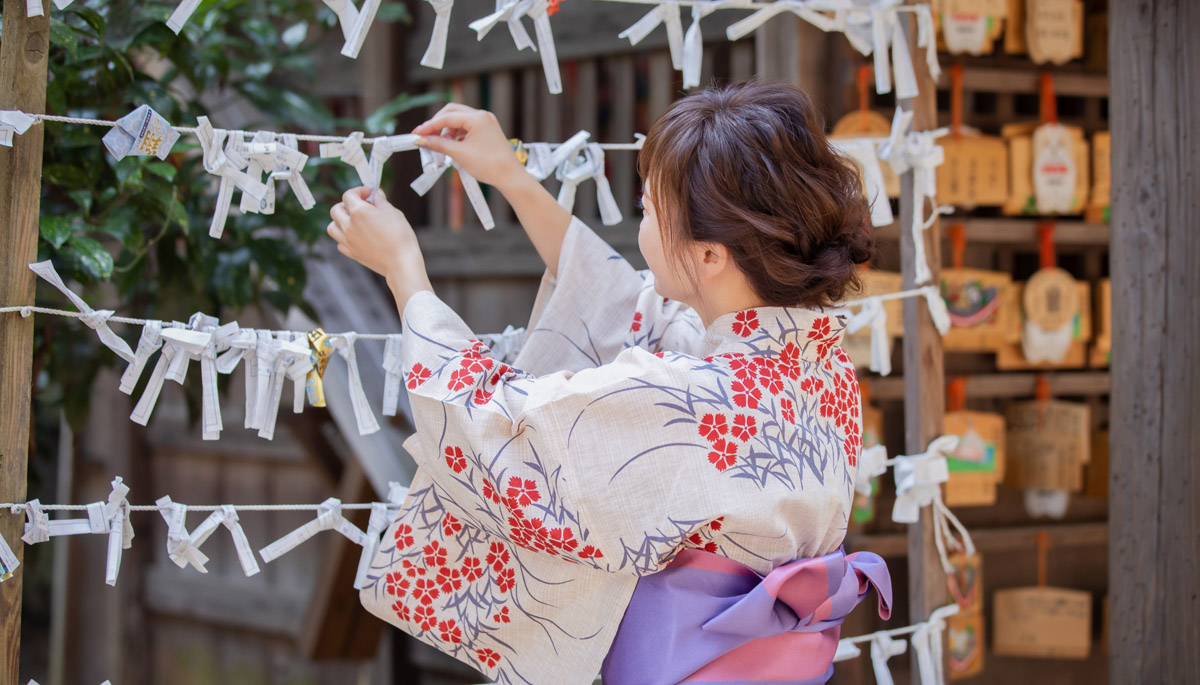
At shrines, you may see omikuji and ema.
Omikuji are fortune slips that include predictions and advice. They may show results such as great blessing, blessing, middle blessing, small blessing, future blessing, or misfortune. However, omikuji are not simply about whether your luck is good or bad. They are better understood as advice for thinking about your actions from that point onward.
Ema are wooden plaques on which people write their wishes and offer them at the shrine. Wishes may relate to passing exams, good health, work, family happiness, and many other hopes. Visitors from overseas can also write ema, but it is better not to read other people’s wishes closely or take large photos of them. Ema often contain personal wishes, so consideration for privacy is important.
You may take your omikuji home, or you may tie it in a designated place within the shrine grounds. If there is a specific place for tying omikuji, follow the shrine’s instructions and do not tie it to tree branches without permission.
Omamori and Goshuin
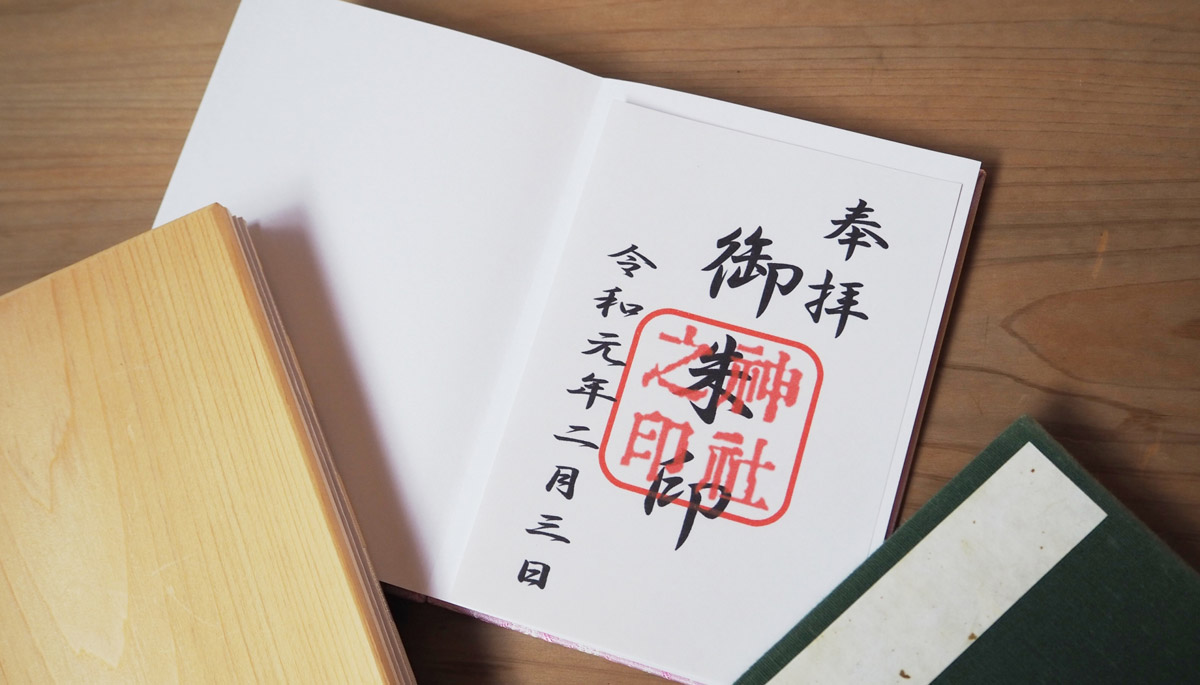
At shrines, you can also receive omamori and goshuin.
Omamori are amulets given for various wishes, such as good health, traffic safety, academic success, safe childbirth, and matchmaking. They are not simply souvenirs, but are regarded as something received from the shrine. For that reason, they should be treated with care.
Goshuin are stamps and calligraphy given as proof of a shrine or temple visit. In recent years, they have become popular among travelers, but they are not the same as ordinary collectible stamps. The basic etiquette is to pray first, then wait quietly to receive the goshuin.
If you have a goshuincho, or goshuin notebook, open it to the page where you would like the goshuin to be written and hand it over. When a shrine is crowded, only pre-written goshuin may be available. Follow each shrine’s rules and avoid making unreasonable requests.
Points to Remember When Taking Photos
Photography is allowed at many shrines. However, this does not mean that you can take photos freely everywhere.
Avoid taking photos of the inside of the main sanctuary, ongoing rituals, shrine priests, shrine maidens, or other visitors without permission. If there is a sign saying that photography is prohibited, be sure to follow the rule.
Torii gates, shrine approaches, building exteriors, and seasonal scenery are often suitable subjects for photography, but it is important not to disturb worshippers. Standing in one place for a long time in a crowded area or using a tripod may be prohibited at some shrines.
A shrine is a place of faith before it is a place for taking beautiful photos. If you keep this in mind, respectful behavior will come naturally.
Clothing and Behavior
For an ordinary shrine visit, special formal clothing is not required. Clothing worn during sightseeing is usually fine, but it is better to avoid clothing that is overly revealing or inappropriate for a sacred place.
If you are taking part in a formal prayer or ritual, slightly more modest and neat clothing is recommended. If you are wearing a hat, removing it in front of the worship hall is considered polite.
Inside the shrine grounds, avoid eating and drinking, smoking, speaking loudly, and flying drones without permission. Some shrines also have rules regarding pets. Checking signs at the entrance or inside the grounds will help you avoid problems.
Festivals and Shrines
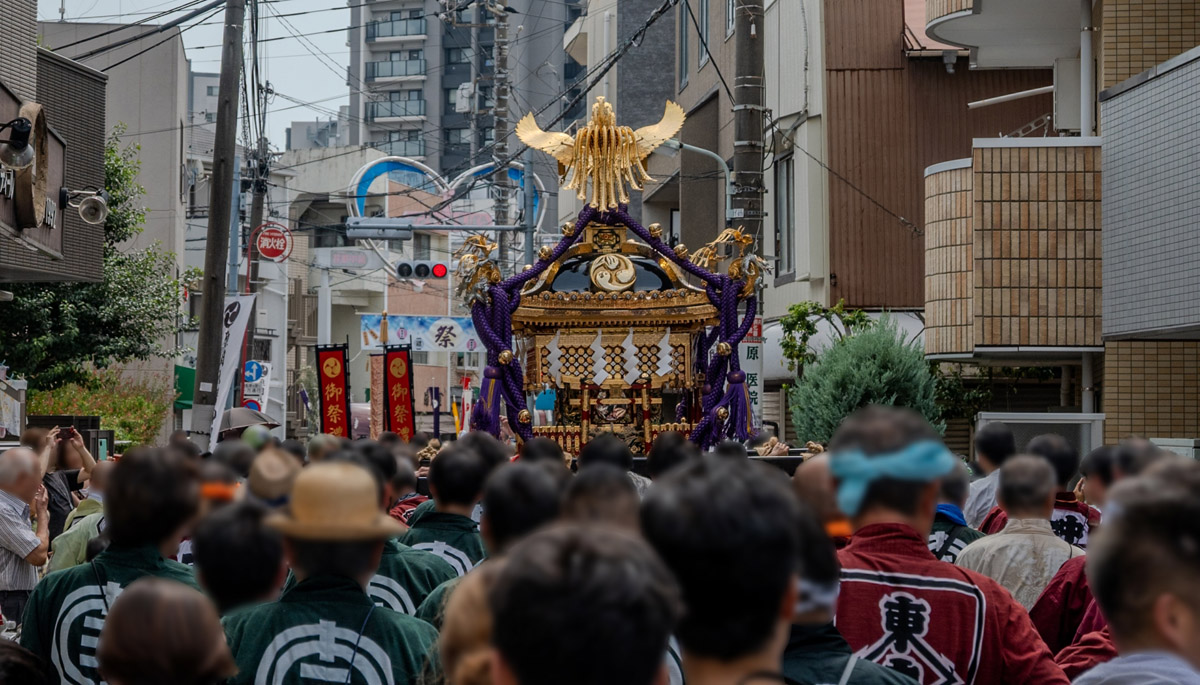
Shrines are deeply connected with local festivals. Festivals have long been held to express gratitude to the deity and to pray for peace, good harvests, prosperity, and the well-being of the local community.
Mikoshi portable shrines, festival floats, drums, dances, and food stalls all reflect the character of each region. To visitors, festivals may look like lively public events, but they are originally religious and community-based occasions centered on Shinto rituals.
When watching a festival, it is important not to enter restricted areas, touch mikoshi or ritual objects without permission, or interfere with the local people carrying out the event. By taking part with respect for an event that the community has preserved over many years, you can experience the appeal of the festival more deeply.
What International Travelers Should Know
You do not need to memorize shrine etiquette perfectly. Even Japanese people do not always know every detailed custom at each shrine. What matters most is to behave quietly and respectfully.
Bow before passing through the torii gate, purify your hands at the chozuya, pray with two bows, two claps, and one bow at the worship hall, and follow the rules for photography. Knowing this basic flow will help you visit a shrine with more confidence and ease.
Shrines are religious facilities, but in Japan they are also familiar places for sightseeing and walking. It is not disrespectful for people without religious belief to visit a shrine. However, it is important to remember that a shrine is a place of prayer and not to disturb people who have come to worship.
What Shrines Reveal About Japanese Culture
Shrines show how Japanese people have valued nature, local places, ancestors, and community life. The forested grounds, seasonal festivals, quiet shrine approaches, and people standing in prayer all reveal deep layers of Japanese culture.
Shinto cannot be fully understood only by studying difficult doctrines. By actually visiting a shrine, passing through the torii gate, purifying your hands, and offering a quiet prayer, you can gradually sense its atmosphere.
When traveling in Japan, it is worth paying attention not only to famous shrines but also to small shrines found in towns and villages. They reveal a form of Japanese faith culture rooted in local life, which may not always be visible in ordinary travel guides.