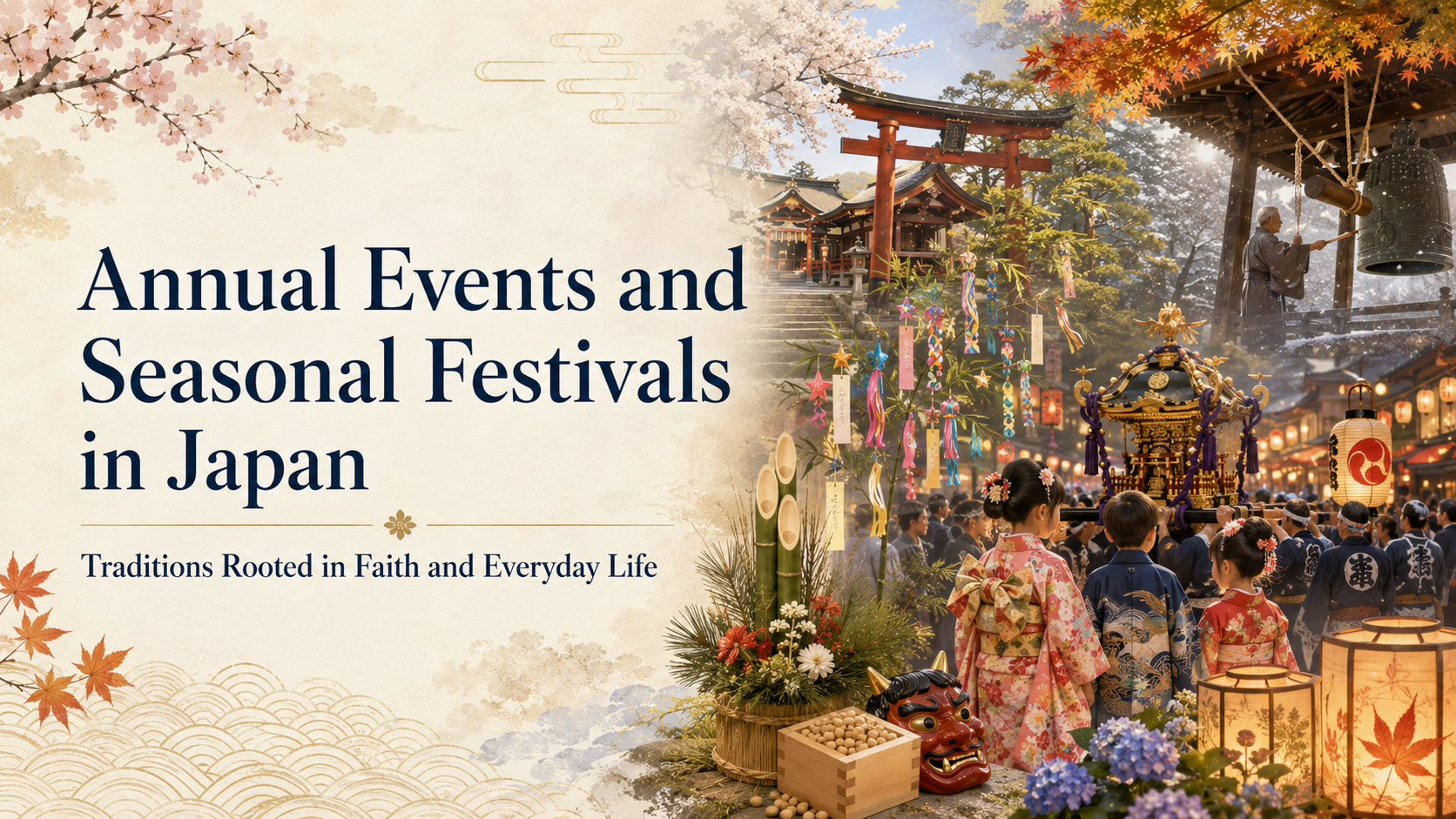
Japan has many annual events and festivals throughout the year. You may have heard of some of them, such as the first shrine or temple visit of the New Year, the spring and autumn Higan periods, summer festivals, Obon, autumn festivals, Shichi-Go-San, and the ringing of temple bells on New Year’s Eve.
These events are not simply seasonal celebrations. Japan’s annual events reflect a blend of Shinto, Buddhism, respect for ancestors, gratitude toward nature, and customs related to purification, protection from misfortune, and prayer.
Many Japanese people do not strongly identify with a specific religion. Even so, religious customs naturally appear in daily life. People may visit a shrine at New Year, welcome ancestral spirits during Obon, or listen to temple bells at the end of the year.
This article introduces Japan’s culture of faith and sense of the seasons through its annual events and seasonal festivals.
- Japan’s Annual Events Combine Faith and the Seasons
- New Year and Hatsumode
- Setsubun and Protection from Misfortune
- Hina Matsuri and Tango no Sekku
- Spring and Autumn Higan
- Hana Matsuri and the Birth of the Buddha
- Summer Festivals and Shrine Rituals
- Tanabata and Wishes
- Obon and Honoring Ancestors
- Autumn Festivals and Gratitude for the Harvest
- Shichi-Go-San and Prayers for Children’s Growth
- Tori-no-Ichi and Prayers for Business Prosperity
- Joya no Kane and the End of the Year
- Etiquette for Travelers Watching Festivals
- What Japan’s Annual Events Reveal About Its Religious Outlook
- Understanding Japanese Culture Through Annual Events
Japan’s Annual Events Combine Faith and the Seasons
An important point in understanding Japan’s annual events is that religion and everyday life are gently connected.
Festivals held at shrines express gratitude and prayers to the deities who protect local communities. Events held at temples reflect Buddhist teachings and the idea of honoring ancestors. Some events, such as Setsubun and Tanabata, are based on ideas introduced from China or on folk beliefs that gradually changed shape as they became part of Japanese life.
Japanese annual events cannot be explained by one religion alone. Shinto, Buddhism, folk beliefs, local customs, and seasonal changes have overlapped over time to form the customs seen today.
For this reason, when looking at Japan’s annual events, it is not enough to ask only whether an event belongs to Shinto or Buddhism. It is also important to look at what people give thanks for, what they pray for, and how they have marked the turning points of the seasons.
New Year and Hatsumode
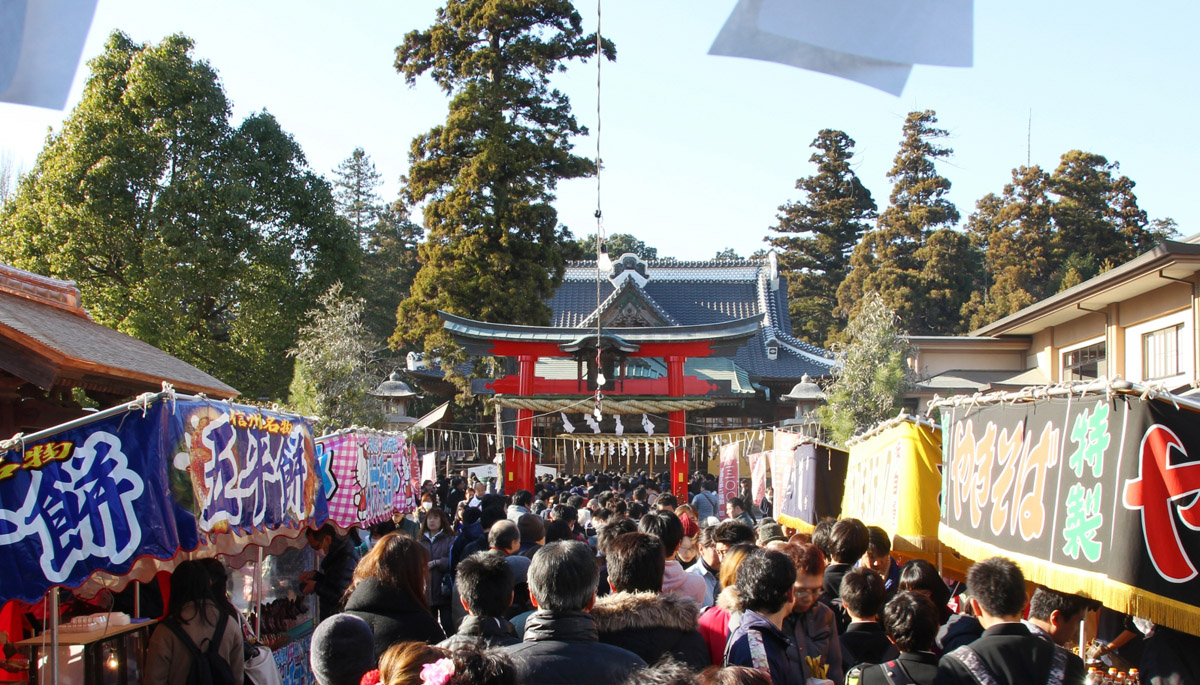
New Year is one of the most important turning points in the Japanese calendar. At the beginning of the year, people prepare their homes, gather with family, and visit shrines or temples.
Hatsumode refers to the first visit to a shrine or temple in the New Year. Many people pray for health, family happiness, success in work or studies, and good fortune for the year ahead. Some people visit shrines, while others visit temples.
At New Year, there is also the idea of welcoming Toshigami, the deity of the New Year. Toshigami is regarded as a deity who brings blessings and happiness for the coming year. This idea is connected with New Year decorations such as kadomatsu, shimekazari, and kagami mochi.
The pine branches used in kadomatsu have traditionally been understood as a sign for welcoming Toshigami, or as a yorishiro, a sacred object where a deity may dwell. In Japanese culture, pine trees are sometimes treated as markers for welcoming sacred beings, and this idea can also be seen in New Year decorations.
Today, Hatsumode is both a religious act and a familiar custom for welcoming the New Year with family and friends. At some shrines and temples, food stalls line the grounds, creating a lively atmosphere.
Setsubun and Protection from Misfortune
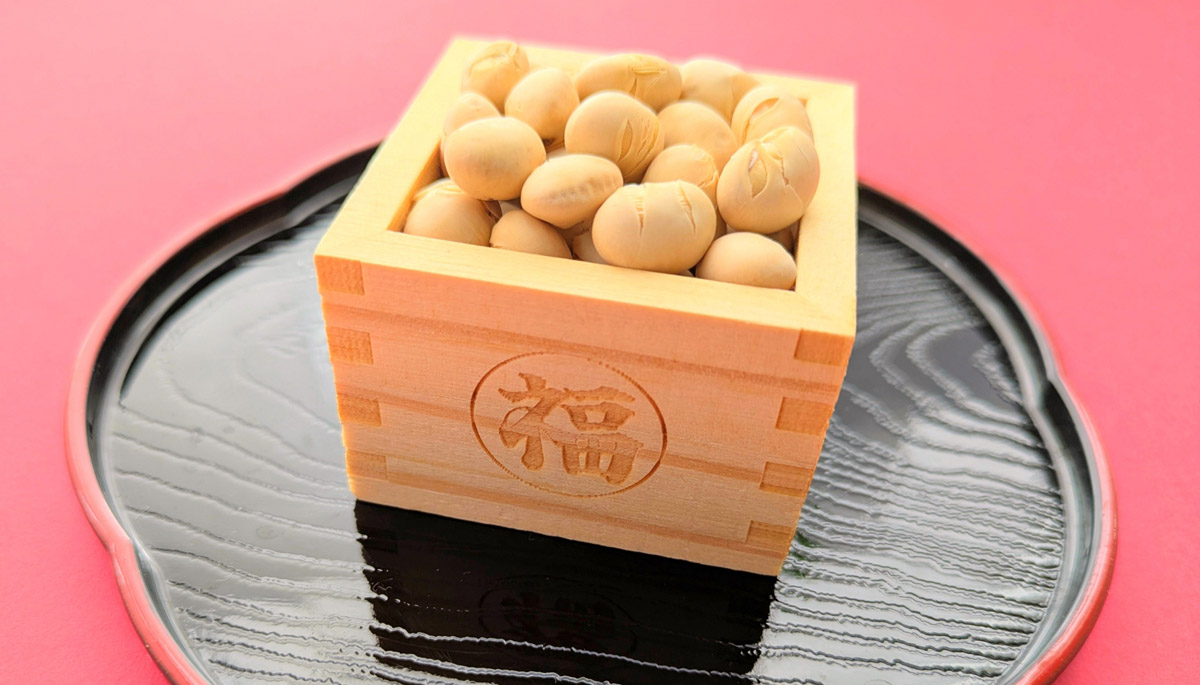
Setsubun is an event held to drive away evil and invite good fortune at the change of seasons. Today, it is most commonly observed on the day before the beginning of spring in the traditional calendar.
The best-known custom of Setsubun is mamemaki, or bean throwing. People scatter beans while saying, “Oni wa soto, fuku wa uchi,” meaning “Demons out, good fortune in.” Oni, or demons, have been understood as symbols of illness, disaster, and misfortune.
Beans are sometimes explained as being connected with the phrase ma o messuru, meaning “to destroy evil.” This way of giving meaning to the sound of words is one feature found in Japanese annual events.
Setsubun is also observed at shrines and temples. At famous temples and shrines, people born under the year’s zodiac sign or well-known public figures may throw beans, attracting many visitors.
This event reflects the idea that harmful forces may enter at seasonal turning points, as well as the wish to welcome a new season in a purified state. To travelers, it may look like a fun seasonal event, but behind it are ideas of protection from misfortune and prayer.
Hina Matsuri and Tango no Sekku
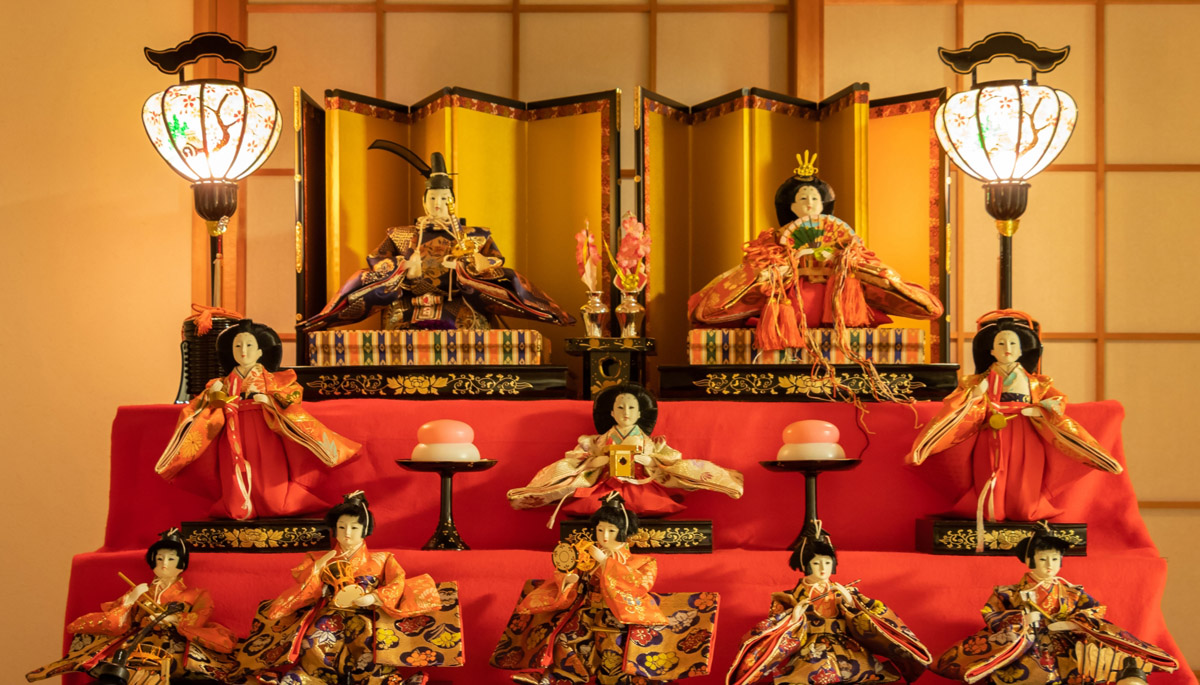
Hina Matsuri is held on March 3 and is an event for wishing for the healthy growth of girls. Families may display hina dolls and prepare foods such as chirashi sushi and hina arare.
Hina dolls are connected with the idea that dolls can take on misfortune that might otherwise fall upon children. The custom is said to have developed from earlier practices in which impurity was transferred to dolls and then carried away by water.
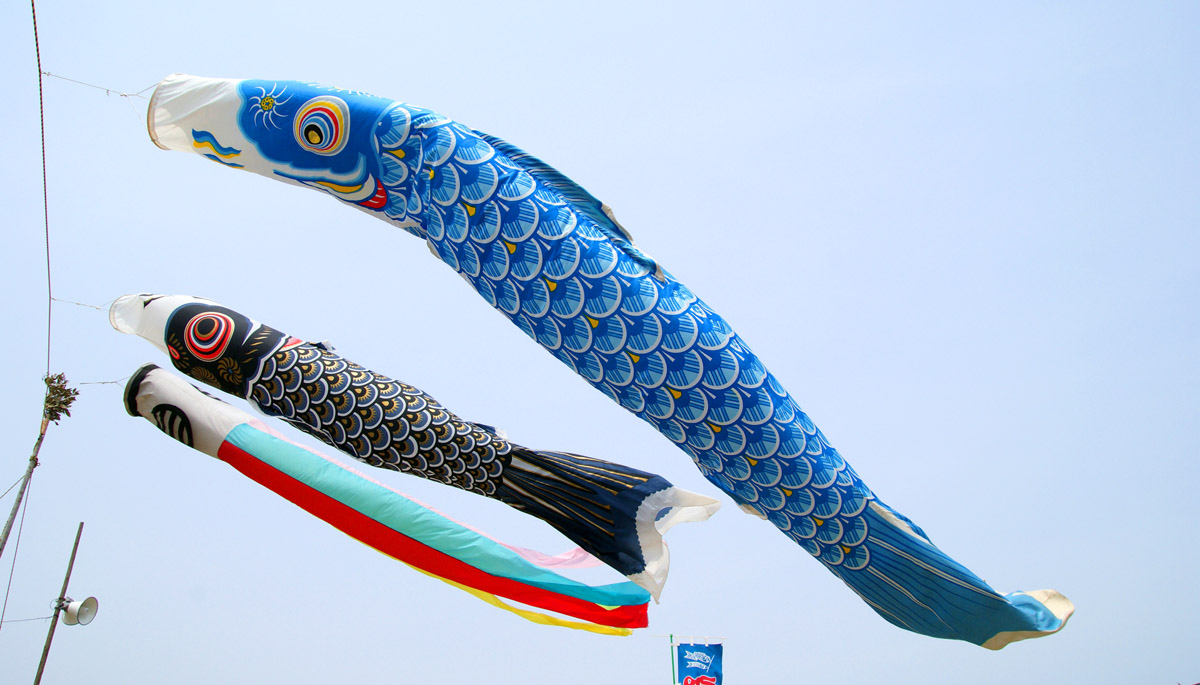
Tango no Sekku is known as an event held on May 5 to pray for the growth of boys. Today, it is also Children’s Day, a national holiday for wishing for the happiness of all children. Families may display carp streamers and warrior dolls, and some households have the custom of taking a bath with shobu, or iris leaves.
Shobu has long been regarded as a plant with the power to ward off misfortune. Tango no Sekku therefore includes not only prayers for children’s growth but also the idea of avoiding harm.
In this way, events for children combine wishes for growth with beliefs related to purification and protection.
Spring and Autumn Higan
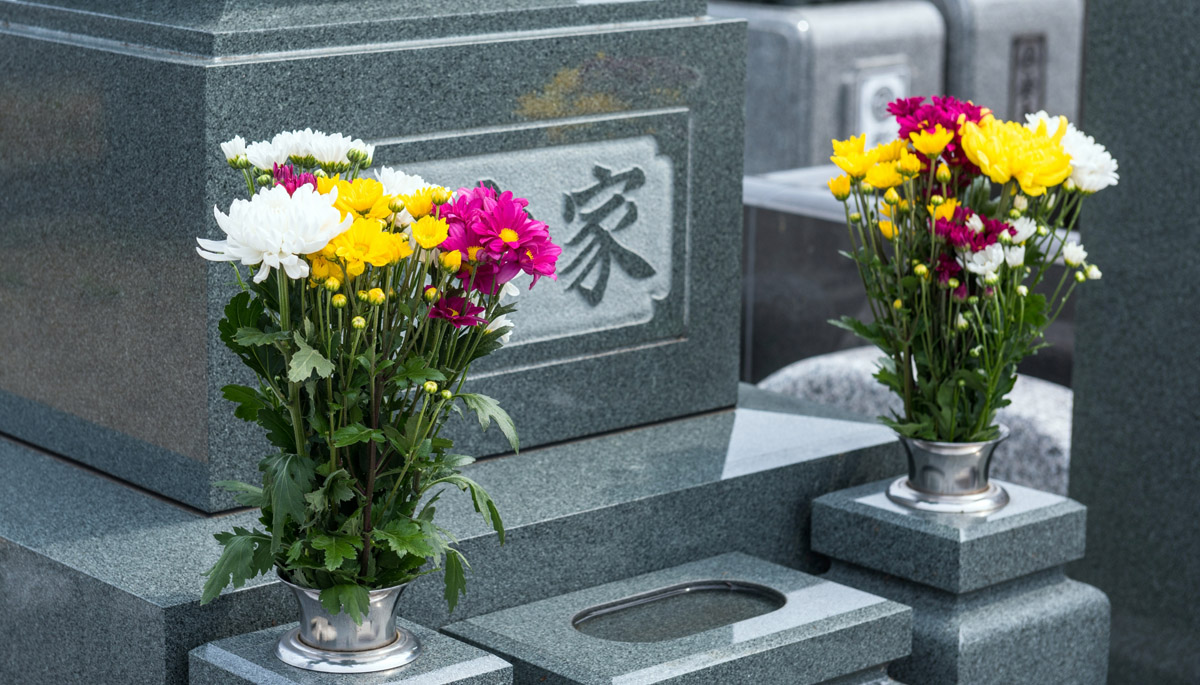
Higan is a Buddhist-related observance held around the spring and autumn equinoxes. In Japan, people often visit family graves and honor their ancestors during the spring and autumn Higan periods.
The word “higan” refers to the world of enlightenment, in contrast to this world of confusion and suffering. The spring and autumn equinoxes are times when day and night are nearly equal in length, and they came to be understood as periods with Buddhist meaning.
During Higan, families clean graves, offer flowers and incense, and join their hands in prayer. It is not a highly visible tourist event, but it is an important custom for understanding Japanese views of ancestors and life and death.
Along with Obon, Higan shows how Buddhist culture has taken root in everyday Japanese life.
Hana Matsuri and the Birth of the Buddha
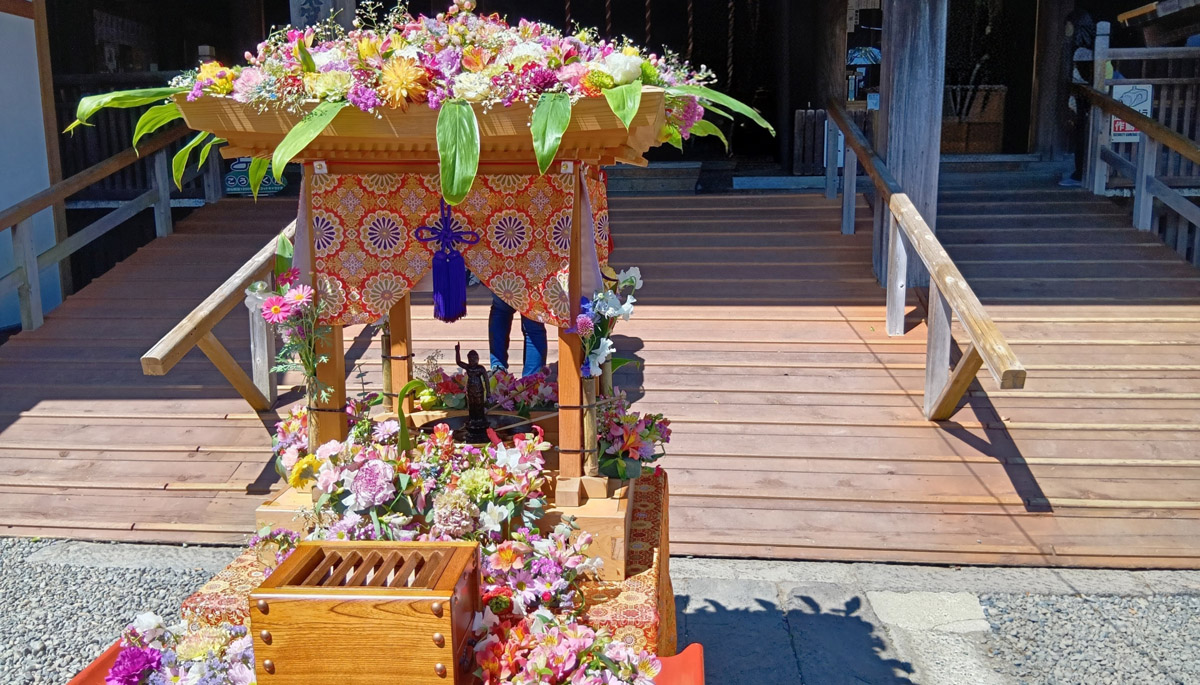
Hana Matsuri is an event that celebrates the birth of Shakyamuni, the founder of Buddhism. It is generally held on April 8.
At temples, a small statue of the newborn Buddha may be placed in a flower-decorated pavilion, and visitors pour sweet tea over it. This custom is said to come from the tradition that sweet rain fell when the Buddha was born.
Hana Matsuri is not as widely known as New Year or Obon, but it is one of the important annual events for Buddhist temples. Depending on the region, it may also be held as a Buddhist service or as an event for children.
For travelers visiting temples, Hana Matsuri offers a good opportunity to experience a Japanese Buddhist event.
Summer Festivals and Shrine Rituals
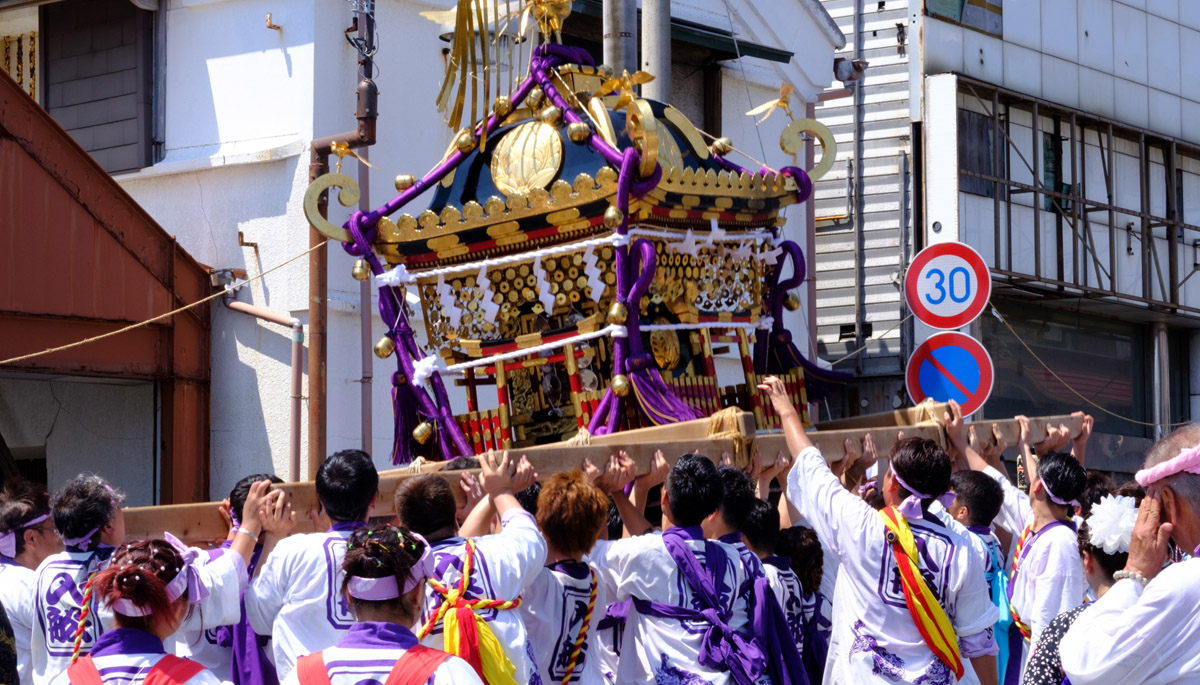
In summer, many festivals are held throughout Japan. The sounds of drums, portable shrines, floats, lanterns, and food stalls are well-known parts of Japan’s summer scenery.
However, many summer festivals originally developed as shrine rituals. They express gratitude to local deities, drive away misfortune, and pray for the safety and prosperity of the community.
A mikoshi, or portable shrine, is understood as something in which a deity temporarily rides. By carrying the mikoshi through the town, people have believed that the deity’s power spreads throughout the community.
Some festivals feature large floats or hoko. For example, Kyoto’s Gion Matsuri began as an event to pray for protection from epidemics. Behind the splendid processions and decorations is a prayer to protect the community.
When watching a festival as a traveler, it is important to see it not merely as an event, but as a sacred practice that local people have preserved with care.
Tanabata and Wishes
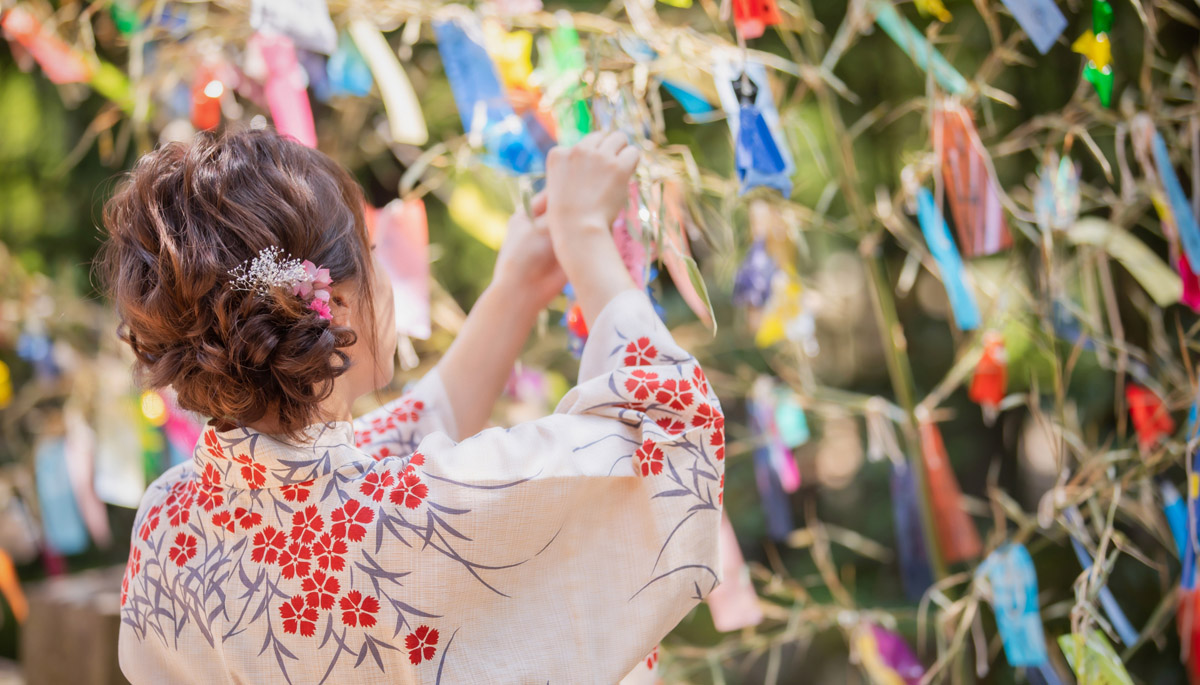
Tanabata is held on July 7. It is known for the story of Orihime and Hikoboshi, and for the custom of writing wishes on strips of paper and hanging them on bamboo branches.
Tanabata developed through the combination of star-related legends and wishes for improvement in arts and skills introduced from China with Japanese customs. Today, it is enjoyed as a seasonal event in which both children and adults write their wishes.
In some regions, large Tanabata festivals are held. Colorful decorations fill shopping streets and town centers, attracting many visitors.
Tanabata is somewhat different from events held directly at shrines or temples, but it is deeply connected with Japan’s culture of prayer because people write down their wishes and display them.
Tanabata is also said to have had another aspect: not only as a festival for making wishes to the stars, but also as a custom of purification before Obon, when ancestral spirits are welcomed. In this sense, Tanabata and Obon can be seen not as completely separate events, but as connected parts of Japan’s summer faith culture.
Obon and Honoring Ancestors
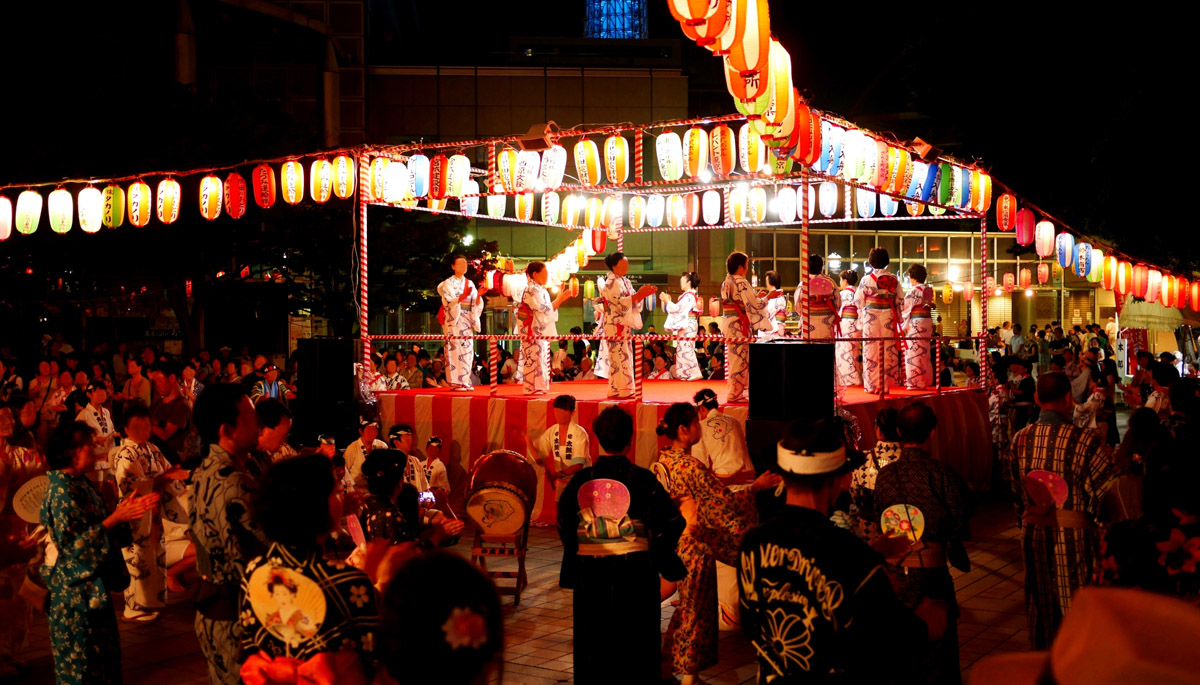
Obon is an event for welcoming and honoring the spirits of ancestors. It is one of the most important annual events for understanding Japanese Buddhist culture.
During Obon, families gather, visit graves, and place offerings at household Buddhist altars. Depending on the region, people light mukaebi and okuribi fires to welcome and send off ancestral spirits.
Bon Odori, or Bon dances, are also connected with Obon. Today, they are often enjoyed as local summer festivals, but originally they were performed as a way to comfort ancestral spirits.
There are also events that use fire or light to send off ancestors, such as Kyoto’s Gozan Okuribi and lantern-floating ceremonies in various regions. Obon brings together thoughts of family, community, ancestors, and the dead.
For travelers from overseas, Obon offers an important opportunity to understand Japanese views of family, ancestors, and life and death.
Autumn Festivals and Gratitude for the Harvest
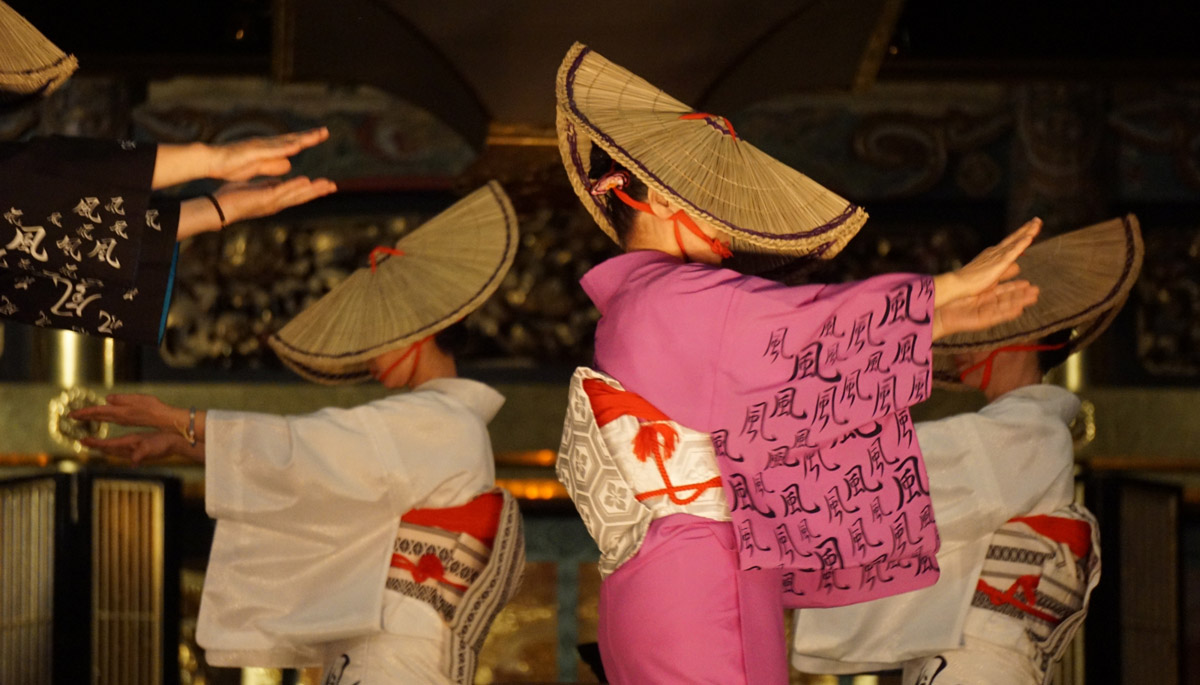
In autumn, festivals expressing gratitude for the harvest are held in many parts of Japan. As crops ripen, people give thanks to local deities and pray for a good harvest and peace in the following year.
Autumn festivals may include mikoshi, floats, lion dances, drums, and kagura. The details differ by region, but they are all connected with gratitude toward local deities and nature.
In Japanese faith culture, nature has not been seen merely as a resource, but as something essential that supports people’s lives. Festivals that give thanks for the rice harvest and seasonal changes clearly reflect this way of thinking.
Autumn festivals are held not only at large sightseeing destinations but also at small local shrines. By seeing festivals rooted in local communities, visitors can understand the everyday form of Japan’s faith culture.
Shichi-Go-San and Prayers for Children’s Growth
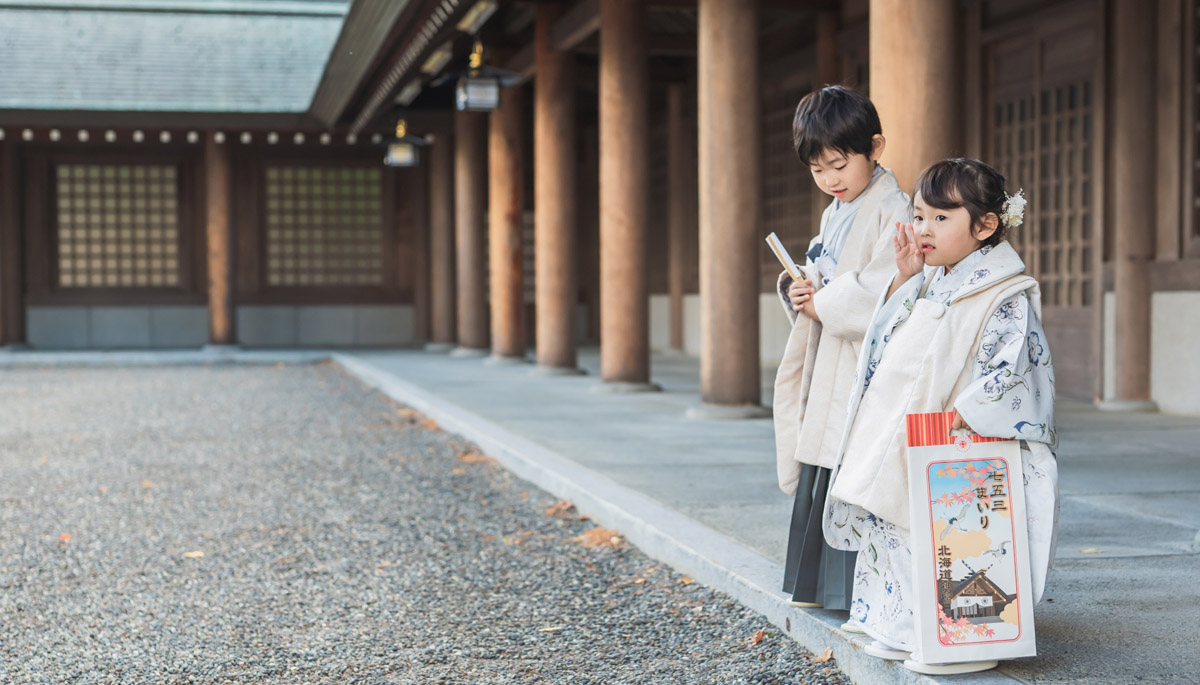
Shichi-Go-San is an event that celebrates children’s growth. In general, children aged three, five, and seven dress in formal clothing and visit a shrine.
In the past, it was more difficult for children to grow up safely than it is today. For this reason, Shichi-Go-San developed as an event to give thanks that a child had reached a certain age and to pray for continued health.
Today, it is widely known as a family event in which children take commemorative photos and visit a shrine. Children dressed in colorful kimono are a common sight at shrines in autumn.
Shichi-Go-San is both a family celebration and a form of faith culture in which families pray for children’s growth at a shrine.
Tori-no-Ichi and Prayers for Business Prosperity
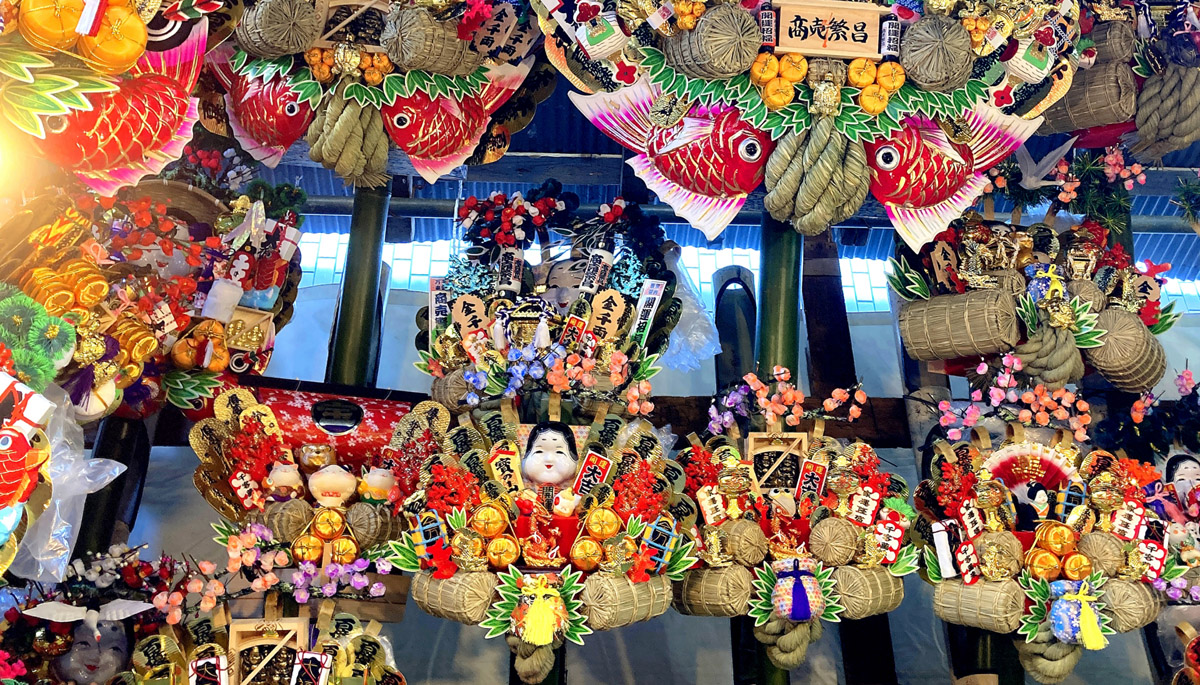
Tori-no-Ichi is an event mainly held in November and is known as a festival for business prosperity and good fortune. It is held at many shrines and temples, especially in the Kanto region.
At Tori-no-Ichi, decorated kumade rakes are sold as lucky charms. Kumade are believed to gather good fortune and luck, and they are especially popular among people involved in business.
A kumade is originally a tool used to rake up fallen leaves and other things. Because of its shape and function, it came to be seen as a lucky object for “raking in” good fortune. This practice of placing wishes on everyday objects reflects Japan’s sense of auspicious symbolism.
Many stalls line the shrine or temple grounds, and lively calls and hand-clapping rituals can be heard. Although the event is lively, behind it is a prayer for prosperity in business over the coming year.
Tori-no-Ichi shows how faith, lucky objects, commerce, and local liveliness come together in Japanese annual events.
Joya no Kane and the End of the Year
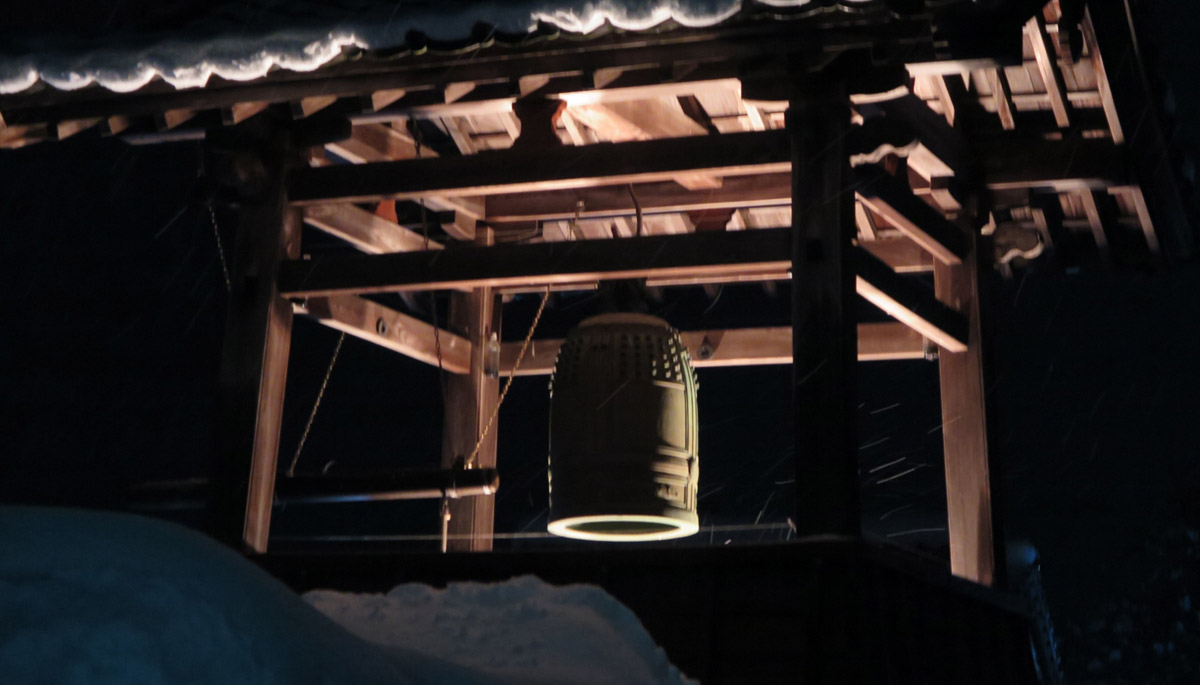
On New Year’s Eve, many temples ring Joya no Kane, the year-end temple bell. It is one of Japan’s representative Buddhist events marking the end of the year.
The bell is commonly rung 108 times, which is often explained as a way to remove human worldly desires. Listening to the sound of the bell becomes a quiet moment to reflect on the past year and welcome the new one.
At some temples, visitors are allowed to ring the bell themselves. However, there may be limits on the number of participants, or numbered tickets may be required, so it is better to check in advance if you wish to take part.
Joya no Kane is not a flashy festival, but it allows visitors to sense how Japanese people have marked the boundary between one year and the next.
Etiquette for Travelers Watching Festivals
Japanese festivals can be fascinating experiences for travelers. Beautiful costumes, music, food stalls, processions, mikoshi, and floats all offer memorable scenes.
However, festivals are important shrine rituals and annual events for local communities. Even when they are open to visitors as sightseeing events, faith and local tradition remain at their center.
When watching a festival, do not enter restricted areas, touch mikoshi or ritual objects without permission, or block the movement of processions. When taking photos, avoid photographing participants or children at close range without permission.
In crowded places, pay attention to the movement of people around you and avoid occupying the same spot for too long. By respecting the background of the festival and the people who have preserved it, you can experience its meaning more deeply.
What Japan’s Annual Events Reveal About Its Religious Outlook
Japan’s annual events and seasonal festivals reveal several features of Japan’s religious outlook.
One is gratitude toward nature. Many events involve prayers or thanks at seasonal turning points, such as the beginning of spring, protection from summer epidemics, the autumn harvest, and the transition from winter to the New Year.
Another is the importance of honoring ancestors. Obon, Higan, grave visits, and offerings at household Buddhist altars all show an attitude of maintaining ties with those who have passed away.
There are also many wishes connected with daily life, such as protection from misfortune, good luck, business prosperity, and children’s growth. Religion is not only found in special places; it is also connected with family, work, health, and the safety of the community.
Japanese religious culture has often been passed down less through strong doctrinal claims and more through events and customs embedded in everyday life. Annual events and festivals are an important doorway into understanding this feature.
Understanding Japanese Culture Through Annual Events
Japan’s annual events and seasonal festivals bring together Shinto, Buddhism, folk beliefs, local customs, gratitude toward nature, and the honoring of ancestors.
At New Year, people pray for happiness in the coming year. At Setsubun, they drive away misfortune. During Obon, they welcome ancestral spirits. At autumn festivals, they give thanks for the harvest. With Joya no Kane, they close the year. These events show how Japanese people have understood seasonal changes and important turning points in life.
When traveling in Japan, if you encounter a festival or annual event, it is worth looking not only at its lively and colorful appearance, but also at the prayers and gratitude behind it. There, you can find a deep connection between Japanese faith culture and everyday life that may not be visible through famous sightseeing spots alone.