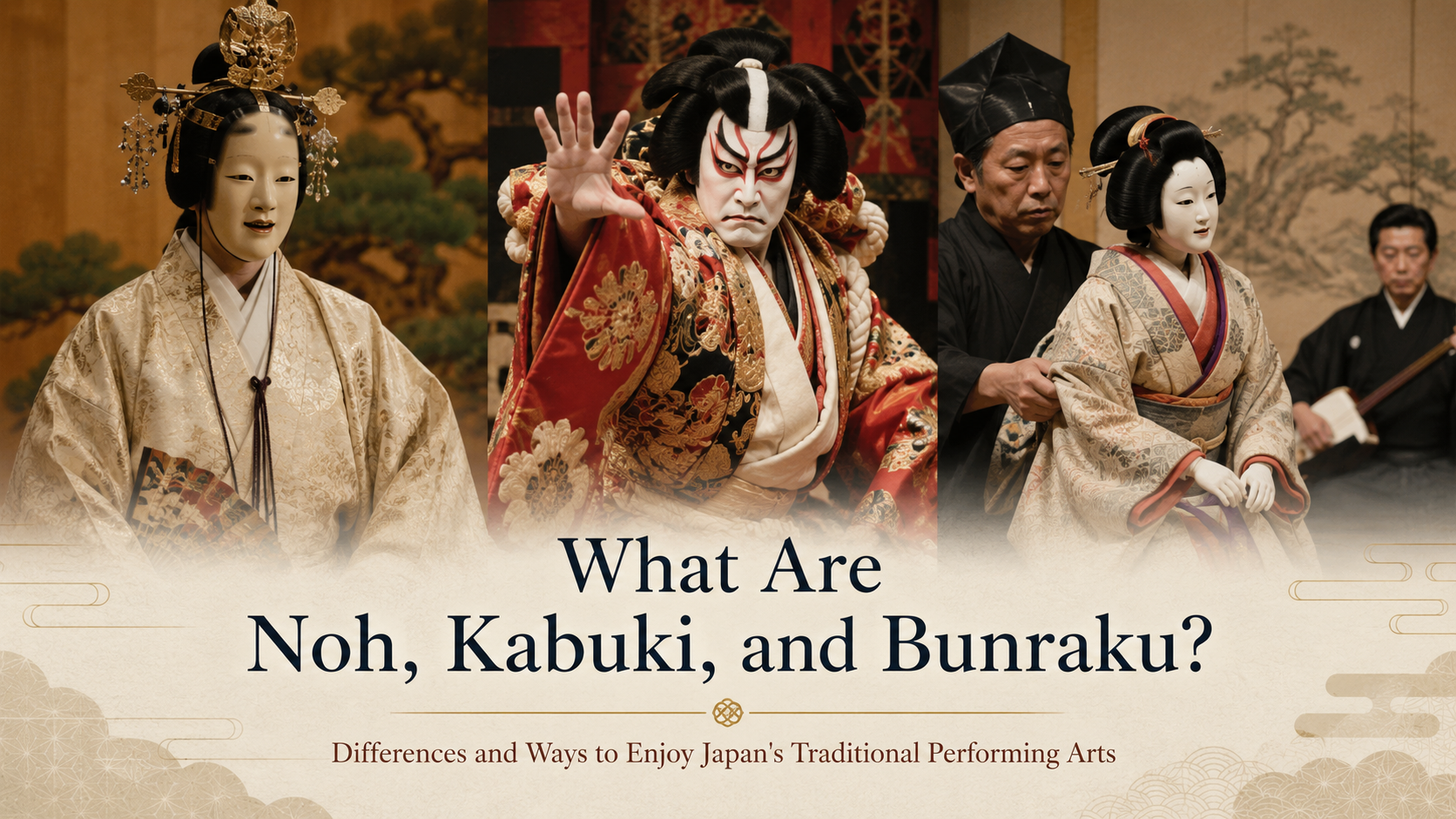
Japan has several traditional stage arts with long histories, including Noh, Kabuki, and Bunraku. All three are important parts of Japanese culture, but their forms of expression and stage atmosphere are very different. Noh is a performing art that values stillness and symbolism. Kabuki is known for its bold acting and dramatic stage effects. Bunraku expresses stories through puppets, narration, and the shamisen.
For people encountering Japanese traditional performing arts for the first time, the differences between these art forms may not be immediately clear. However, once you know the basic features of Noh, Kabuki, and Bunraku, you will know where to focus when watching a performance. This article explains the differences between Noh, Kabuki, and Bunraku in a clear and accessible way for English-speaking readers, along with tips on how to enjoy them.
What Is Noh?
A Performing Art That Values Stillness and Symbolism
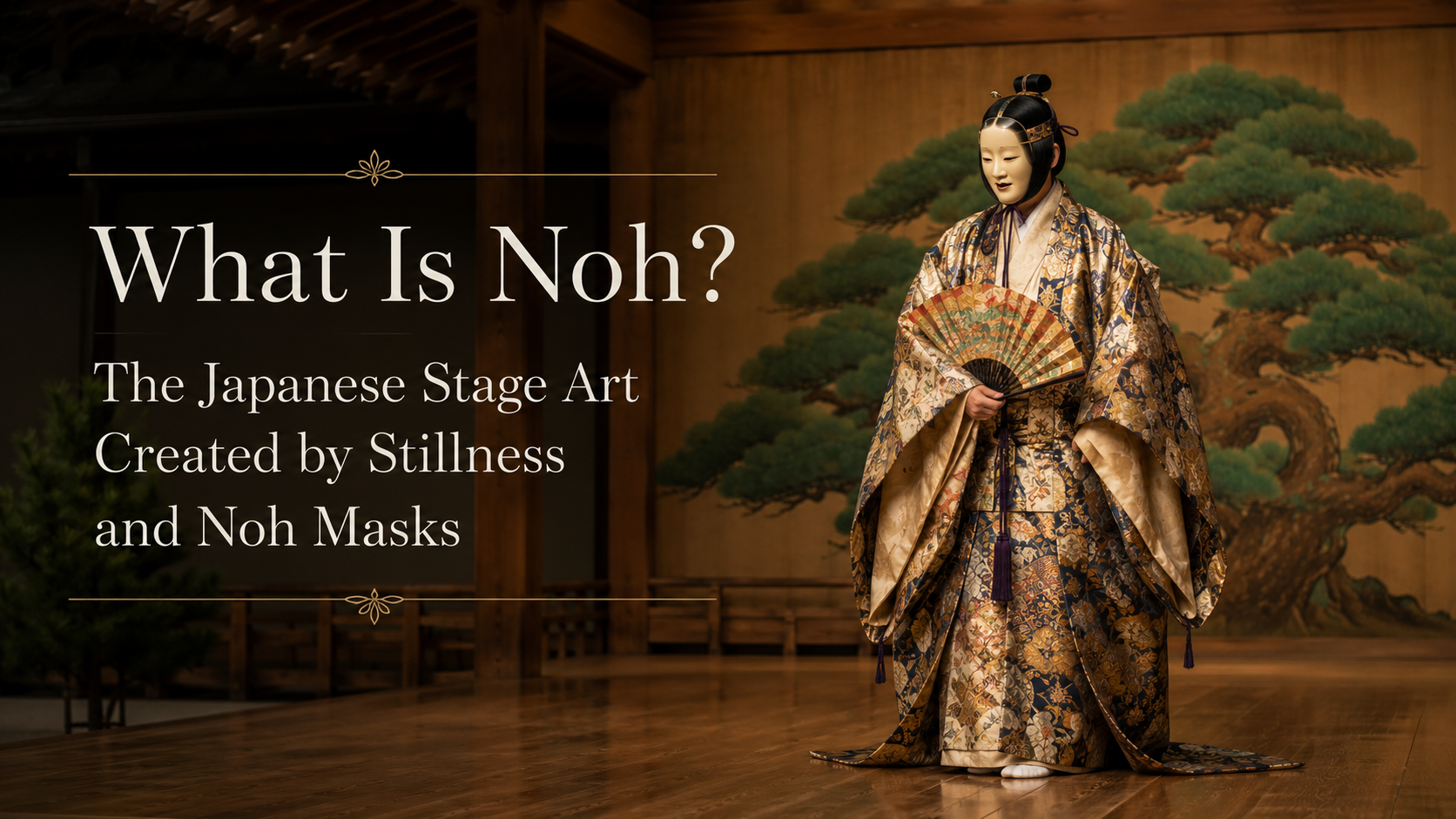
Noh is a traditional Japanese performing art made up of masks, chanting, stylized movement, and musical accompaniment. Rather than showing large movements or flashy stage effects, Noh expresses stories and emotions through a small number of carefully controlled movements and words. It is quite different from modern theater or film, where scenes and emotions are often explained more directly.
On a Noh stage, the emotions of the characters and the events of the story are expressed through slow movement, the resonance of the voice, music, and the appearance of the mask. At first, the movements may seem minimal and the pace may feel slow. However, within that stillness, a unique tension and lingering atmosphere are created.
Noh is not only a performing art in which the audience follows the details of the story. It is also an art form in which the audience experiences the atmosphere of the entire stage. The movement of the masked performer, the chanting voice, and the sounds of the flute and drums come together to create a sense of time that feels different from everyday life.
Noh Masks and Slow Movements
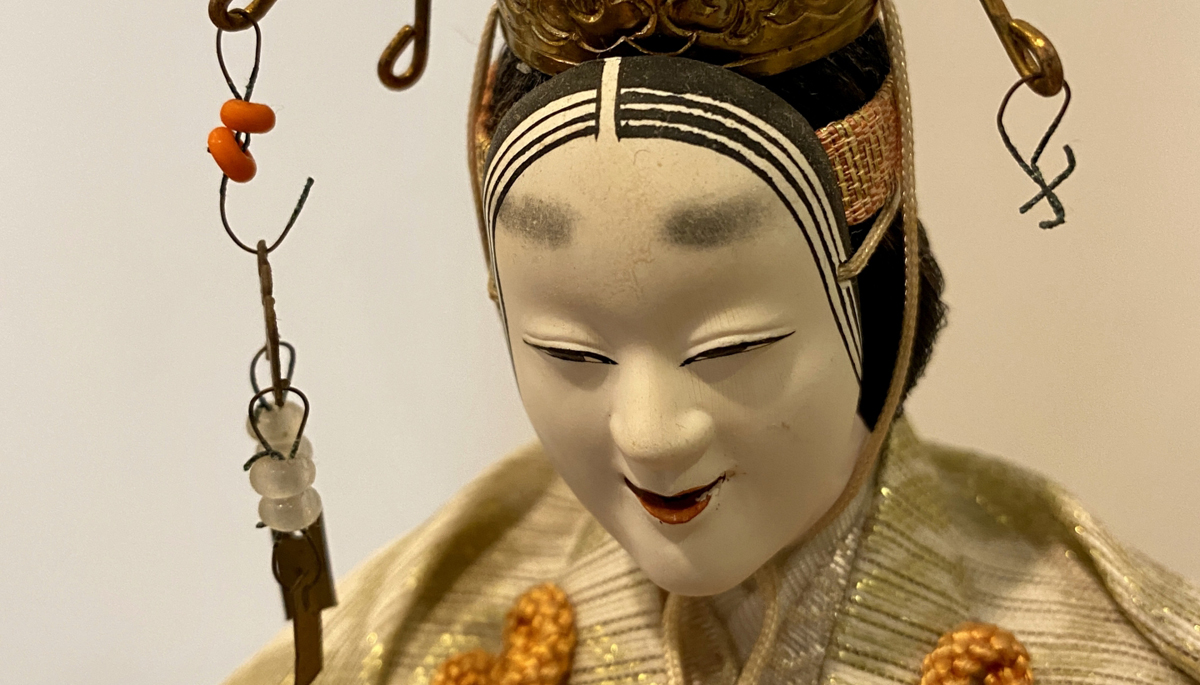
One of the most symbolic elements of Noh is the Noh mask. At first glance, a Noh mask may seem to have a fixed expression. However, when the performer changes the angle of the face slightly, the mask can appear to show sadness, stillness, anger, or deep emotion. Rather than changing facial expressions in an obvious way, Noh expresses emotion through subtle angles and the way light falls on the mask.
The movements in Noh are also extremely slow and controlled. Walking, stopping, and turning all have meaning. Because there are few movements, each gesture leaves a strong impression. For first-time viewers, it may be better not to try to understand the entire story at once. Instead, pay attention to the performer’s steps, body direction, and the way the mask appears from different angles. This can help you feel the atmosphere of Noh more naturally.
How to Enjoy Noh for the First Time
When watching Noh for the first time, you do not need to understand everything from the beginning. Some parts may feel difficult if you are not familiar with the language or background. Even so, you can still experience the character of Noh by paying attention to the mask, costume, music, and the quietness of the stage.
Noh is not a performing art that gives quick and strong stimulation. Rather, it is a stage art that leaves an impression gradually within a quiet flow of time. Reading a brief summary of the story in advance can help you understand the relationships between the characters and the meaning of the scenes. During the performance, it is helpful to focus less on every individual word and more on the atmosphere created by the whole stage.
What Is Kabuki?
Colorful Costumes and Bold Acting
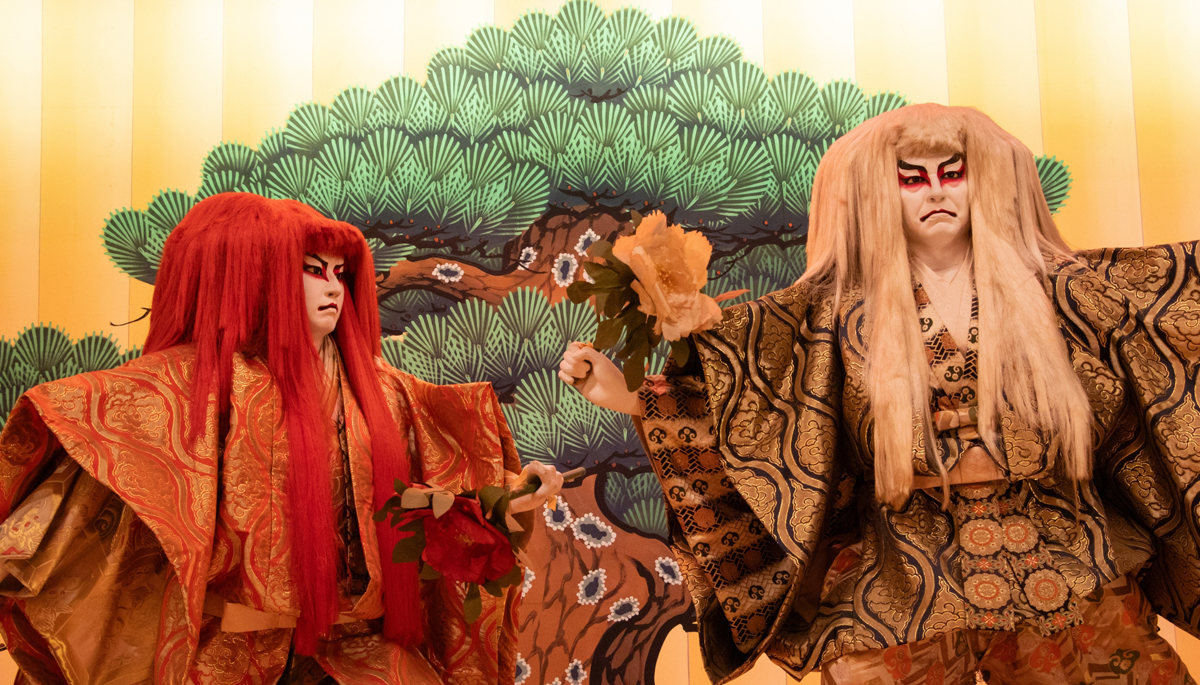
Kabuki is a traditional Japanese performing art that combines acting, music, dance, costumes, and stage effects. While Noh values stillness and symbolism, Kabuki is known for visual splendor and bold acting. Luxurious costumes, striking makeup, powerful lines, and dynamic stage direction come together to create a performance that often leaves a strong impression even on first-time viewers.
Kabuki stories may be based on historical events, the lives and romances of townspeople, loyalty, family relationships, or dramatic human emotions. The stories are classical, but the stage expression is rich and lively. The actor’s voice, movement, costume colors, and changes in the stage setting work together to present the story on a grand scale.
Mie, Kumadori, and Other Features
One of the best-known features of Kabuki is mie. Mie is a dramatic pose held by an actor at a moment of emotional or narrative intensity. The audience’s attention gathers at that moment, and the tension on stage becomes stronger. Even if you do not understand every word, a mie pose can show that the character is experiencing a powerful emotion.
Kabuki is also known for kumadori, a style of makeup that uses bold lines in colors such as red and blue to emphasize the character’s personality and power. Heroic characters, frightening figures, and supernatural beings can be visually identified through this makeup. For English-speaking readers, kumadori is one of the easiest features to recognize when first learning about Kabuki.
The stage itself is also a major attraction. Kabuki may use a hanamichi, a walkway that passes through the audience, a revolving stage that helps scenes change, and other devices that create impressive entrances and dramatic effects. Kabuki is not only something to understand through the story. It is also a performing art that can be enjoyed visually through the entire stage.
Onnagata: A Unique Form of Expression
Another important feature of Kabuki is onnagata, in which male actors perform female roles. Onnagata is not simply an imitation of women. It is a highly refined art in which the actor expresses a stylized image of femininity through the voice, walking style, hand movements, and handling of the costume.
This may seem surprising to some English-speaking readers, but onnagata is an essential part of Kabuki aesthetics. It does not aim to reproduce realistic femininity exactly as it appears in everyday life. Instead, it creates a form of beauty and emotion that belongs to the Kabuki stage.
How to Enjoy Kabuki for the First Time
When watching Kabuki for the first time, it is helpful to pay attention to the costumes, makeup, actors’ movements, music, and stage effects. Even if you do not understand every detail of the story, you can still enjoy the power of the stage, the colors, and the actors’ expressions.
Kabuki performances can be long, but in some cases it is possible to watch only one act. For travelers, starting with a shorter viewing experience can be a good way to get a sense of the atmosphere. Reading a simple summary of the play in advance will also make it easier to understand what is happening on stage.
What Is Bunraku?
A Performing Art Combining Puppets, Narration, and Shamisen
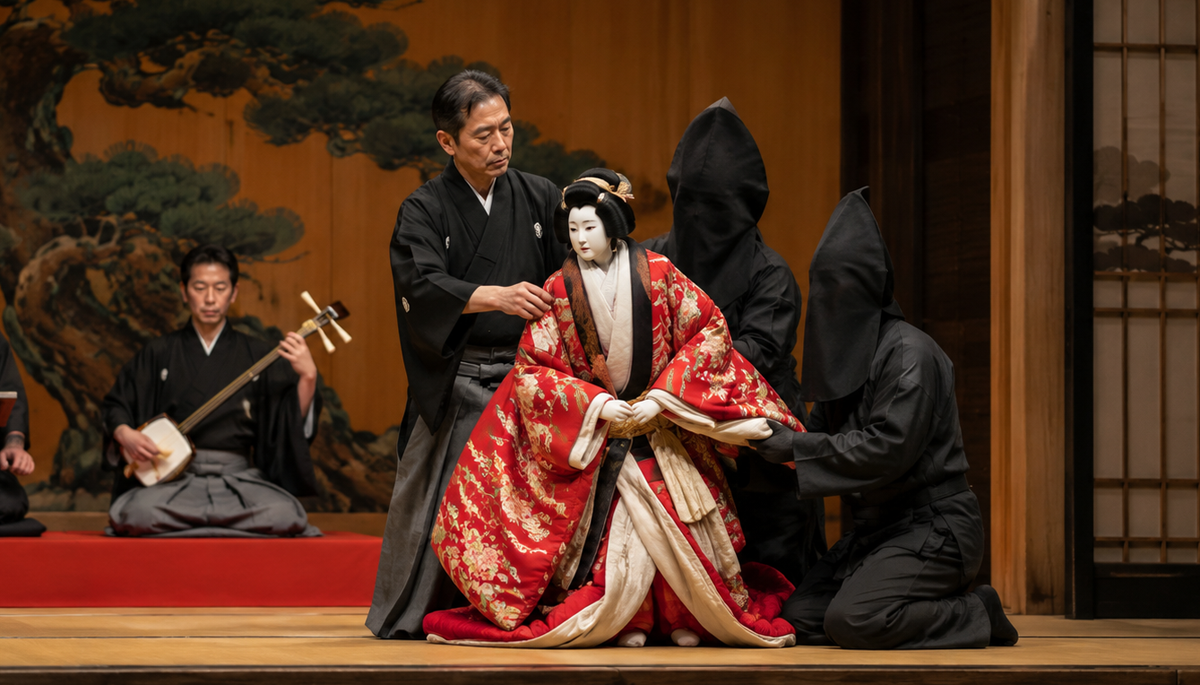
Bunraku, also known as ningyō jōruri, is a traditional Japanese performing art. Puppeteers operate the puppets, the tayū narrates the story, and the shamisen supports the emotions and scenes through music. It is a highly sophisticated stage art that cannot be fully explained by the word “puppet theater” alone.
The distinctive feature of Bunraku is that puppets, narration, and shamisen do not exist separately. They work together to create the story. Through the voice of the tayū, the emotions of the characters and the scenes of the story are expressed. The shamisen supports those emotions, and the movements of the puppets give physical form to the characters’ inner lives. Although the audience knows that the figures are puppets, they gradually begin to feel human emotions in them.
The Expressive Power of the Puppeteers
In Bunraku, one puppet may be operated by several puppeteers. The main puppeteer usually controls the head and right hand, while other puppeteers control the left hand and the feet. Even though several people are moving one puppet, on stage it can appear as if a single person is naturally alive.
The puppet’s face does not change expression dramatically. However, sadness, hesitation, determination, joy, and other emotions can be expressed through the tilt of the head, the movement of the hands, and the direction of the body. When watching Bunraku, there may be moments when you forget that the figure is a puppet. That is one of the special expressive powers of Bunraku.
The Power of Narration and Shamisen
The narration by the tayū is also extremely important in Bunraku. The tayū is not simply a narrator. While telling the story, the tayū also performs the lines and emotions of multiple characters alone. Through changes in vocal intensity, timing, and tone, the tayū expresses men, women, elderly people, young people, and characters of different social positions, bringing the entire story to life.
The shamisen accompanies the narration and expresses the tension of the scene and the feelings of the characters. Even if you do not understand the words, the strength and softness of the voice and music can help you sense the weight of the scene and the rise of emotion. In Bunraku, it is helpful not to focus only on the puppets, but also to notice how the tayū and shamisen support the story.
How to Enjoy Bunraku for the First Time
When watching Bunraku for the first time, try not to see the puppet movement, narration, and shamisen as separate elements. Instead, notice how they overlap and support one another. The puppet moves, the narration gives emotion, and the shamisen creates the atmosphere of the scene. Together, they create a story on stage.
Reading a brief summary of the story in advance can make it easier to understand the movements and narration during the performance. At first, you may notice the puppeteers themselves, but as you continue watching, your attention may gradually shift toward the puppet as a character. That change in perception is one of the fascinating parts of watching Bunraku.
Differences Between Noh, Kabuki, and Bunraku
Noh, Kabuki, and Bunraku are all representative traditional performing arts of Japan, but the center of expression is different in each. Noh creates a quiet and symbolic world through masks, movement, and chanting. Kabuki presents a colorful and dramatic world through actors, costumes, makeup, and stage effects. Bunraku expresses story and emotion through the unity of puppets, narration, and shamisen.
The differences can be summarized as follows.
| Point | Noh | Kabuki | Bunraku |
|---|---|---|---|
| Main form of expression | Masks, movement, chanting | Actors, costumes, stage effects | Puppets, narration, shamisen |
| Atmosphere | Quiet and symbolic | Colorful and dramatic | Rich in story and emotion |
| Main highlights | Noh masks, movements, lingering atmosphere | Mie, kumadori, hanamichi, costumes, onnagata | Puppet movements, tayū, shamisen |
| Accessibility for first-time viewers | May feel difficult at first, but has unique depth | Visually engaging and relatively easy to enjoy | Easier to enjoy once you understand how it works |
| How to enjoy it | Appreciate the atmosphere and symbolism | Enjoy the power and color of the stage | Watch the unity of narration and puppets |
For people seeing Japanese traditional performing arts for the first time, Kabuki may feel relatively accessible because it provides a great deal of visual information. Noh may seem quiet and abstract at first, but it has a unique depth. Bunraku can be especially impressive once you understand the relationship between the puppets, narration, and shamisen.
The important thing is not to choose only by asking which one is easiest to understand. Each has a different kind of appeal. If you want to experience stillness, Noh can be a good entry point. If you want to enjoy a colorful stage, Kabuki may be a good choice. If you want to experience the depth of story and emotion, Bunraku offers a powerful introduction.
How to Enjoy Them for the First Time
Read a Summary Beforehand
Noh, Kabuki, and Bunraku often include classical stories and traditional language. For that reason, it may feel difficult to understand everything on the spot while watching the performance. Reading a brief summary of the play beforehand can make it easier to follow what is happening on stage.
Knowing the outline of the story does not reduce the enjoyment. Rather, once you understand the basic flow, you have more room to pay attention to the actors’ movements, music, costumes, and stage changes. For first-time viewers, it is helpful to know the broad outline of the story rather than trying to understand every line.
Check for English Guides or Explanations
When watching Japanese traditional performing arts, it is a good idea to check in advance whether English audio guides, subtitles, pamphlets, or story summaries are available. For Kabuki and Bunraku, English audio guides may be available depending on the theater and performance. Some Noh performances may also offer English subtitles or explanations.
However, English support differs depending on the theater and the specific performance. Before booking tickets, check the official website for English guides, subtitles, pamphlets, performance times, and summaries of the program. This can make it much easier for first-time visitors to follow the flow of the performance.
Focus on Sound, Costumes, and Movement
Traditional performing arts are not enjoyed through words alone. In Noh, you can pay attention to the sound of chanting and instruments, the appearance of the mask, and the quiet movements. In Kabuki, the costume colors, actors’ voices, mie, and stage changes are major highlights. In Bunraku, the narration of the tayū, the sound of the shamisen, and the subtle movements of the puppets support the story.
Even if you do not fully understand the language, there is a great deal of information on stage. The intensity of the sound, the speed of movement, the colors of the costumes, and the brightness of the stage can all help you sense the atmosphere of the scene and the emotions of the characters. For English-speaking visitors, starting with what you can see and hear can make traditional performing arts much easier to enjoy.
Start with a Shorter Performance
Noh, Kabuki, and Bunraku can include long performances. For first-time viewers, beginning with a long program may make it difficult to stay focused. During a trip, you may also need to consider transportation and other plans, so starting with a shorter performance or just one part of a program can be a good approach.
At first, it is enough to experience the atmosphere of the stage rather than trying to understand everything. Just being in the theater, hearing the sounds, and seeing the movements of the actors or puppets can give you a sense of what makes Japanese traditional performing arts distinctive.
Why It Is Worth Seeing Them in Japan
You Can Experience the Stage Space Itself
Noh, Kabuki, and Bunraku can also be watched on video, but the impression is very different when you see them on an actual stage. The atmosphere of the theater, the distance between the stage and the audience, the resonance of the sound, and the stillness or reactions of the audience are all elements that are difficult to feel unless you are there in person.
In Noh, a quiet sense of space spreads across the stage. In Kabuki, the stage effects and the presence of the actors reach the audience directly. In Bunraku, the voice of the tayū, the sound of the shamisen, and the movements of the puppets come together in the same space. The value of seeing these arts in Japan lies not only in the performance itself, but also in experiencing the entire stage environment.
A Gateway to the Diversity of Japanese Culture
When people think of Japanese culture, they may imagine quiet aesthetics such as tea ceremony, ikebana, or gardens. By watching Noh, Kabuki, and Bunraku, however, you can see that Japanese culture also includes many different forms of stage expression.
Noh has stillness and symbolism. Kabuki has color, drama, and theatrical power. Bunraku has deep storytelling and emotion. By comparing the three, you can see that Japanese traditional culture cannot be described through only one mood or style.
Conclusion
Noh, Kabuki, and Bunraku are all representative traditional performing arts of Japan. However, their forms of expression are very different. Noh creates a quiet and symbolic world through masks, movement, and chanting. Kabuki presents a colorful world through actors, costumes, makeup, and stage effects. Bunraku expresses stories and emotions through the unity of puppets, narration, and shamisen.
When watching them for the first time, you do not need to understand everything perfectly. Reading a short summary, checking whether English guides or explanations are available, and paying attention to sound, costumes, movement, and the atmosphere of the stage can already help you appreciate their appeal. Including a traditional performing arts experience in your trip to Japan can be a valuable way to understand the depth and variety of Japanese culture.