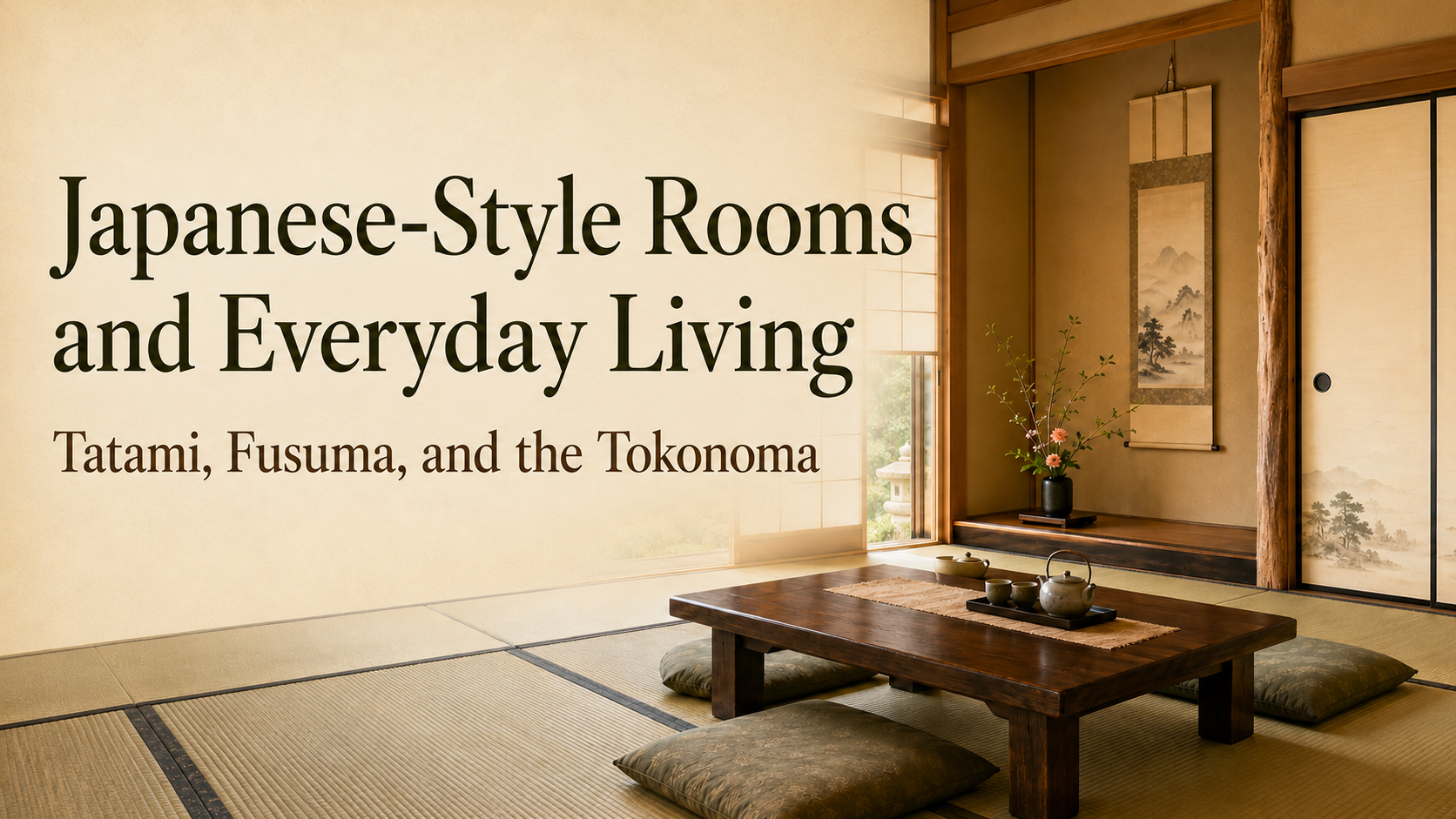
When traveling in Japan, you may encounter Japanese-style rooms in ryokan inns, temples, old folk houses, tea rooms, and traditional residences. A room with tatami flooring, fusuma sliding doors, shoji screens, a tokonoma alcove, zabuton cushions, and low tables leaves a strong impression of Japanese living space.
A Japanese-style room is not simply a “Japanese-looking room.” It has long been used for many aspects of daily life, including sitting, eating, welcoming guests, sleeping, and enjoying seasonal decorations.
This article introduces Japanese-style rooms and ways of living through tatami, fusuma, shoji, the tokonoma, and other traditional elements.
- What Is a Japanese-Style Room?
- What Is Tatami?
- How to Spend Time on Tatami
- Fusuma and Shoji Create Flexible Spaces
- What Is a Tokonoma?
- Manners Around the Tokonoma
- A Room for Sitting, Eating, and Sleeping
- Experiencing a Japanese-Style Room at a Ryokan
- Basic Manners When Entering a Japanese-Style Room
- What Japanese-Style Rooms Reveal About Japanese Living Culture
What Is a Japanese-Style Room?
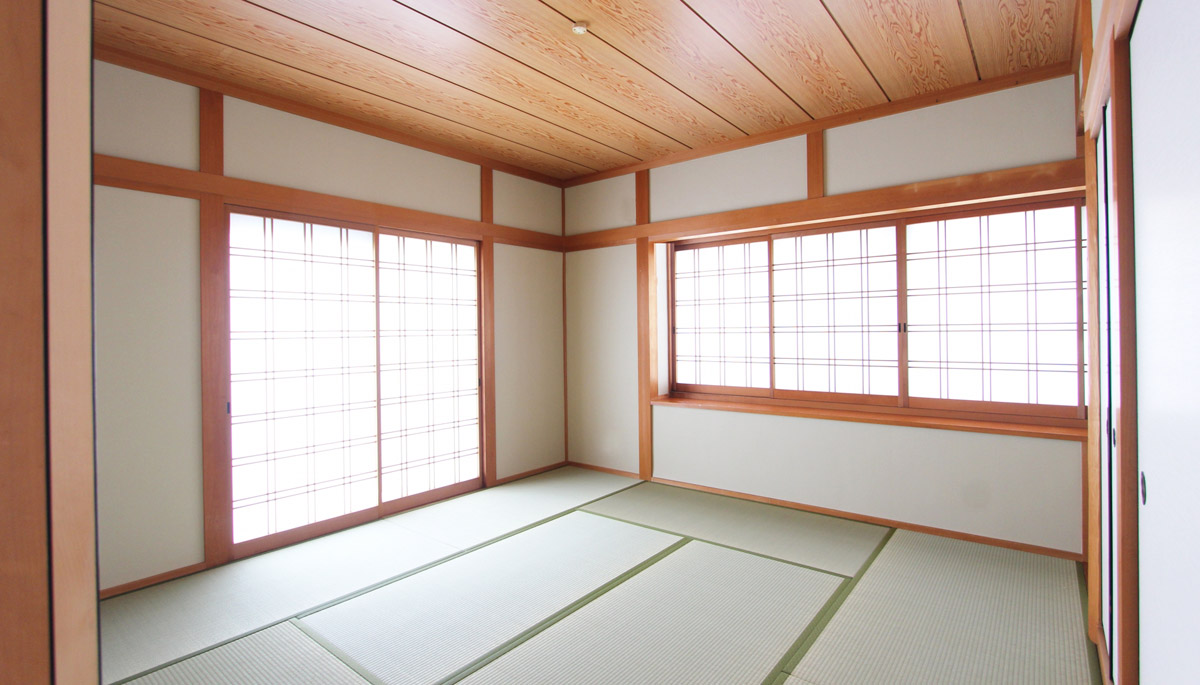
A Japanese-style room, or washitsu, is a Japanese room with tatami mats on the floor. In traditional Japanese houses, tatami rooms were often used as central living spaces.
In modern Japan, not every home has a Japanese-style room. In urban apartments and newer houses, some homes consist entirely of Western-style rooms. Even so, Japanese-style rooms are still valued in ryokan inns, temples, tea rooms, old folk houses, and homes where relatives gather.
One key feature of a Japanese-style room is that its role is not limited to a single purpose. During the day, it can be used as a guest room or living room. At night, futon bedding can be laid out, turning it into a bedroom. This flexibility, with fewer fixed pieces of furniture and uses that change as needed, is one of its defining characteristics.
What Is Tatami?
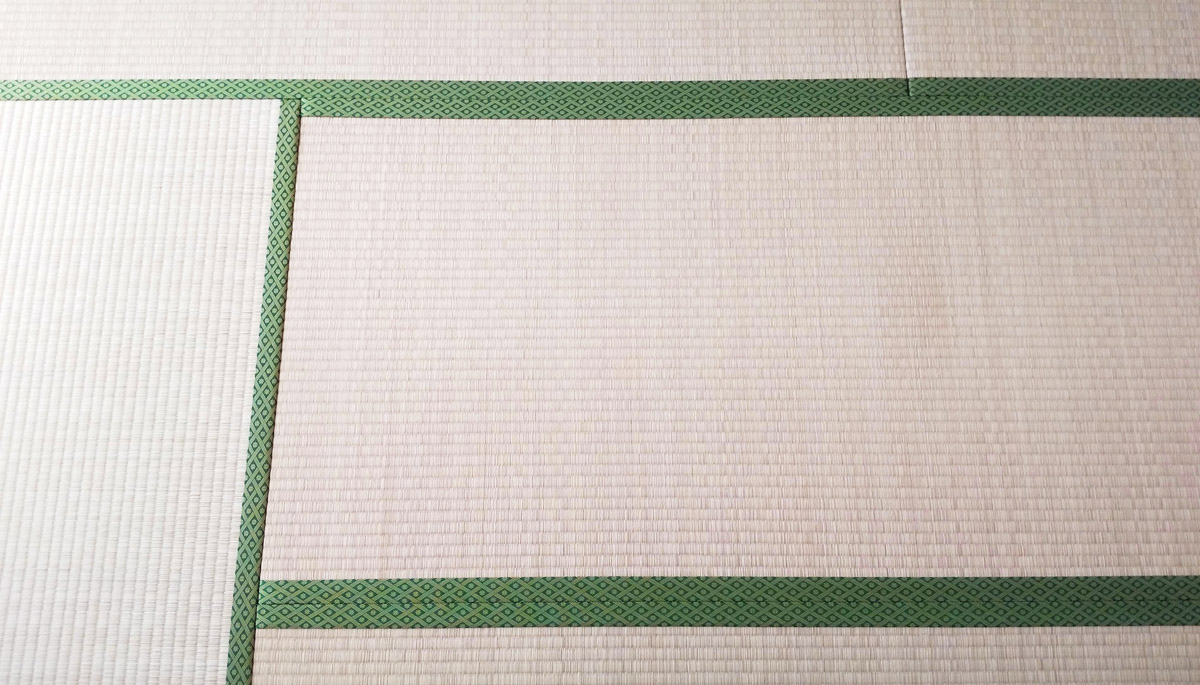
Tatami are traditional Japanese floor mats used in Japanese-style rooms. Traditional tatami were made with a core of layered rice straw and a surface woven from igusa rush. Today, modern materials such as building-material tatami and washi-paper tatami are also used to suit contemporary homes.
Tatami have softness and moderate elasticity. Because people take off their shoes before entering, they can sit, lie down, and relax directly on the floor. In this sense, the floor itself becomes part of daily life.
The scent of tatami is also an important part of the atmosphere of a Japanese-style room. New tatami have a fresh, calming scent of igusa. This scent may become part of the memory of entering a tatami room at a ryokan or tea room.
Tatami are not merely flooring. They have supported a Japanese way of living close to the floor.
How to Spend Time on Tatami
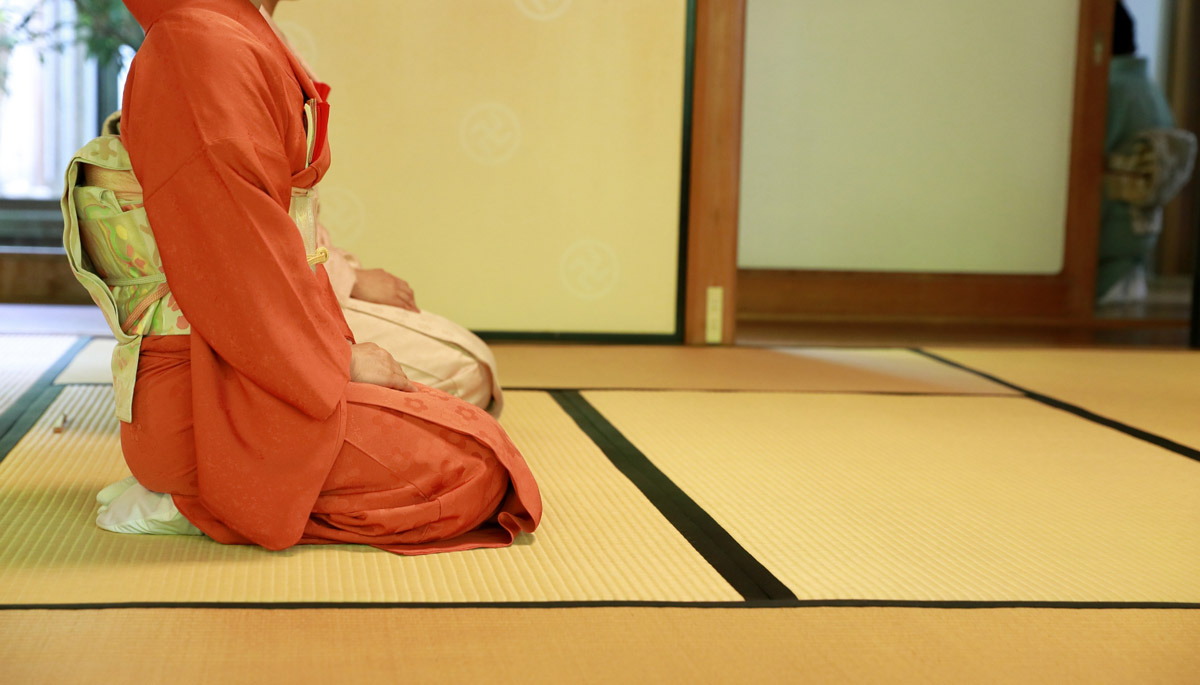
In a Japanese-style room, people usually sit on the floor rather than on chairs. They may sit formally in seiza on zabuton cushions, sit cross-legged, or sit with their legs to one side.
Seiza is a formal way of sitting seen in settings such as the tea ceremony, temple events, and other formal occasions. However, sitting in seiza for a long time can be difficult for people who are not used to it, so it is important not to force yourself when staying at a ryokan or visiting a cultural facility.
On tatami, shoes and slippers are generally removed. When entering a ryokan guest room or the interior of a temple, you take off your footwear at the entrance and step onto the tatami in socks or bare feet. Because tatami can be damaged easily, avoid dragging wheeled luggage across it or placing heavy bags down forcefully.
There is also a custom of avoiding stepping on the edges of tatami. The edges, called heri, are easily worn down, and in the past they sometimes featured family crests or patterns associated with status. For this reason, stepping on the edge could be seen as disrespectful to the household or to the people hosting you.
Some explanations also connect this custom with the tension of samurai society. One story says that people avoided stepping on the seams between tatami and floorboards because these areas could be vulnerable to attacks from below the floor. This is no longer a practical concern in daily life today, but the custom of avoiding tatami edges reflects not only care for the room, but also physical habits shaped by history.
When entering a Japanese-style room as a traveler, avoiding the tatami edges when possible can make your movements appear more respectful.
Fusuma and Shoji Create Flexible Spaces
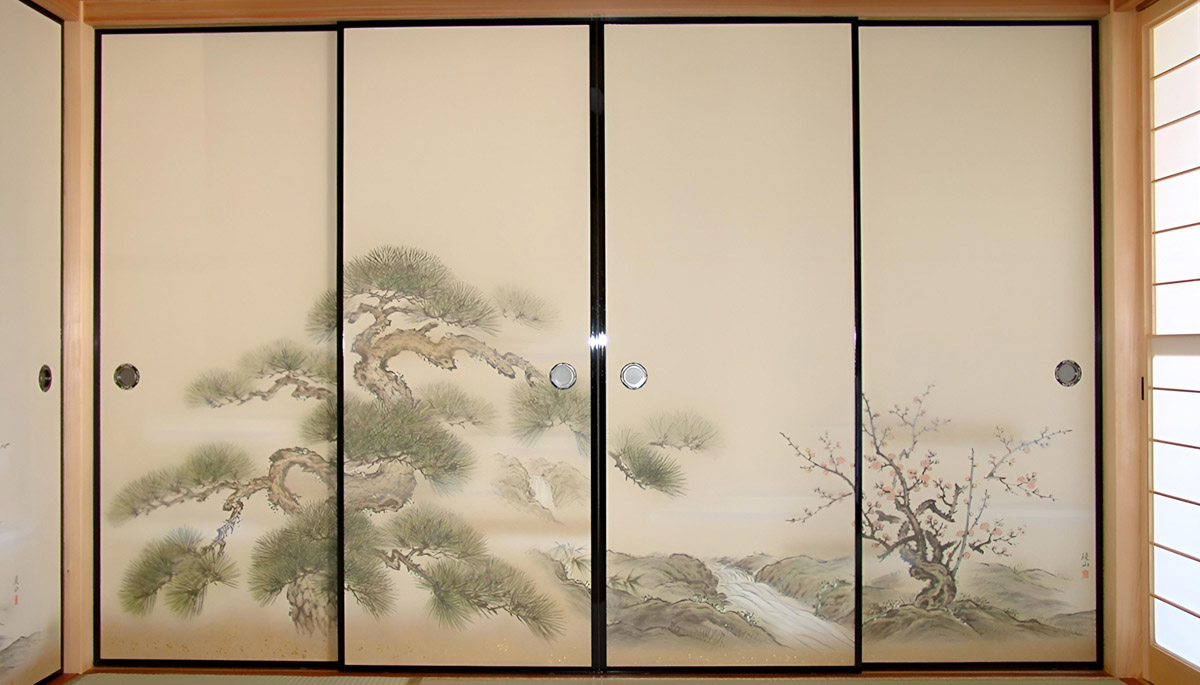
Japanese-style rooms often use sliding fittings called fusuma and shoji. Both are used to divide spaces, but they differ in function and appearance.
Fusuma are sliding doors made by covering a wooden frame with paper or cloth. They are used to divide one room from another. When closed, they separate spaces; when opened, they allow multiple rooms to function as one larger space. In some cases, fusuma can also be removed entirely, making it possible to combine several rooms into a single open area.
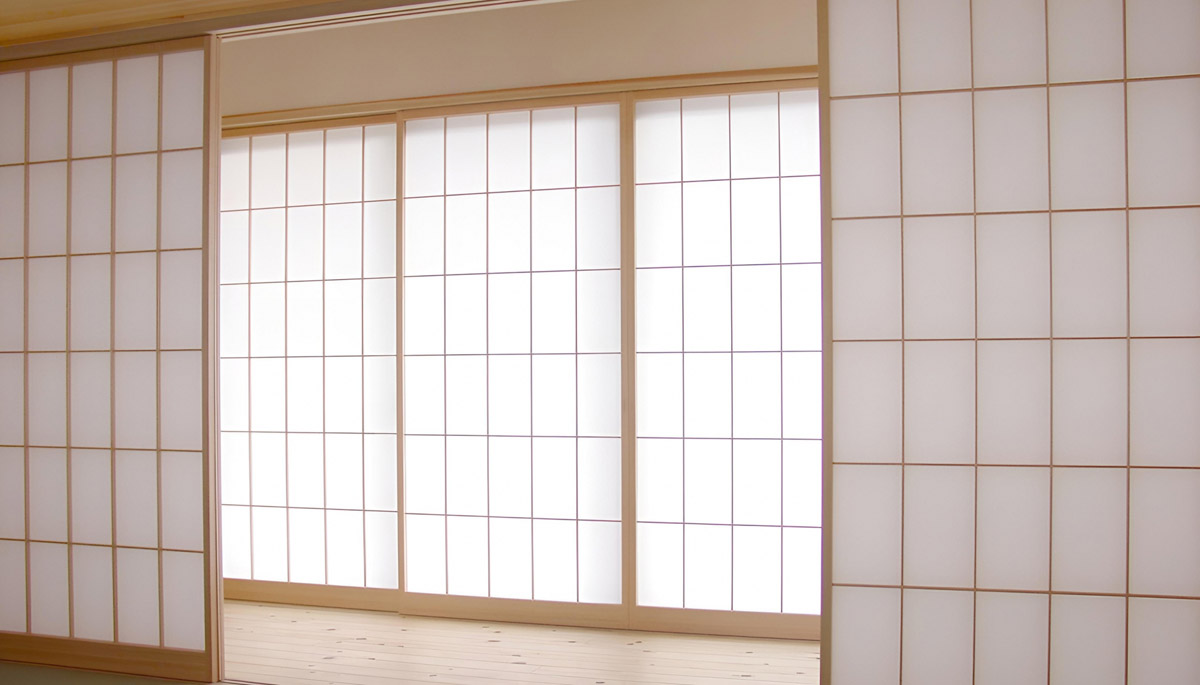
Shoji are sliding screens made from a wooden lattice covered with washi paper. They softly bring in light from outside while gently blocking direct views. The light filtered through shoji creates the calm atmosphere of a Japanese-style room.
Fusuma and shoji are not fixed walls. By opening, closing, or removing them, people can change the size and purpose of the room. In summer, rooms can be opened up to allow air to flow through; in winter, they can be closed off to create a more enclosed, calm space. This ability to adapt the home to the season and the number of people shows the flexibility of Japanese architecture.
What Is a Tokonoma?
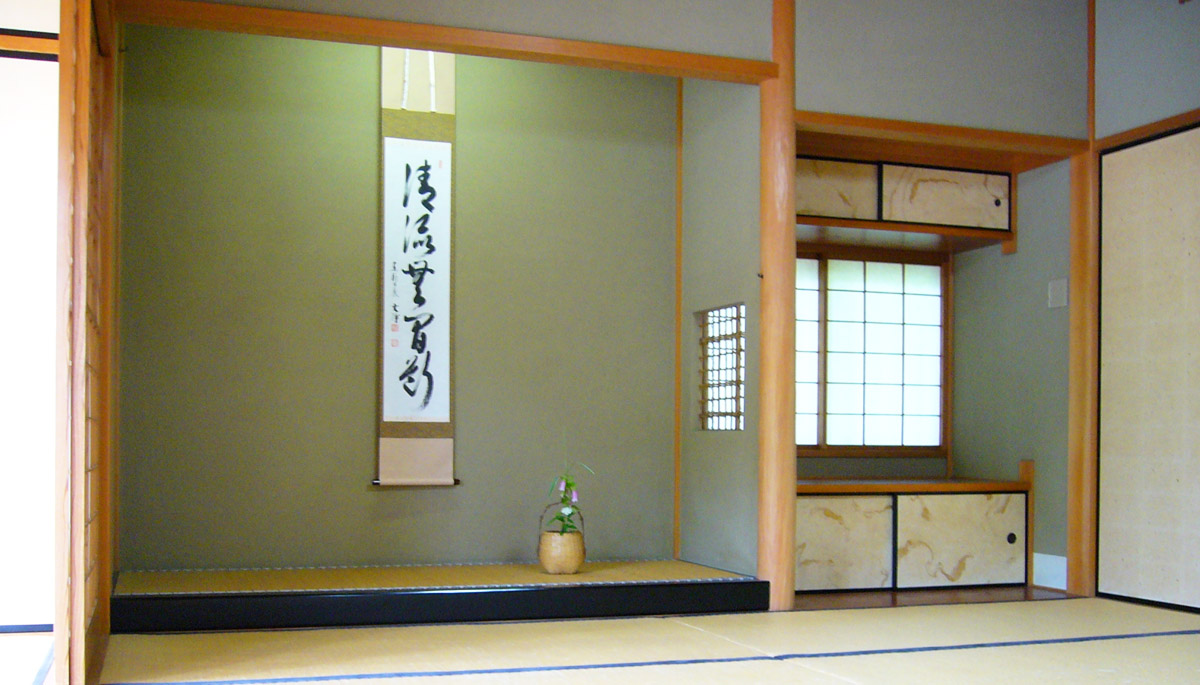
A tokonoma is a slightly raised decorative alcove built into one side of a Japanese-style room. It is used to display items such as hanging scrolls, flowers, incense burners, and ornaments.
The tokonoma is not a storage space or work area. It is usually found in a room for receiving guests, where seasonal or occasion-specific decorations help shape the atmosphere of the room.
The tokonoma is also connected with seating order in a Japanese-style room. In general, the seat closest to the tokonoma is considered the kamiza, or seat of honor, and serves as a guide for where an important guest should sit. When a guest sits with the tokonoma behind them, the hanging scroll and flowers form a beautiful background, creating a setting that honors the guest.
For example, flowers may be displayed in spring, while a hanging scroll related to autumn leaves or the moon may be chosen in autumn. In tea rooms and ryokan guest rooms, the decorations in the tokonoma can reveal the host’s sense of hospitality and awareness of the season.
The tokonoma also creates a small space of quiet openness within the room. The fact that a home includes a space meant not for practical use, but for viewing and appreciation, reflects an important aspect of Japanese aesthetics.
Manners Around the Tokonoma
The tokonoma is treated as a special place within a Japanese-style room. For this reason, you should avoid placing luggage there, sitting on it, or stepping into it.
In ryokan guest rooms, you may be shown to a room with a tokonoma. It can be tempting to place a suitcase or bag there, especially if you are unsure where to put your belongings, but the tokonoma is not a luggage space. Bags should be placed in a corner of the room or wherever the inn indicates.
You should also avoid touching hanging scrolls, flowers, and ornaments. They may be old or delicate, so check the rules of the facility before taking photos.
If you are guided to a seat, it is best to follow the instructions of the inn staff or host rather than choosing the seat of honor yourself. Knowing that the seat closest to the tokonoma is often reserved for an important guest helps you understand the meaning of hospitality in a Japanese-style room.
A Room for Sitting, Eating, and Sleeping
One major feature of a Japanese-style room is that a single room can serve several purposes.
During the day, a low table may be placed in the room for meals, tea, or conversation. When guests are welcomed, zabuton cushions can be arranged and the room can become a guest room. At night, the table can be moved aside and futon bedding laid out, turning the same room into a bedroom.
This way of using space is closely connected with a lifestyle that does not rely on fixed furniture. Without large beds or sofas, the room can be changed for different purposes by bringing out or putting away what is needed.
When staying in a ryokan, you may find that futon bedding has been laid out after dinner or while you are out of the room. This is part of Japanese lodging culture, in which a tatami room changes from a daytime space for relaxing into a bedroom at night.
Experiencing a Japanese-Style Room at a Ryokan
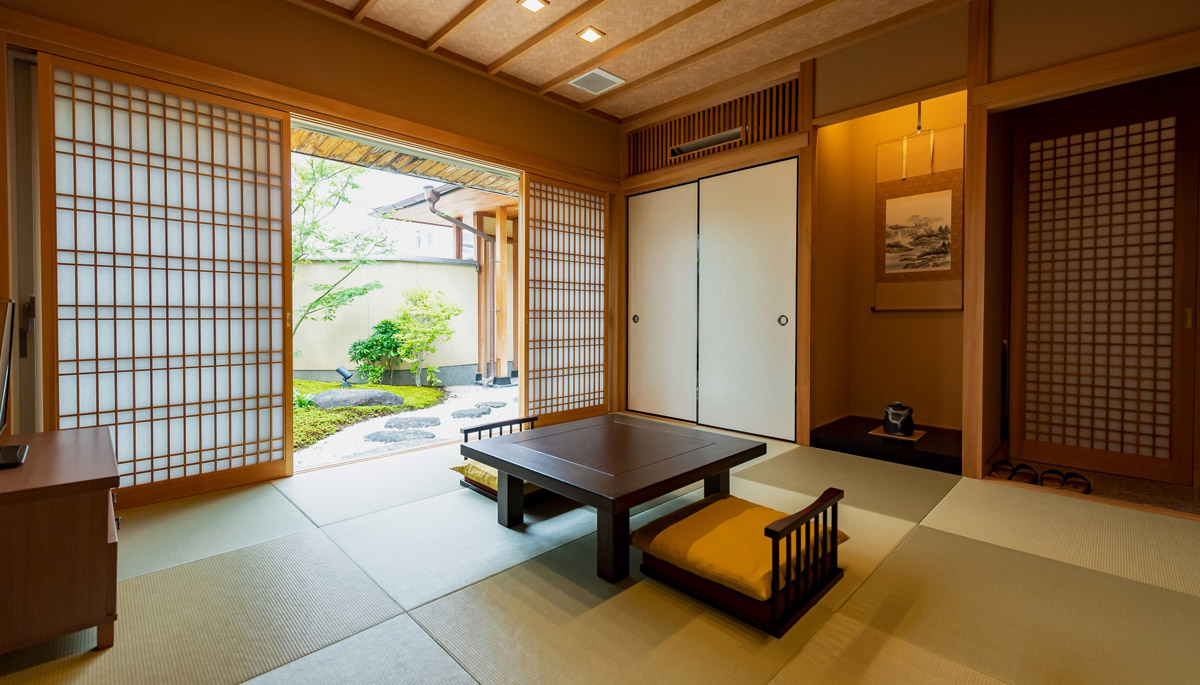
For travelers from overseas, a ryokan is one of the easiest places to experience a Japanese-style room. Through tatami flooring, low tables, floor chairs, futon bedding, shoji screens, and the tokonoma, visitors can experience the feeling of a traditional Japanese living space.
In a ryokan room, you take off your shoes before entering. On tatami, you also remove slippers. Slippers may be used in hallways or other parts of the inn, but they are removed at the entrance to the tatami room.
Drinking tea at a low table, looking out at a garden from a window-side chair, and sleeping on a futon all offer an experience different from staying in a modern hotel. The feel of tatami, light through shoji, and the sound of wooden fittings give Japanese-style rooms their quiet charm.
However, because Japanese-style rooms often involve sitting on the floor, travelers with concerns about their legs, knees, or back may want to check whether chairs or rooms with beds are available.
Basic Manners When Entering a Japanese-Style Room
When entering a Japanese-style room, pay attention first to your footwear. The basic rule is not to step onto tatami with shoes or slippers. At temples, old folk houses, and ryokan inns, follow the signs and remove your footwear where instructed.
On tatami, avoid running or dragging large luggage. Fusuma and shoji can be fragile, so open and close them gently. Pressing on the paper part of a shoji screen can tear it, so move it by touching the wooden frame.
It is also important not to place luggage in the tokonoma. The tokonoma is a space for decoration and respect, not for practical items.
You do not need to memorize every rule of Japanese-style room etiquette perfectly. If you are mindful of not damaging the tatami, fittings, or decorations, and treat the space with care, your behavior will naturally become respectful.
What Japanese-Style Rooms Reveal About Japanese Living Culture
Japanese-style rooms clearly show certain features of Japanese ways of living.
Tatami supported a lifestyle of sitting, lying down, and sleeping on the floor. Fusuma and shoji made it possible to change a room according to daily needs instead of fixing it permanently. The tokonoma conveys a culture of decoration, seasonal awareness, and meaningful empty space beyond practical use.
A Japanese-style room is not a room filled with furniture. It is a space that leaves room open and changes its use as needed. Behind this is a way of thinking that values flexible use of limited space, attention to the seasons, and hospitality toward guests.
When traveling in Japan, if you have the chance to enter a Japanese-style room, pay attention to the feel of tatami, the light through shoji, and the decorations in the tokonoma. A Japanese-style room quietly conveys the culture of Japanese homes and everyday life.