Bunraku is one of Japan’s major traditional performing arts. In English, it is written as Bunraku. It is known as a theatrical form in which puppets, narration, and the shamisen come together to tell a story. Because puppets are used, it is sometimes introduced to first-time audiences as puppet theater, but Bunraku is a highly sophisticated storytelling art that cannot be fully explained by that phrase alone.
On the Bunraku stage, puppeteers move the puppets, the tayū narrates the story, and the shamisen supports the atmosphere of each scene and the emotions of the characters. The audience understands that the figures on stage are puppets, but gradually begins to sense human sorrow, hesitation, determination, and affection within them. This article explains what kind of traditional performing art Bunraku is, what roles the puppeteers, tayū, and shamisen play, and what first-time viewers may want to notice.
What Is Bunraku?
A Traditional Performing Art That Developed as Ningyō Jōruri
Bunraku is a traditional Japanese performing art also known as ningyō jōruri. Jōruri refers to a form of narrative storytelling accompanied by the shamisen. In ningyō jōruri, puppets move on stage in response to that narration. One of the major characteristics of Bunraku is that puppets, narration, and music do not exist as separate elements. Instead, the three overlap and work together to create a single story.
Bunraku plays may be based on historical events, the loyalty of samurai, the lives and romances of townspeople, or family relationships. Although the stories are classical, the emotions they portray are deeply human. Many works deal with themes that continue to resonate across time, such as separation between parents and children, the suffering of lovers, and the conflict between social duty and personal emotion.
More Than Simple Puppet Theater
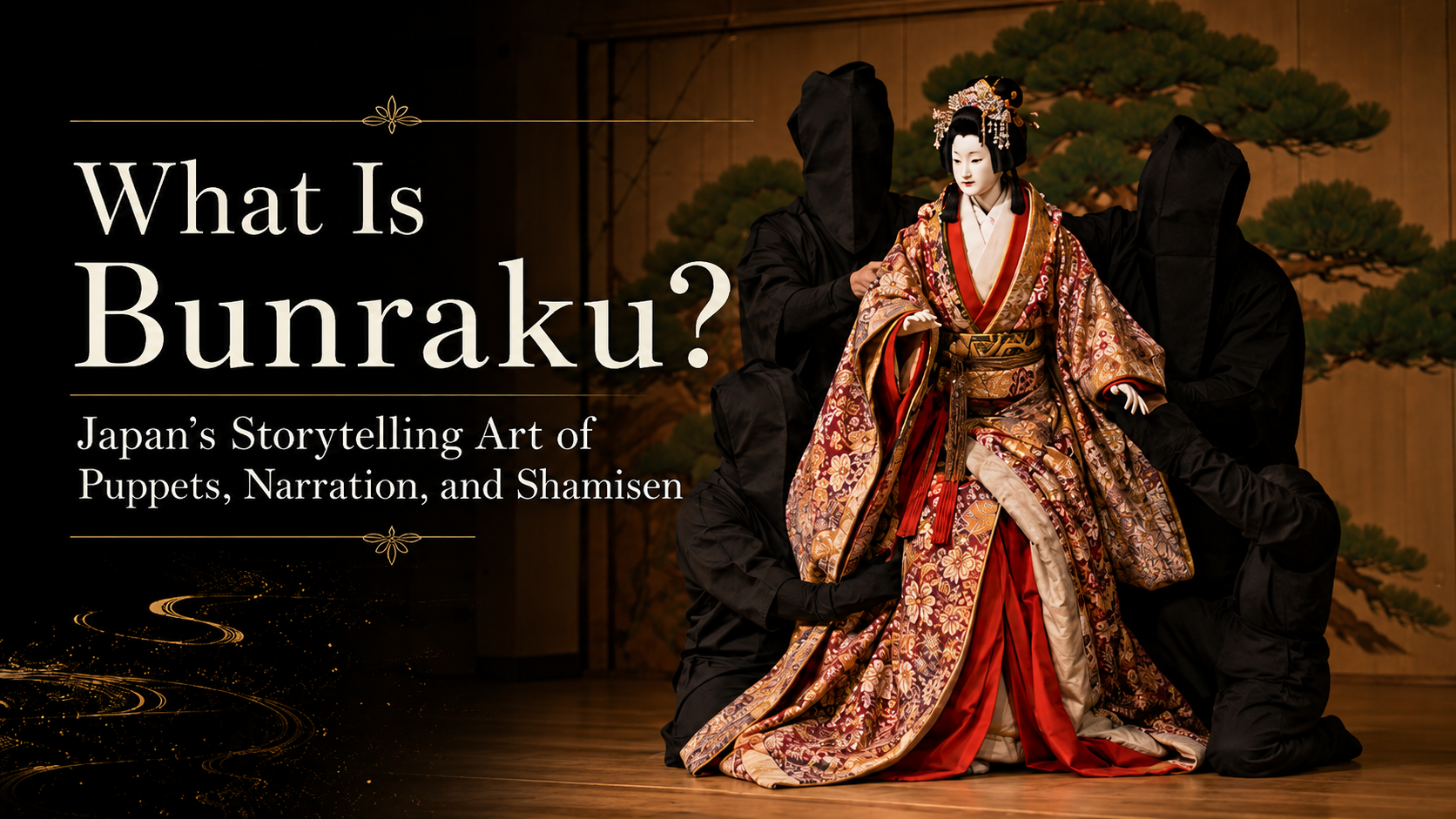
Bunraku uses puppets, but it is very different from simple puppet theater. The puppets on stage wear finely made costumes and are operated with great precision by several puppeteers. The movement of the head, gestures of the hands, direction of the body, and way of walking all express the inner feelings of the character.
At first, viewers may notice the presence of the puppeteers. However, as the story progresses, attention often shifts toward the puppet itself, and the figure begins to appear as if it were truly alive on stage. This is one of the distinctive appeals of Bunraku. Precisely because the figures are puppets, they can create a concentrated emotional intensity and symbolism different from that of live actors.
Bunraku Puppeteers
Several Puppeteers Operate One Puppet
In Bunraku, one puppet may be operated by several puppeteers. In many cases, the main puppeteer controls the head and right hand, while another puppeteer controls the left hand and another controls the feet. By working together as one, they make the puppet walk, turn, reach out, nod, and express emotion.
Even though several people are moving one puppet, the movement appears unified on stage. If the puppeteers are not perfectly coordinated, the puppet will not look natural. Bunraku puppets feel alive because they are supported by highly refined techniques developed through long training.
Small Movements Express Emotion
Bunraku puppets do not change their facial expressions dramatically. Even so, many emotions can be expressed through small movements, such as tilting the head slightly, bringing a hand toward the chest, lowering the body, or slowly turning around. Sadness, hesitation, embarrassment, anger, determination, and other feelings are communicated through these subtle movements.
In scenes where a character is deeply troubled or carrying feelings that cannot be put into words, the quiet movements of the puppet can leave a strong impression. Bunraku’s delicacy lies in the way emotion is expressed not through large movements, but through slight angles and pauses.
The Puppeteers Are Also Part of the Stage
In Bunraku, the puppeteers are often visible on stage. First-time viewers may wonder whether it is strange for the puppeteers to be seen. However, in Bunraku, the presence of the puppeteers is not completely hidden. Instead, it is accepted as part of the stage expression.
As you continue watching, the puppeteers may gradually become less noticeable, and your attention may move toward the puppet’s movement and emotion. This is one of the fascinating experiences of watching Bunraku. You can appreciate the skill of the puppeteers while also accepting the puppet as a character in the story. This creates a unique depth in the way Bunraku is viewed.
The Narration of the Tayū
A Performer Who Carries the Whole Story Alone
The tayū plays an extremely important role in Bunraku. The tayū is not simply a narrator. This performer narrates the story, speaks the lines of the characters, expresses their emotions, and conveys the tension of each scene alone. Men, women, elderly people, young people, people of high status, townspeople, and many other characters are all performed through changes in voice, rhythm, pauses, and intensity.
This is an especially important feature of Bunraku for English-speaking readers to understand. A single tayū carries the entire story and gives voice to the hearts of many characters. Scenes change and emotions are conveyed through vocal expression alone. This vocal power is one of the defining features of Bunraku narration.
Vocal Intensity and Pauses Create Emotion
In the narration of the tayū, not only the volume and pitch of the voice, but also the timing of pauses is important. Silence between words, moments when the voice suddenly grows stronger, and scenes where the voice is held low all express the feelings of the characters and the tension of the story.
Even if you do not understand every word, you can sense the weight of a scene and the rise of emotion through the strength, trembling, and momentum of the voice. When watching Bunraku for the first time, it is helpful to listen to the tayū not only as language, but also as a flow of sound and emotion.
The Role of the Shamisen
Sound That Supports the Atmosphere of the Story
The shamisen is also essential in Bunraku. It is not merely background accompaniment. While staying close to the narration of the tayū, the shamisen supports the atmosphere of the scene, the emotions of the characters, and the tension of the story. In sad scenes, it may create a low and heavy resonance. In tense scenes, the sound may become stronger and more forceful.
The shamisen does not directly explain what is happening on stage. However, its sound helps the audience sense the weight of the scene and the feelings of the characters. In Bunraku, the movement of the puppets, the voice of the tayū, and the sound of the shamisen overlap, deepening the emotional power of the story.
The Unity of Tayū and Shamisen
The tayū and shamisen do not proceed separately. As the narration grows stronger or the emotions shift, the sound of the shamisen changes as well. At the same time, the shamisen supports the narration and heightens the tension of the scene.
When watching Bunraku, it is worth paying attention not only to the puppets, but also to how the tayū and shamisen resonate with each other. When voice and sound come together, the emotions of the puppet on stage can feel even stronger. This unity among the three elements is what makes Bunraku such a special theatrical tradition.
The Stories of Bunraku
Stories of Duty and Human Feeling
Many Bunraku stories feature characters torn between duty and personal emotion. Family affection, loyalty to one’s lord, love for a partner, social position, promises, and responsibility often overlap, forcing the characters into painful choices.
These themes are often found in Japanese classical performing arts, but in Bunraku, the emotions can appear especially concentrated because they are expressed through puppets. Unlike performances by live actors, the quiet face of the puppet and the powerful narration of the tayū come together to convey the suffering and determination of the characters in a deeply moving way.
Emotion That Can Be Expressed Because They Are Puppets
Bunraku puppets are not real human beings. Yet precisely because of that, viewers can more easily project their own imagination onto them. The expressions of the puppets are limited, but this allows the audience’s imagination to work through the narration of the tayū, the sound of the shamisen, and the movements of the puppeteers.
The puppets appear human, but they are not human themselves. This distance creates the distinctive emotional quality of Bunraku. In sad scenes or scenes of farewell, the quiet presence of the puppet can leave an even stronger lingering impression.
Points to Notice When Watching Bunraku for the First Time
Read the Summary in Advance
If you are watching Bunraku for the first time, it is helpful to read a summary of the play beforehand. The language of Bunraku is classical, and the narration of the tayū has a distinctive style. For this reason, it may be difficult for first-time viewers to understand the entire story on the spot.
Knowing the general flow of the story makes it easier to follow what the puppet movements and narration are expressing. Even a simple understanding of the relationships between the characters, the background of the story, and the emotions that appear toward the end can help you appreciate the performance.
Do Not Watch the Puppets, Narration, and Shamisen Too Separately
When watching Bunraku, it is more enjoyable to notice how the puppets, tayū, and shamisen overlap, rather than treating them as separate elements. The puppet moves, the voice of the tayū gives emotion, and the shamisen creates the atmosphere of the scene.
At first, your eyes may naturally go to the skill of the puppeteers or the movement of the puppet. Once you become a little more accustomed to the performance, try also listening to the voice of the tayū and the sound of the shamisen. When you begin to see how these three elements create one scene together, the appeal of Bunraku becomes much clearer.
Check for English Guides or Explanations
For travelers watching Bunraku, it is a good idea to check in advance whether English audio guides, subtitles, pamphlets, or story summaries are available. Support differs depending on the theater and performance, but English explanations can make it easier to understand the story and main highlights.
Especially for first-time viewers, it is helpful to check the official website for the title of the play, performance time, story summary, and whether English guidance is available. Even knowing the basic flow of the story can make it easier to follow the puppets and narration on stage.
Why It Is Worth Seeing Bunraku in Japan
Experiencing the Moment When Three Forms of Expression Come Together
Bunraku can be watched on video, but the impression changes greatly when it is seen in an actual theater. The resonance of the tayū’s voice, the sound of the shamisen, the subtle movements of the puppets, and the quietness of the audience are all elements that can be felt more strongly when you are in the same space.
In Bunraku, one of the greatest attractions is the moment when puppets, narration, and shamisen come together on stage. Each element can be observed through video, but in the theater, the unity of sound and movement is felt more powerfully. The value of seeing Bunraku in Japan lies in being able to experience the entire stage space.
Encountering Japan’s Storytelling Culture
Bunraku is also an important performing art for understanding Japan’s storytelling culture. Within its classical language and settings, it portrays human emotion, family ties, relationships with society, and conflicts between duty and personal feeling. Although the historical background is different from modern life, the emotions it presents can still speak to people today.
By watching Bunraku, you can encounter the depth of Japanese narrative culture and the appeal of a stage art that combines words, sound, and physical expression. It offers an entry point into the storytelling side of Japanese culture, different from the quiet aesthetics of tea ceremony or ikebana.
Conclusion
Bunraku is a Japanese storytelling art created through puppets, narration, and shamisen. Puppeteers move the puppets, the tayū performs both the story and the characters alone, and the shamisen supports the emotions of each scene, creating a deep narrative world on stage. Although Bunraku uses puppets, the emotions expressed through them are profoundly human.
When watching Bunraku for the first time, you do not need to understand everything perfectly. Reading a brief summary in advance and paying attention to how the puppet movements, the voice of the tayū, and the sound of the shamisen overlap can already help you sense its appeal. For travelers who want to experience a traditional performing art rich in storytelling, Bunraku can become a deeply memorable cultural experience.