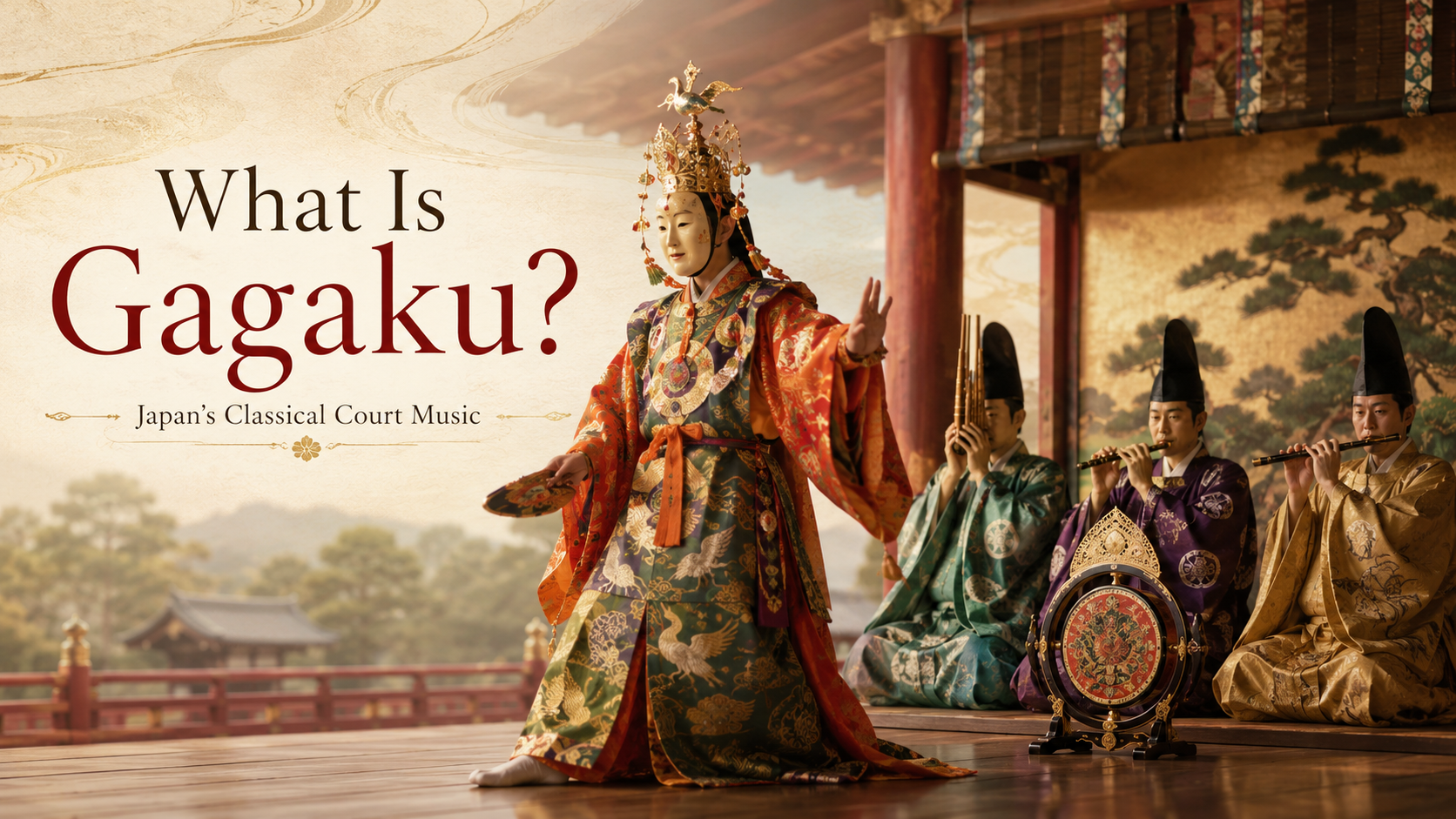
Gagaku is one of Japan’s classical performing arts, passed down over many centuries. In English, it is written as Gagaku. It is known as a traditional music-and-dance culture that developed as court music and includes a strong ceremonial character. Unlike stage arts such as Noh, Kabuki, and Bunraku, Gagaku has a more formal world of sound closely connected with court ceremonies and religious events at shrines and temples.
For people encountering Gagaku for the first time, its sound and the way the performance unfolds may feel very different from modern music. Slow-moving melodies, the layered sound of the shō, the powerful tone of the hichiriki, the flowing sound of the ryūteki, and the slow movements of the dancers come together to create a sense of time unlike everyday life. This article explains what kind of tradition Gagaku is, what instruments and dances are used, and how first-time listeners can enjoy it.
What Is Gagaku?
Classical Japanese Music Passed Down in the Court
Gagaku is classical Japanese music that has been passed down together with court ceremonies and religious rituals. It includes not only music that developed within Japan, but also elements of music and dance that came from the Asian continent and the Korean Peninsula in ancient times, later refined within Japanese court culture.
The word gagaku carries the meaning of “elegant music.” In this context, “elegant” does not simply mean bright or decorative. It suggests a refined, formal, and well-ordered beauty. Gagaku has long been valued not only as music for enjoyment, but also as music that shapes the atmosphere of a ceremony and supports its meaning.
A Tradition Combining Music, Dance, and Ceremony
Gagaku is not only an art of listening to sound. In addition to music performed with wind, percussion, and string instruments, some pieces also include dance. Dancers wear colorful traditional costumes and move slowly across the stage with formal gestures. When music and dance come together, they create the solemn and distinctive world of Gagaku.
Gagaku has also been closely connected with shrines, temples, and court ceremonies. For this reason, it is easier to understand Gagaku not simply as concert music, but as music that prepares a space and supports the meaning of a ritual or formal occasion.
The Sound of Gagaku
A Slow Flow of Time
When you first listen to Gagaku, one of the first things you may notice is its slow sense of tempo. Unlike modern pop music or Western classical music, it does not usually move forward with a clearly marked beat. Instead, the sound spreads widely and flows slowly.
This slow sense of time is one of the main characteristics of Gagaku. The sound does not immediately move on to the next moment. Each resonance remains in the space, overlaps with other sounds, and changes gradually. As a listener, you do not need to follow a fast development. Instead, you can take in the spread of sound and the atmosphere of the place at a slower pace.
A Solemn Sound Created by Layers
The sound of Gagaku has a distinctive layered quality. Several wind instruments sound together, while percussion and string instruments add further depth. Since the sound works differently from Western harmony, it may feel fresh or unfamiliar to English-speaking listeners.
Gagaku gives the impression of sound filling a large space, rather than music moving lightly and quickly. When heard in a formal setting such as a shrine, temple, or traditional performance venue, its solemn quality becomes even more striking.
Main Instruments Used in Gagaku
The Shō and Its Heavenly Sound
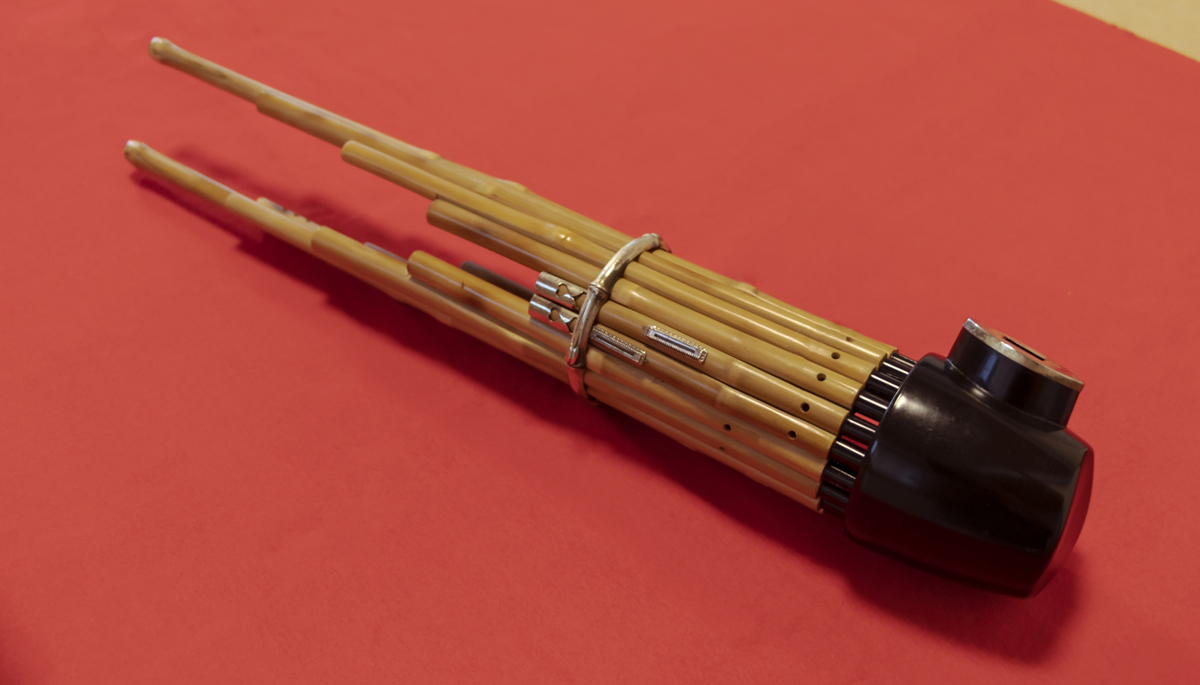
One of the most characteristic instruments of Gagaku is the shō. The shō is a wind instrument made of multiple slender bamboo pipes and produces layered tones that can sound almost like chords. Its sound is sometimes described as resembling light shining down from the sky.
The shō does not mainly play a clearly defined melody. Instead, it surrounds the music with a wide field of sound. When listening to Gagaku, paying attention to how the shō expands the overall resonance can help you feel the atmosphere that is unique to Gagaku.
The Hichiriki and Its Powerful Melody
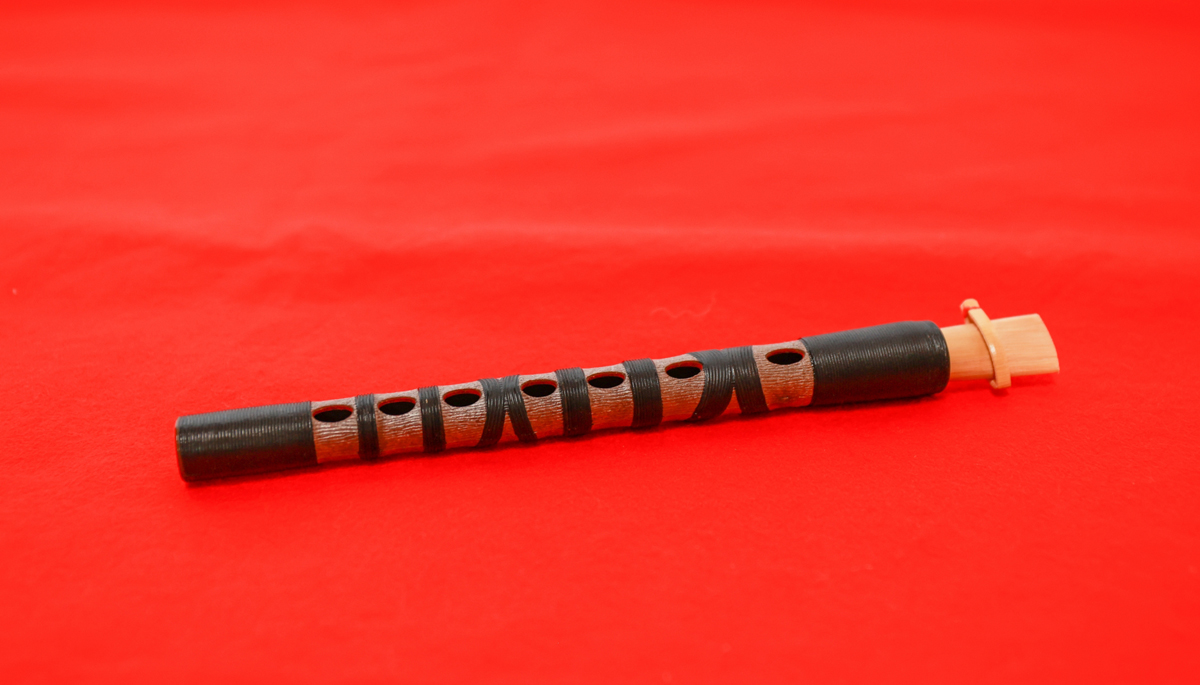
The hichiriki is a small wind instrument, but it has a very powerful sound. In Gagaku, it often carries the main melody, and its distinctive, slightly wavering tone leaves a strong impression. Its sound has both sharpness and depth, and at times it may even feel close to the human voice.
For first-time listeners, the sound of the hichiriki may be one of the most memorable parts of Gagaku. Within the slow flow of the music, the melody of the hichiriki comes forward and gives the whole performance a sense of life.
The Ryūteki and Its Flowing Sound
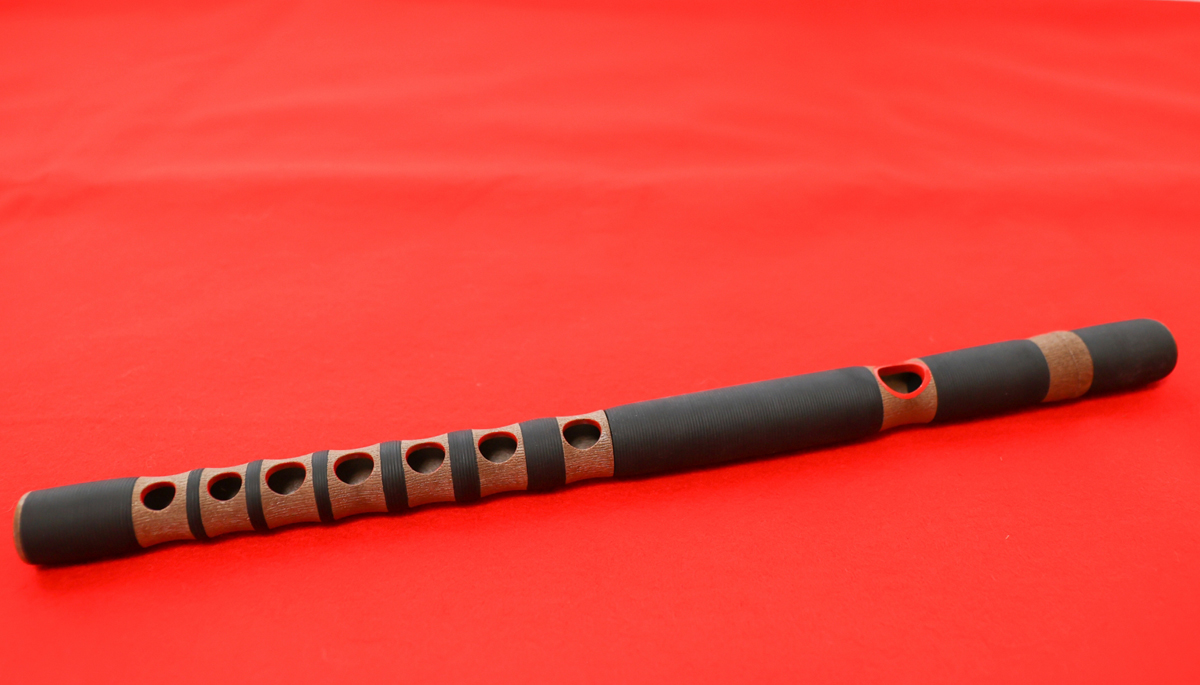
The ryūteki is a type of transverse flute. It has a high, clear sound and creates flowing melodic lines within Gagaku. In contrast to the powerful tone of the hichiriki, the ryūteki gives the impression of moving lightly through the space.
When listening to the ryūteki, it is helpful to notice not only the movement of the melody, but also how the sound passes through the space. The combination of the shō, hichiriki, and ryūteki creates the distinctive sound world of Gagaku.
Percussion and String Instruments Supporting the Music
Gagaku also uses percussion instruments such as the taiko, shōko, and kakko. These instruments do not usually keep a strong, continuous beat in the way drums often do in modern music. Instead, they support the structure and flow of the music. Each strike gives meaning to the progress of the dance and the music.
String instruments such as the gakubiwa and gakusō may also be used. These instruments add calmness and depth to the music. In Gagaku, each instrument does not stand out separately in a showy way. Rather, each plays a role within the total resonance.
Gagaku with Dance
What Is Bugaku?
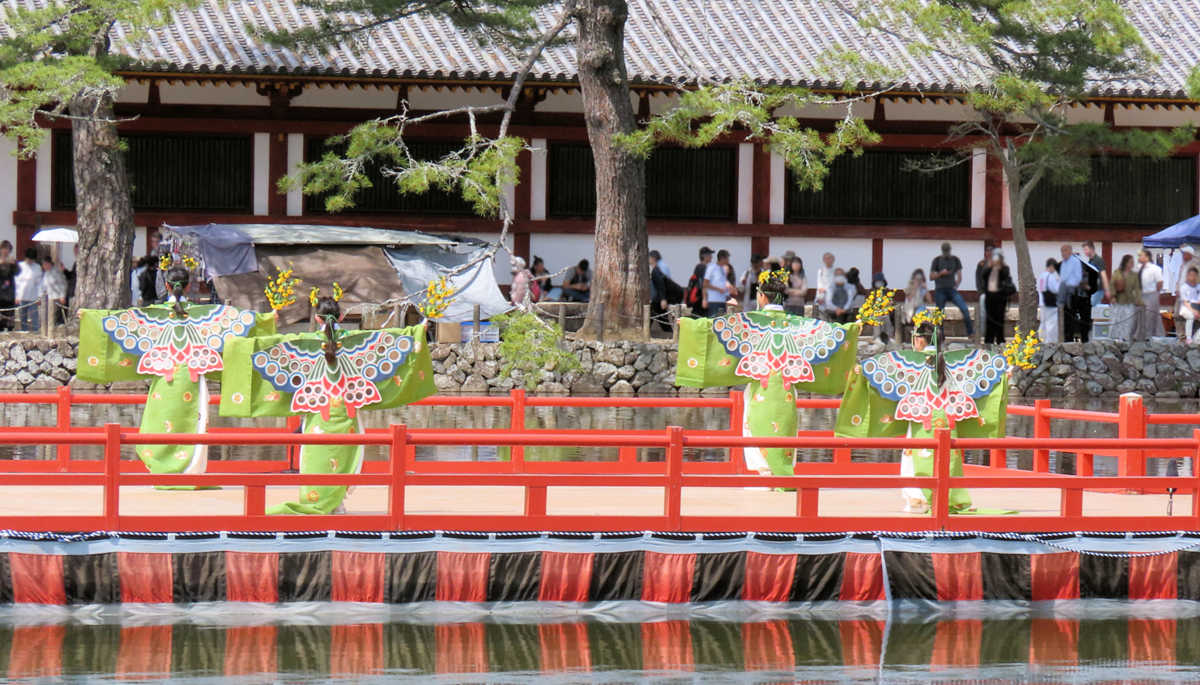
Some forms of Gagaku include dance. This is called bugaku. In bugaku, dancers move slowly in time with the music. They often wear colorful costumes and sometimes masks, making the performance visually memorable as well as musical.
The movements of bugaku are not fast or intense like many forms of modern dance. Hand movements, steps, and turns are performed within a slow and formal flow. When watching bugaku, it is more enjoyable to focus on the shapes of the gestures, the pauses, and the beauty of the costumes rather than on speed.
Sahō-no-Mai and Uhō-no-Mai
Bugaku includes classifications such as sahō-no-mai and uhō-no-mai. You do not need to understand the full historical system in detail, but knowing that there are differences in origin, costume, and musical atmosphere can provide a helpful clue when watching.
Sahō-no-mai is often associated with music of Chinese origin, while uhō-no-mai is often associated with music from the Korean Peninsula. Their costumes and atmosphere can differ. For first-time viewers, it is not necessary to memorize these classifications. Simply noticing differences in costume colors, dancers’ movements, and musical sound is enough to begin appreciating the performance.
Gagaku and Japanese Culture
Sound Connected with Court Culture
Gagaku is deeply connected with Japanese court culture. It has been performed at court ceremonies and celebratory occasions, and has been passed down as music that creates a formal atmosphere. For that reason, the sound of Gagaku has a sense of dignity that differs from everyday music.
Listening to Gagaku is not only a matter of enjoying beautiful melodies. It can also feel like encountering an older layer of Japanese court culture. Through the combination of music, costumes, dance, and ceremonial atmosphere, Gagaku reveals one of the most classical worlds within Japanese culture.
Music Connected with Shrines and Temples
Gagaku has also been performed at shrine and temple events. Its sound may be heard during Shinto rituals, festivals, and other traditional ceremonies. While traveling in Japan, visitors may encounter Gagaku at shrines or during cultural events.
The impression of Gagaku heard in a theater and Gagaku heard during a shrine or temple ceremony may be slightly different. When heard within a ritual, the music is connected not only with sound itself, but also with the atmosphere of the place and the feeling of prayer.
How to Enjoy Gagaku for the First Time
Try Listening to Each Instrument
When you first hear Gagaku, its overall sound may feel unusual, and it may be difficult to understand what each instrument is doing. In that case, try first paying attention to the sounds of the shō, hichiriki, and ryūteki.
The shō creates layered resonance, the hichiriki carries a powerful melody, and the ryūteki produces a flowing sound. Simply becoming aware of these differences can change the way you hear Gagaku. Rather than trying to analyze everything, it is often easier to enjoy the music by gradually sensing its layers of sound.
Notice the Dance and Costumes
If you are watching bugaku, paying attention to the dance and costumes as well as the music will make the experience richer. The dancers’ movements are slow, but the angles of the hands, the steps, and the timing of turns all carry meaning. The colors and shapes of the costumes are also important elements that shape the overall impression of the performance.
You do not need to know the detailed rules when watching for the first time. By simply observing how the dancers’ movements and the music come together, it becomes easier to enter the world of Gagaku.
You Do Not Need to Listen as You Would to Modern Music
Gagaku may be difficult to grasp if you try to listen to it in the same way as modern music. Rather than expecting a clear chorus, a strong beat, or dramatic development, it is better to appreciate the way the sound fills the space and changes slowly.
When listening to Gagaku, it may help to take in the atmosphere created by the sound rather than follow the structure of the piece too closely. By experiencing the layered sound, the slow movement of the dance, and the beauty of the costumes together, the appeal of Gagaku becomes easier to feel.
Why It Is Worth Experiencing Gagaku in Japan
Encountering an Ancient Sound World of Japan
Gagaku carries an ancient sound world of Japan into the present. Because its resonance differs greatly from modern music, it may feel mysterious at first. That unfamiliar feeling is also part of the experience of encountering Gagaku.
When you hear Gagaku in Japan, you can experience not only the sound, but also the stage or ritual space, the costumes, and the shapes of the instruments. The way sound spreads through the space is difficult to fully understand through recordings or video. That is one of the reasons it is worth experiencing Gagaku in person.
A Gateway to the Classical Side of Japanese Culture
Like tea ceremony, ikebana, Noh, Kabuki, and Bunraku, Gagaku is an important gateway to understanding Japanese culture. However, because it is especially connected with court culture and ritual, it offers a way to encounter the more classical and formal side of Japanese tradition.
By learning about Gagaku, you can see that Japanese traditional culture does not take only one form. In addition to quiet aesthetics, colorful stage arts, and storytelling traditions, there is also the solemn sound world of court music.
Conclusion
Gagaku is a classical Japanese performing art passed down as court music. Wind instruments such as the shō, hichiriki, and ryūteki, together with percussion and string instruments, create layered sound. Along with dance and costumes, Gagaku forms a solemn world that feels different from everyday life. Because its sound and flow of time are very different from modern music, it may feel mysterious at first.
When experiencing Gagaku for the first time, you do not need to understand everything. Simply paying attention to the layered sound of the shō, the powerful melody of the hichiriki, the flowing sound of the ryūteki, and the slow movements of the dancers is enough to begin appreciating its appeal. For travelers who want to encounter a classical sound culture in Japan, Gagaku can become a deeply memorable cultural experience.