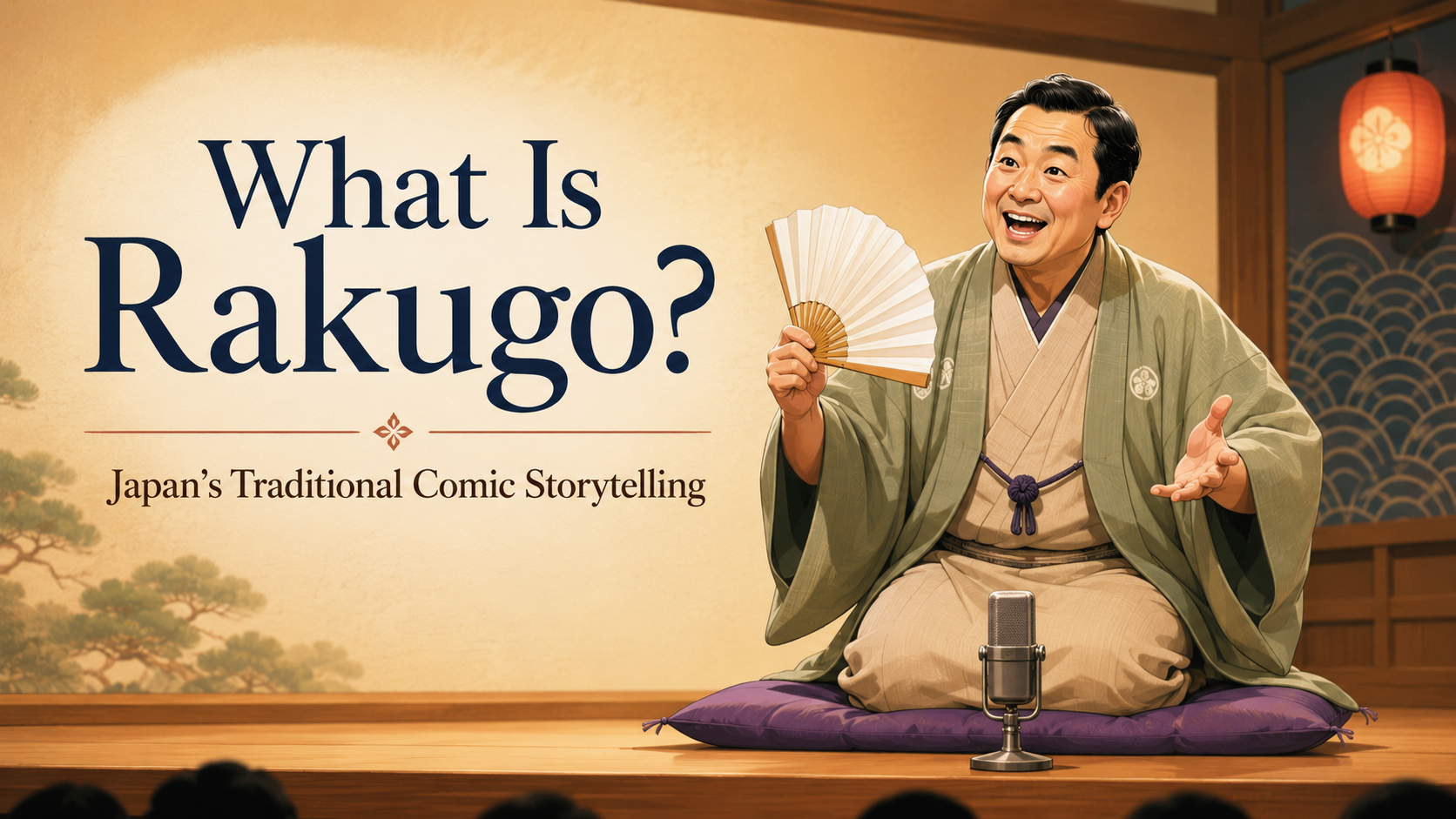
Rakugo is one of Japan’s traditional performing arts and has long been enjoyed by many people. In English, it is written as Rakugo. It is a form of comic storytelling in which a single performer sits on stage and tells a story while acting out multiple characters and scenes. Unlike Noh, Kabuki, and Bunraku, which may involve large stage settings or multiple performers, Rakugo creates an entire world through one person’s voice, facial expressions, gaze, gestures, and a few simple props.
For people encountering Rakugo for the first time, it is sometimes described as traditional Japanese comedy. It is true that Rakugo includes humor. However, Rakugo is not simply a series of jokes. It is a short storytelling art built around conversations between characters, everyday mistakes, human desires, misunderstandings, and a final punchline. This article explains what kind of storytelling art Rakugo is, what makes it appealing, and what first-time viewers can enjoy.
- What Is Rakugo?
- How Rakugo Differs from Stand-Up Comedy
- The Skill of Performing Multiple Characters Alone
- The World Created by a Fan and a Hand Towel
- Rakugo Structure and the Punchline
- Edo Rakugo and Kamigata Rakugo
- The World Portrayed in Rakugo
- How to Enjoy Rakugo for the First Time
- Why It Is Worth Seeing Rakugo in Japan
- Conclusion
What Is Rakugo?
A Performing Art in Which One Storyteller Acts Out a Whole Story
Rakugo is performed by a storyteller called a rakugoka, who sits on a small stage platform and tells a story. Usually, only one performer appears on stage. There are no large backgrounds or stage sets. Instead, the characters, places, time, and events are expressed through the storyteller’s voice and gestures.
Rakugo stories feature many kinds of people, such as merchants, craftsmen, husbands and wives, parents and children, residents of old neighborhood tenements, samurai, monks, shop owners, and servants. While remaining seated, the rakugoka changes the tone of the voice, direction of the face, gaze, and timing in order to perform different characters. The audience knows that there is only one person on stage, yet the conversation begins to feel as if several people are present.
Showing Human Nature Through Humor
One of the major features of Rakugo is that it portrays human nature through humor. The characters are not perfect heroes. They may be a little foolish, try to look better than they are, give in to desire, or misunderstand what is happening. These weaknesses and comic qualities make Rakugo stories feel familiar and approachable.
The humor in Rakugo is not simply about making fun of someone. Its appeal lies in gently showing the small gaps and awkwardness found in everyday life. Even when the time period or lifestyle is different from today, the feelings and behavior of the characters often remain easy to understand.
How Rakugo Differs from Stand-Up Comedy
Similar in Some Ways, but Different as Storytelling
When explaining Rakugo to English-speaking readers, it is sometimes compared to stand-up comedy. Both involve one performer speaking in front of an audience and creating laughter. However, Rakugo is somewhat different from stand-up comedy.
In stand-up comedy, performers often speak directly about their own opinions, experiences, or observations about society. In Rakugo, by contrast, the storyteller enters the world of a story and performs several characters within it. The audience does not simply listen to the performer’s personal views. Instead, they enjoy something closer to watching a short story unfold.
Rakugo Develops as a Story
Rakugo has a beginning, development, dialogue, and a final punchline. Within the story, characters interact, misunderstandings or crossed purposes arise, and the ending brings the story together as humor. Because of this structure, Rakugo can also be understood as a kind of short theater performed by one person.
For English-speaking readers, Rakugo may be easiest to understand as Japanese comic storytelling. It is an art that includes laughter, but the center of it is a story. A rakugoka is at once a storyteller, actor, and director.
The Skill of Performing Multiple Characters Alone
Changing Characters Through the Direction of the Face
Rakugo often centers on conversations between characters. Although only one rakugoka is on stage, the speaker changes when the performer slightly changes the direction of the face. For example, when the performer turns to the right, it may be the shop owner speaking; when the performer turns to the left, it may be the servant. In this way, the performer creates the spatial relationship between the characters while continuing the conversation.
This ability to switch between characters is one of the main highlights of Rakugo. The performer does not change costumes, and no other actor appears. Even so, the audience naturally understands who is speaking. Differences in voice, facial expression, speaking speed, and attitude also reveal each character’s personality.
Expressing Emotion Through Voice and Timing
The use of the voice is also important in Rakugo. Elderly characters, young characters, timid characters, lively characters, angry characters, and confused characters are all expressed through changes in tone. Emotions are conveyed not only through loud voices, but also through low voices, slightly foolish-sounding voices, or hurried voices.
Timing is also essential in Rakugo. Laughter can be created not only by speaking quickly, but also by pausing briefly. The pause gives the audience time to imagine what may happen next, and when an unexpected line follows, it leads to humor. The appeal of Rakugo comes not only from the words themselves, but also from the combination of voice and timing.
The World Created by a Fan and a Hand Towel
A Fan Can Become Many Different Objects
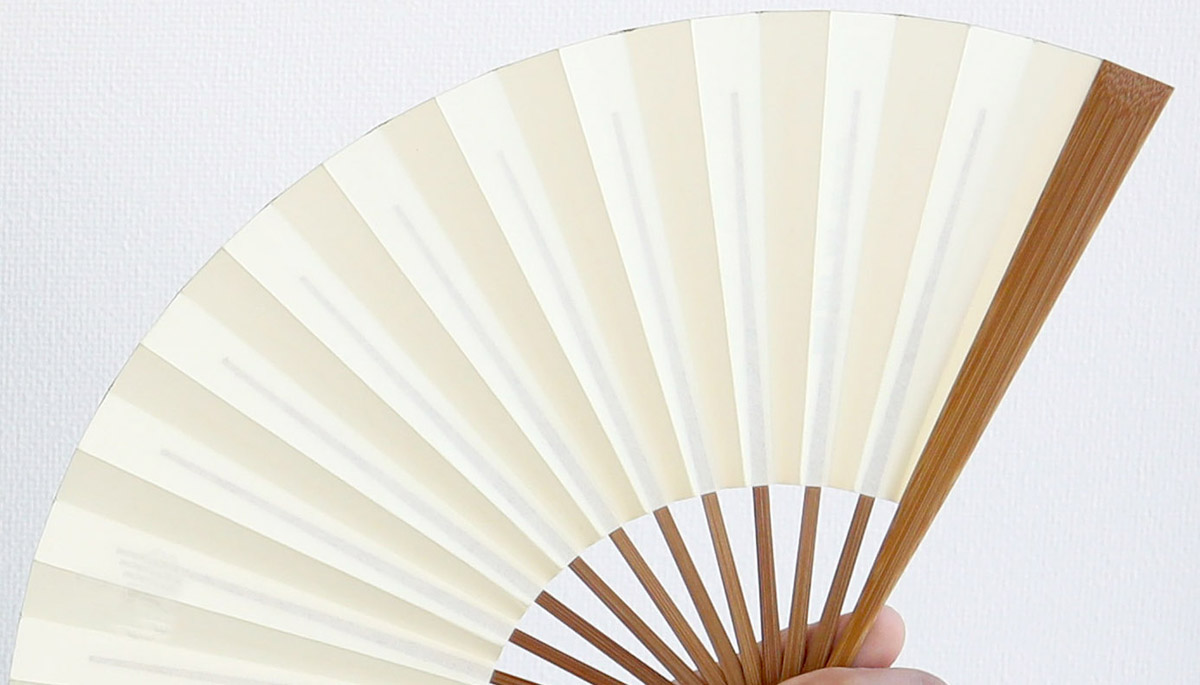
The props used in Rakugo are extremely limited. The most representative are a folding fan and a hand towel. A fan is not used only for fanning oneself. In Rakugo, it can represent chopsticks, a writing brush, a sword, a tobacco pipe, a book, a fishing rod, and many other objects.
The audience knows that the object is actually a fan. Even so, through the way the rakugoka handles it, the fan begins to look like something else. This shared imagination is part of the charm of Rakugo. Without placing many real objects on stage, the gestures of the storyteller and the imagination of the audience create the world of the story.
A Hand Towel Also Supports the Scene
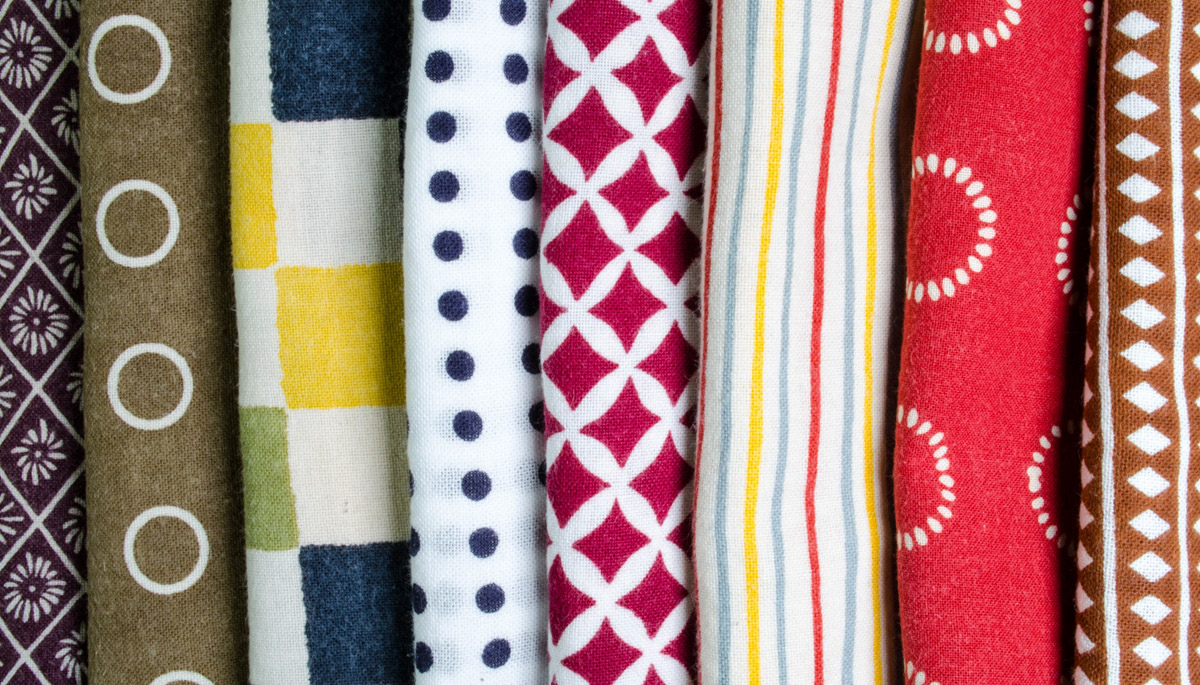
A hand towel is also an important prop in Rakugo. It can represent a wallet, a letter, a notebook, a wrapped object, or sometimes simply something used for wiping. The rakugoka folds it or changes the way it is held to suggest different objects within the story.
The fact that many scenes can be created with only a fan and a hand towel shows both the simplicity and richness of Rakugo. Because there are so few props, the meaning of each gesture becomes clear. When watching Rakugo for the first time, paying attention to what the fan or hand towel represents can make it easier to enter the world of the story.
Rakugo Structure and the Punchline
Moving from Makura into the Main Story
In many Rakugo performances, the storyteller begins with an introductory section called makura before entering the main story. In the makura, the performer may talk about the season, everyday events, light humor, or something suited to the audience that day. Through this introduction, the audience gradually becomes familiar with the performer’s style of speaking.
The makura may seem unrelated to the main story at first. However, it helps soften the atmosphere and naturally leads the audience into the mood of the story that follows. Rakugo does not always begin suddenly with the main plot. It often moves forward while gradually bringing the storyteller and audience closer together.
The Punchline Brings the Story to a Close
At the end of a Rakugo story, there is a punchline. In Japanese, this is also called sage. The punchline is the final word, phrase, or development that closes the story. Conversations and misunderstandings that have built up throughout the story come together in the final moment as humor.
Rakugo punchlines do not always aim for loud laughter. Some are based on wordplay, some on a reversal of the situation, some on a revealed misunderstanding, and others leave a gentle aftertaste. One of the pleasures of Rakugo is that the meaning of the whole story can become clear through the final line.
Edo Rakugo and Kamigata Rakugo
Features of Edo Rakugo
Rakugo can be broadly divided into Edo Rakugo and Kamigata Rakugo. Edo Rakugo developed mainly around Tokyo. It often portrays Edo merchant culture, life in neighborhood tenements, shops, and stories of human warmth. The style of sitting on a cushion and performing with relatively few props is especially well known.
Edo Rakugo often shows witty conversation, warmth, and the everyday life of the town. Through the exchanges between characters, the culture and values of ordinary people in Edo become visible.
Features of Kamigata Rakugo
Kamigata Rakugo developed mainly around Osaka and Kyoto. Many stories carry the lively atmosphere of Osaka as a merchant city and feature energetic exchanges between characters. In Kamigata Rakugo, props such as a small table called a kendai and wooden clappers called kobyōshi may also be used.
Edo Rakugo and Kamigata Rakugo differ in stories, performance style, rhythm, and atmosphere of humor. However, first-time viewers do not need to memorize the details. It is enough to know that different Rakugo cultures developed around Tokyo and Osaka, giving Rakugo a wider range of expression.
The World Portrayed in Rakugo
Everyday Life of Ordinary People
Many Rakugo stories take place in the everyday world of ordinary people. Conversations in old tenement houses, business failures, quarrels between husbands and wives, drinking parties, pretending to know more than one does, debt, and exchanges between parents and children can all become stories. Rather than focusing on great events or heroic figures, Rakugo creates humor from small incidents in daily life.
This closeness to everyday life makes Rakugo approachable. Even if the historical background is old, human desire, vanity, misunderstanding, kindness, and awkwardness are still familiar to people today.
Human Warmth Within Humor
Rakugo includes not only comic stories, but also touching stories known as ninjōbanashi, or stories of human emotion. Relationships between parents and children, husbands and wives, teachers and pupils, or friends may be portrayed, and some stories leave a sense of warmth or sadness as well as laughter.
One of the attractions of Rakugo is that humor and human warmth are very close to each other. Even while laughing at a character’s mistake, the audience may still feel affection for that person. Rakugo does not harshly criticize human weakness. Instead, it turns that weakness into humor with a certain gentle distance.
How to Enjoy Rakugo for the First Time
Parts of Rakugo Can Be Enjoyed Even Without Understanding Every Word
Because Rakugo is centered on language, it may feel difficult for people who do not understand Japanese. Classical Rakugo may include older expressions and references to past ways of life. However, there are still many elements that can be enjoyed through changes in voice, facial expression, direction of the face, and gestures.
For English-speaking travelers watching Rakugo, performances with English subtitles or English explanations can make the experience easier to understand. In recent years, some Rakugo performances have been presented in English or with explanations for international audiences. Since support differs depending on the performance, it is best to check official information in advance.
Watch How the Characters Change
When watching Rakugo for the first time, it is helpful to notice how the characters switch. A different character may be speaking when the performer changes the direction of the face, the tone of the voice, or the speed of speaking.
Once you realize that one rakugoka is performing several characters alone, the stage begins to look different. An empty space can become a shop, a tenement house, a street, or a room. Rakugo is an art that is enjoyed through the imagination of the audience.
Notice How the Fan and Hand Towel Are Used
When watching Rakugo, paying attention to the folding fan and hand towel can also make the performance more interesting. Seeing a fan become chopsticks, a brush, or a sword shows how Rakugo creates rich scenes with very few props.
The hand towel can also become many different things depending on the scene. Although the props are simple, the storyteller’s gestures make them appear as something else. This is one of the distinctive forms of expression in Rakugo.
Why It Is Worth Seeing Rakugo in Japan
Experiencing the Atmosphere of a Yose
If you want to experience Rakugo in Japan, visiting a yose can be a meaningful choice. A yose is a traditional entertainment hall where audiences can enjoy Rakugo and various other performing arts known as iromono. Several performers appear one after another, and you can hear different stories within a relatively short time.
At a yose, the distance between performers and audience is close, and the whole venue has a distinctive warmth. Unlike a large theater, it allows visitors to enjoy traditional performing arts in an atmosphere closer to everyday life. Experiencing Rakugo during a trip can help visitors feel a more familiar side of Japanese popular culture.
Encountering Japanese Humor and Language Culture
Watching Rakugo also offers a chance to encounter Japanese humor and language culture. Verbal exchanges, timing, indirect expressions, and humor born from misunderstandings are deeply connected to Japanese language and culture.
Rakugo can make people laugh and draw them into a story world through words and imagination alone, without elaborate stage sets. As a way to understand Japanese culture, it offers a gateway into the culture of spoken performance, different from tea ceremony, ikebana, Noh, or Kabuki.
Conclusion
Rakugo is a Japanese storytelling art created by a single performer. Sitting on a small stage platform, the rakugoka uses voice, facial expression, gaze, gestures, a folding fan, and a hand towel to create multiple characters and the world of the story. Although laughter is central to Rakugo, it also contains human warmth, everyday humor, and a gentle view of human nature.
When watching Rakugo for the first time, you do not need to understand every word perfectly. Paying attention to how the characters switch, how the voice changes, and how the fan and hand towel are used can reveal much of Rakugo’s appeal. For travelers who want to experience popular culture and the art of spoken storytelling in Japan, Rakugo can become a memorable traditional performance.